Mango Chutney
Also known as: chunda, sweet mango chutney
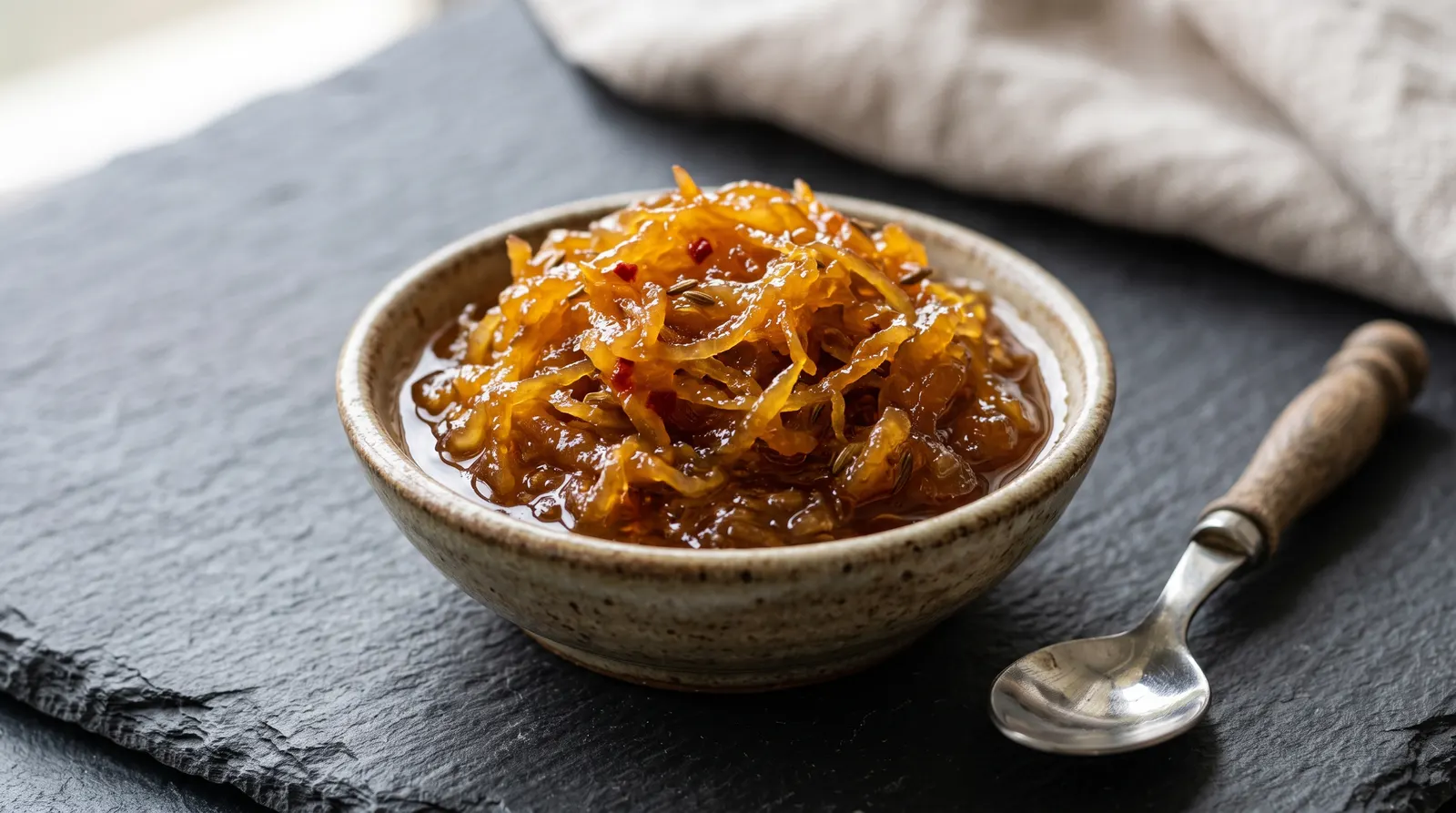
What Mango Chutney is
Sweet preserved mango: raw fruit grated with sugar and spice until it sets jam-like. This is the family behind the 'mango chutney' of Indian-restaurant menus — not the fresh green chutney, and not a sour pickle.
Gujarati chunda begins as grated raw mango, a firm sour one such as rajapuri, mixed with sugar, which draws out the fruit's juice and turns the mixture into a preserve; chilli and cumin season it, and sun-cooking or a short simmer finishes the set. Related but distinct is murabba, whole baby mangoes in syrup. The restaurant-style jars descend from the Anglo-Indian Major Grey pattern instead: sweetened and sharpened with vinegar, studded with sultanas, chunkier and milder than chunda. Traditional chunda is sun-cooked: the grated mango is covered with sugar, the jar is covered with muslin and set in the sun for days, and the mixture is stirred daily while the syrup thickens. Some family recipes add cardamom or cloves to the chilli and cumin. No pectin is needed, because the mango brings enough of its own.
Taste and texture
Sweet first, tart behind it, with a slow chilli warmth and cumin's dusty earth. The shreds turn translucent and sticky; good chunda has the loose set of a jam, not the stiffness of a jelly. The chilli is usually gentle rather than hot, and the cumin keeps it from tasting like dessert. The older it gets, the darker and thicker it becomes, and the sourness softens as the sugar takes over. A chunda that tastes sharply of raw mango has not had enough sun or time; one that tastes only of sugar has had too much of both.
Forms to buy
- Chunda (grated) — The classic shredded preserve.
- Chunky sweet mango chutney — Restaurant-style pieces in syrup; milder.
How to cook it
Spoon it where a thali wants sweetness: with papad and paratha, alongside a simple dal, or folded into a cheese-and-cracker plate, which is a respectable modern use. In Gujarat it goes onto a hot rotli with a smear of ghee, which is breakfast rather than a side, and it is the classic partner to thepla, the fenugreek flatbread Gujaratis pack for journeys, and to crisp khakhra. Stirred into thick yoghurt it makes a quick sweet-sour dip for parathas. It is a better cooking ingredient than it looks: a spoon stirred into a yoghurt raita, or brushed over a tray of carrots or paneer before they go under the grill, gives a sweet-sour glaze that works with the chilli.
Buying note
Typically ¥500–¥900 per jar at Indian grocers in Japan. Read the list: mango should come first, ahead of sugar, and there is little reason to accept a jar thickened with added pectin. Bright shreds and a loose, glossy set are what to look for. Cheap jars are usually darker and sweeter, with more syrup and less fruit, and the ingredient list says so. Home-made chunda appears at some grocers in season and is usually sharper and better.
Storing it
Chunda keeps by sugar rather than by oil, so the rules differ from achar. An unopened jar holds a year in a cool dark cupboard. Once opened, keep it in the fridge and always use a dry spoon: a wet spoon thins the syrup and can start a ferment. Expect three to four months in the fridge after opening, and longer if the jar is small enough to finish quickly. The first sign of trouble is the surface — a white bloom, a vinegary smell, or bubbles rising in the syrup, which mean fermentation has begun. Mould is fuzzy and sits on the surface or under the lid, and that jar should go. Freezing works but leaves the texture grainy once thawed, so small jars are the better answer. If the chunda dries out, a spoon of hot water stirred through brings it back. Cold firms the set, so let a jar from the fridge stand at room temperature a few minutes before serving.
What goes wrong
- The chutney is thin and syrupy rather than jam-like. — The mango was too ripe, or all the sugar went in at once. Use firm raw mango, grated on the coarse side of a box grater so the shreds stay distinct, layer it with sugar and let it stand so the juice draws out slowly, then simmer gently until a drop on a cold plate holds its shape.
- The chunda tastes of nothing but sugar. — Too little fruit for the sugar. Use roughly equal weights of grated mango and sugar, which is the traditional proportion, and add the chilli and cumin near the end so they are not cooked flat. Taste before the last simmer, since the sweetness deepens as the syrup reduces and cannot be corrected afterwards.
- The jar grows a white bloom after a few weeks in the cupboard. — It was left out after opening, or a wet spoon went in and thinned the syrup enough for yeast to start.