Indian food
Not one cuisine but a continent's worth, unified by how spices are handled rather than by what is cooked.
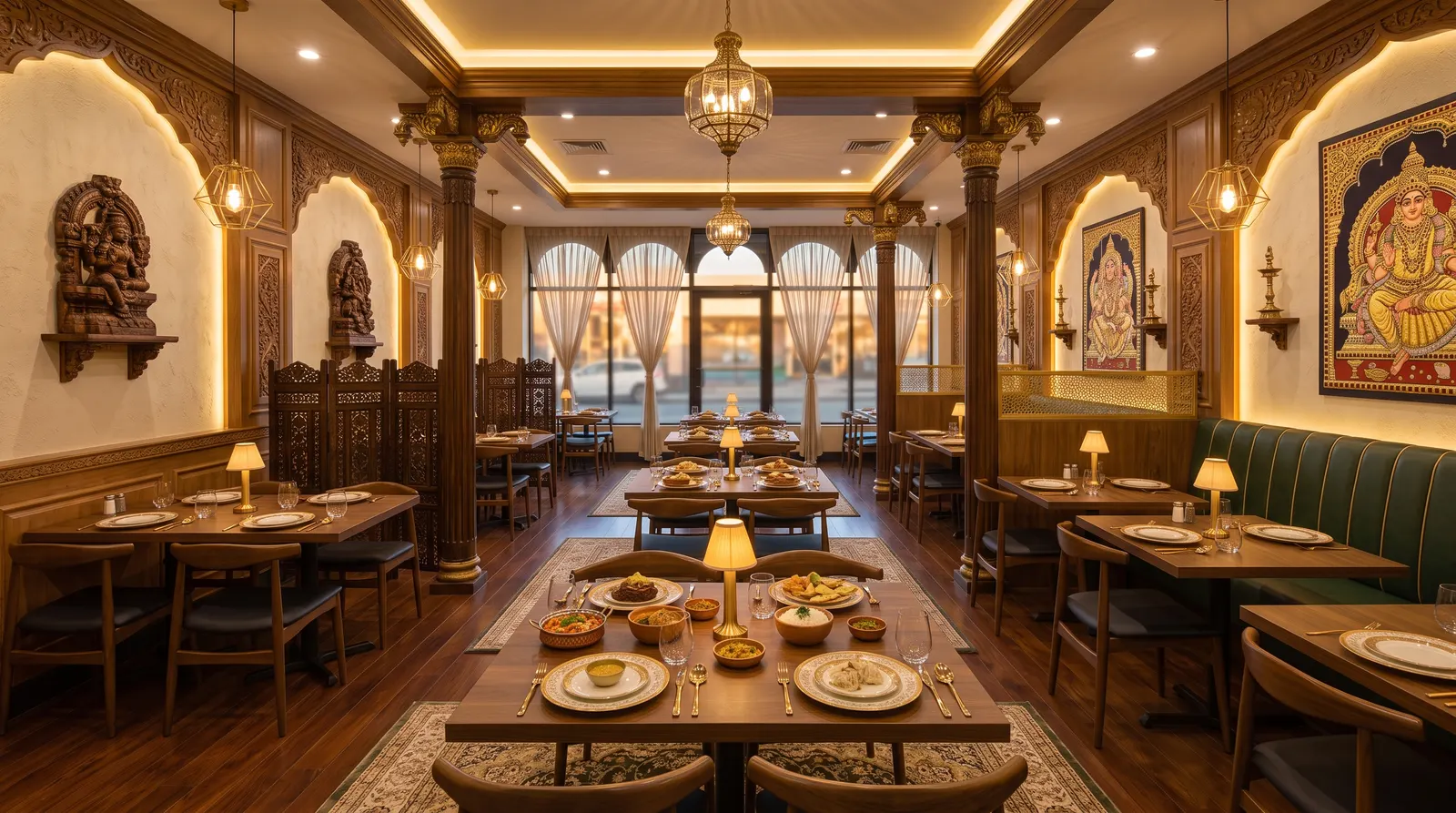
What Indian food is
What most menus label Indian is usually North Indian: wheat breads rather than rice as the staple, dairy used generously, and gravies built on onion and tomato cooked down in fat. It is the style that travelled furthest, because tandoor cooking and rich gravies survive a restaurant kitchen better than the more delicate regional traditions do.
What defines it
The defining technique is not a spice list, it is the order of operations. Onions are browned properly, whole spices are bloomed in hot fat, ground spices go into oil rather than water, and the masala is cooked until the fat visibly separates and pools at the edge. Every gravy on a North Indian menu is a variation on that sequence. A kitchen that rushes it produces curries that taste raw and harsh no matter how good the ingredients were.
How a meal works
There is no course structure in the European sense. Everything arrives together and is shared from the middle of the table: two or three gravies, a dry vegetable, a dal, rice, bread, yoghurt and pickle. You build each mouthful yourself rather than eating one dish to completion. Bread is torn with the hands and used as a scoop; rice is mixed with only as much gravy as you are about to eat, so the rest stays dry.
If it is your first time
Order one creamy dish, one dry or grilled dish, and one dal, then bread and rice to share. Butter chicken and garlic naan is the safest possible start and there is no shame in it. Resist ordering three gravies — they will taste similar and the meal becomes monotonous. If you are unsure about heat, ask for it mild; a kitchen can always bring chilli on the side, but it cannot take it out.
Worth knowing when you order
- One gravy, one dry dish, one dal is a better meal than three gravies
- Naan for thick gravies, rice for thin ones
- Raita is a cooling agent, not a side salad — order it if you order heat
- Bone-in meat carries more flavour than boneless and costs less
Dishes to know
Regional variation
Move south and the staple flips from wheat to rice, coconut and curry leaf appear, and the food gets lighter and sourer. Go east to Bengal for mustard oil and freshwater fish; west to Gujarat for vegetarian food with a distinct sweetness. A restaurant calling itself simply Indian is usually cooking the Punjabi-descended style, whatever the owners' own background — it is what customers expect, so it is what sells.