Chicken Biryani
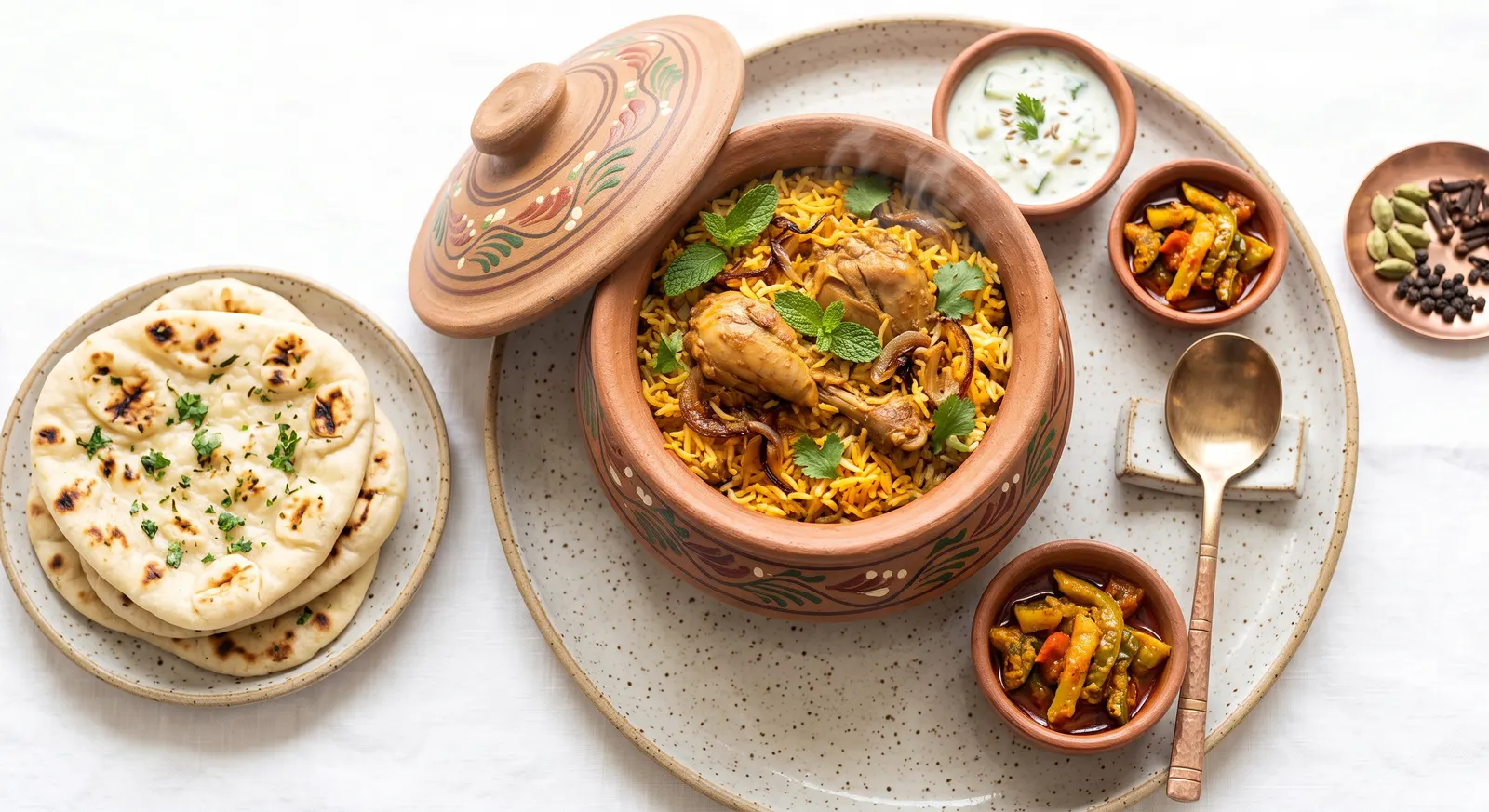
Rice and marinated chicken layered raw, then sealed and steamed together.
- Prep
- 40 min
- Cook
- 60 min
- Total
- 100 min
- Serves
- 6
- Heat
- Medium
What Chicken Biryani is
Biryani is not a rice dish with chicken stirred through it. Half-cooked basmati and marinated chicken are layered in a heavy pot, sealed, and finished on low heat so the rice absorbs the meat's steam. Done properly the grains stay separate and each one is a different shade — saffron yellow, white, and brown where it met the masala.
Where it comes from
Biryani arrived with Persian and Mughal cooking and then split into dozens of regional versions that argue with each other: Hyderabadi cooks the meat raw in the pot, Lucknowi cooks it first and keeps the spicing gentle, Kolkata adds potato. What they share is the dum method — sealing the pot so nothing escapes. The seal is the technique; everything else is local.
How to eat it
Biryani is eaten with raita and nothing else — no extra curry, which is a common mistake, because the rice already carries its own sauce. Take a portion that includes both rice and meat, spoon a little raita to the side rather than over the top, and mix only the mouthful you are about to eat. Eaten by hand, you press a small amount together with the fingertips into a loose ball. The crisp fried onion on top is meant to be spread across the plate, not eaten all at once.
Goes well with
- Cucumber and mint raita
- Sliced raw onion with lemon
- Mirchi ka salan
Ingredients
- 500 g Basmati rice — Aged basmati if you can get it; new rice breaks.
- 1 kg Bone-in chicken — Bone-in — boneless overcooks before the rice is done.
- 250 g Thick yoghurt
- 4 large Onions, thinly sliced — Fried to birista; both a layer and a seasoning.
- 3 tbsp Ginger-garlic paste
- 4 Green chillies, slit
- 1 large bunch each Mint and coriander leaves
- a generous pinch Saffron — Soaked in 60 ml warm milk.
- 2, 1 stick, 5, 6, 1 Whole spices: bay, cinnamon, cardamom, cloves, star anise
- 2 tbsp Biryani masala or garam masala
- 4 tbsp Ghee
- to taste, and generously for the rice water Salt
Spices in this dish
How to cook it
1Marinate the chicken for hours, not minutes
Mix the chicken with yoghurt, ginger-garlic paste, half the fried onions, chilli, chopped herbs, biryani masala and salt. Refrigerate for at least four hours. The yoghurt both tenderises and becomes the sauce, so a short marinade leaves you with plain chicken sitting in rice.
2Fry the onions slowly to birista
Fry the sliced onions in ghee over medium heat until deep brown and crisp, then drain on paper. They will crisp further as they cool. Rushing on high heat burns the edges while the centre stays raw, and burnt onion turns the whole pot bitter.
3Parboil the rice to exactly 70 per cent
Boil heavily salted water with the whole spices, add the soaked rice and cook for four to five minutes only. A grain should snap when pressed, with a hard white core still visible. This is the step that decides whether the finished biryani is fluffy or mush — the rice finishes cooking in the sealed pot.
4Layer without stirring
Spread the marinated chicken in the base of a heavy pot. Cover with the drained rice. Scatter the remaining fried onions, herbs, saffron milk and a little ghee over the top. Do not stir — layering is the whole point.
5Seal and cook on dum
Cover with a tight lid, sealing the rim with foil or a flour-and-water dough if the lid is loose. Cook on high for four minutes to build steam, then on the lowest possible heat for thirty-five minutes. A tawa or heat diffuser under the pot stops the base catching.
6Rest, then lift rather than stir
Leave it sealed off the heat for ten minutes. Open it, then serve by lifting from one side with a flat spoon so you bring up all the layers at once. Stirring breaks the grains and muddies the colours.
Calories and nutrition
Per serving — 1 plate with raita (about 450 g)
| Calories | 780 kcal |
|---|---|
| Protein | 42 g |
| Carbohydrate | 88 g |
| Fat | 28 g |
| Fibre | 4 g |
| Sodium | 1240 mg |
Approximate values for a typical restaurant portion, calculated from standard ingredient tables. Actual figures vary with the kitchen, the oil used and the portion served. Not intended as medical or dietary advice.