Veg Biryani
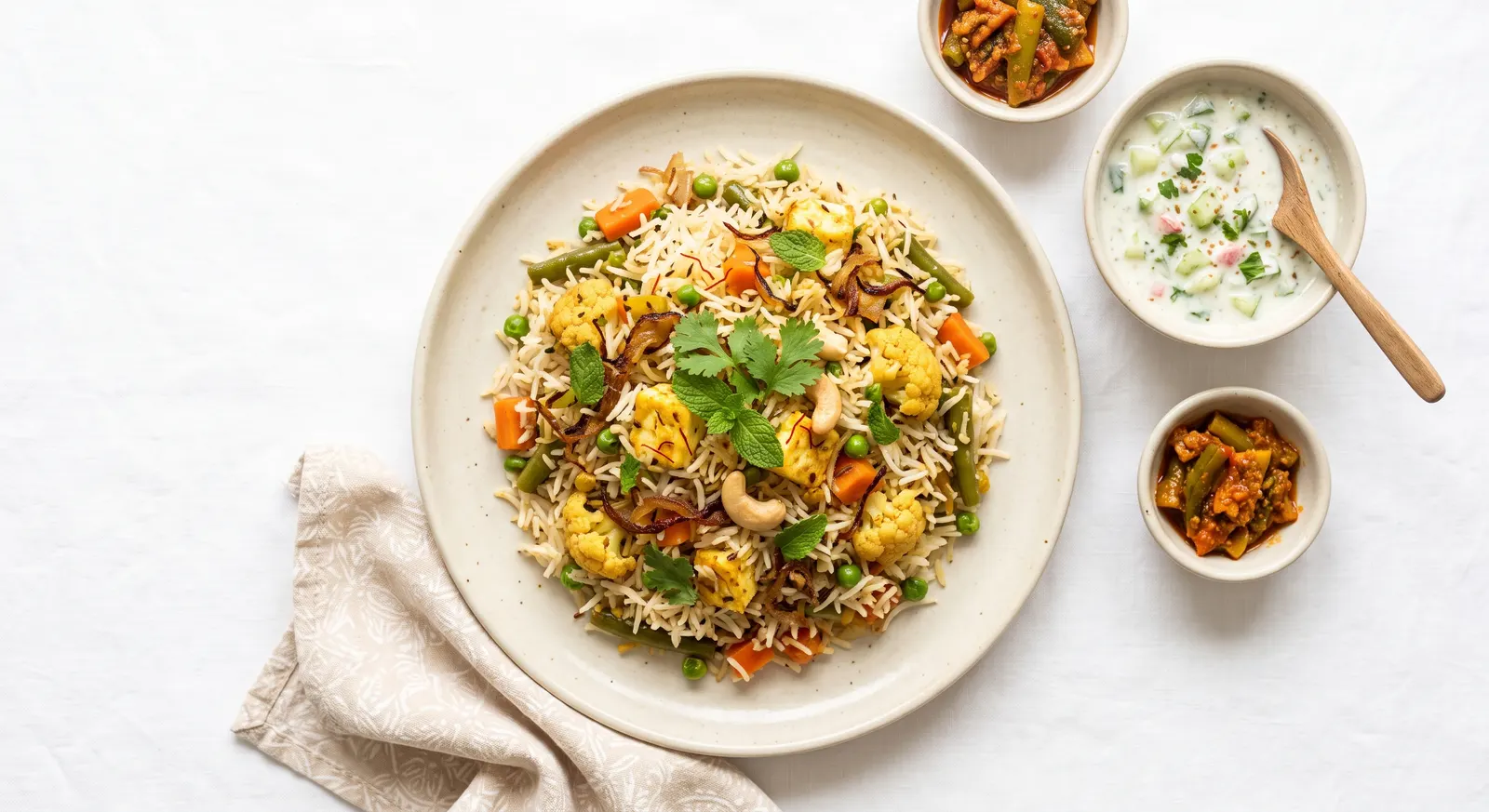
Vegetables cut to hold their shape, layered with rice the same way as meat.
- Prep
- 35 min
- Cook
- 50 min
- Total
- 85 min
- Serves
- 6
- Heat
- Medium
What Veg Biryani is
Veg biryani layers part-cooked basmati with vegetables in a spiced yoghurt masala. The difficulty is the opposite of the meat versions: vegetables cook fast and turn to pulp, so they are cut large, cooked briefly, and chosen for firmness. Done well the carrot and bean still have bite when the rice is ready.
Where it comes from
Vegetable biryani is standard across South India and in any kitchen cooking for a mixed table, and it is a genuine dish rather than a substitution — Hyderabad's tahiri and the Tamil vegetable biryani both predate the modern restaurant menu. It is also what most temples and festival kitchens serve, where meat is not cooked at all.
How to eat it
Serve with raita and, if you want it, a thin curry on the side — vegetable biryani carries less fat than the meat versions, so it takes an accompaniment better. Mix only the mouthful in front of you. The fried onion and the crisp base are the best parts; spread them across the plate rather than letting one person take them.
Goes well with
- Cucumber raita
- Mirchi ka salan
- Papad
Ingredients
- 500 g Basmati rice
- 2 large Carrot, cut into batons — Large pieces; diced carrot disappears.
- 150 g Green beans, halved
- 200 g Cauliflower florets
- 100 g Green peas
- 2 medium Potato, quartered — Fried first so it holds together.
- 200 g Thick yoghurt
- 3 large Onions, thinly sliced
- 2 tbsp Ginger-garlic paste
- as for chicken biryani, 2 tbsp masala Whole spices and biryani masala
- a pinch in 60 ml Saffron in warm milk
- 1 bunch each Mint and coriander
- 4 tbsp Ghee or oil
How to cook it
1Fry the potato and onion first
Fry the quartered potato until golden and set aside, then fry the sliced onions to deep brown birista. Frying the potato separately stops it breaking up and turning the rice starchy.
2Cook the masala briefly
Cook the ginger-garlic paste with the ground spices, then stir in the yoghurt off the heat so it does not split. Return to a low heat until the fat separates.
3Add the vegetables for minutes, not longer
Add carrot, bean and cauliflower to the masala and cook for five minutes only, then stir in the peas and fried potato. They should still be firm — they get another thirty minutes of steam in the sealed pot.
4Parboil the rice to 70 per cent
Four to five minutes in heavily salted, spiced water, drained while each grain still has a hard white core.
5Layer, seal and cook on dum
Vegetables in the base, rice on top, then birista, herbs, saffron milk and ghee. Seal, four minutes on high, then twenty-five minutes on the lowest heat — less than the meat versions need.
6Rest and lift
Ten minutes sealed off the heat, then serve by lifting from one side rather than stirring, so the vegetables stay whole.
Calories and nutrition
Per serving — 1 plate with raita (about 430 g)
| Calories | 610 kcal |
|---|---|
| Protein | 14 g |
| Carbohydrate | 96 g |
| Fat | 19 g |
| Fibre | 8 g |
| Sodium | 1080 mg |
Approximate values for a typical restaurant portion, calculated from standard ingredient tables. Actual figures vary with the kitchen, the oil used and the portion served. Not intended as medical or dietary advice.