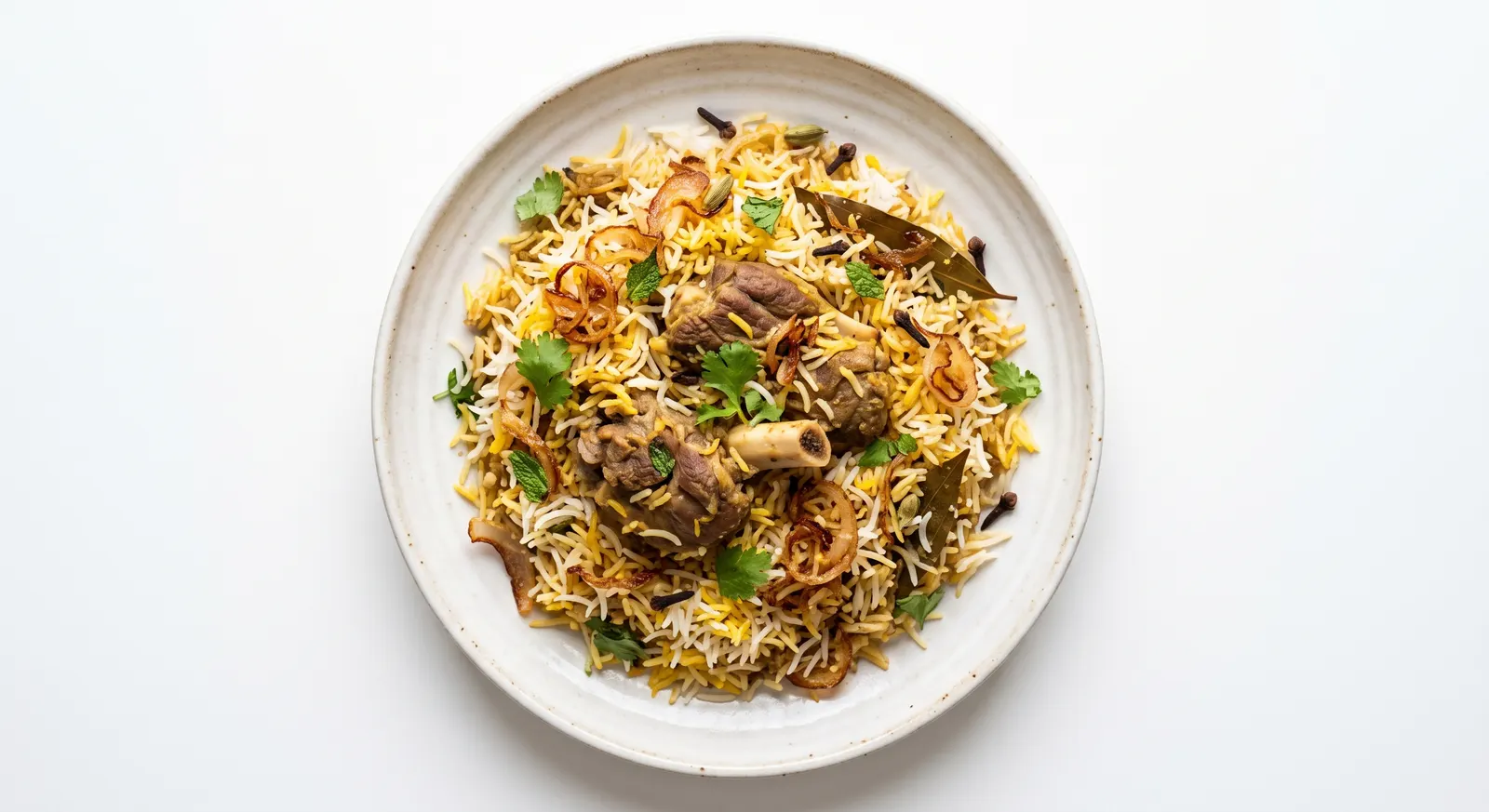
Mutton Biryani
The same method as chicken biryani, but the meat sets the timing.
- Prep
- 45 min
- Cook
- 110 min
- Total
- 155 min
- Serves
- 6
- Heat
- Hot
What Mutton Biryani is
Mutton biryani follows the identical layered, sealed method, with one difference that changes everything: goat or mutton needs far longer than rice does. The meat is either part-cooked before layering or given a much longer dum, and the result is darker, richer and more strongly spiced than the chicken version.
Where it comes from
Where goat is the everyday meat — across much of North India, Pakistan and Nepal — mutton biryani is the default and chicken the substitute, not the other way round. The longer cook suits an animal with more connective tissue, and the bones give the rice a depth that chicken cannot. It is the version usually cooked for weddings and Eid, in pots large enough to feed a street.
How to eat it
As with chicken biryani, raita is the only accompaniment it needs. The bones are part of the dish and the marrow is prized — expect to use your hands, and expect a plate for the bones. Take rice and meat together in one portion rather than eating the meat first. If the pot has a browned crust at the base, ask for it; it is the most sought-after part and is usually shared out deliberately.
Goes well with
- Cucumber and mint raita
- Mirchi ka salan
- Sliced onion with lemon and green chilli
Ingredients
- 1 kg Bone-in mutton or goat, cut into chunks
- 500 g Basmati rice
- 300 g Thick yoghurt — More than for chicken; it has more work to do.
- 1 tbsp Raw papaya paste — Optional, a traditional tenderiser for goat.
- 4 large Onions, thinly sliced
- 4 tbsp Ginger-garlic paste
- 2, 1 stick, 2 and 5, 6 Whole spices: bay, cinnamon, black and green cardamom, cloves
- 3 tbsp Biryani masala
- a pinch in 60 ml Saffron in warm milk
- 1 large bunch each Mint and coriander
- 5 tbsp Ghee
- to taste Salt
Spices in this dish
How to cook it
1Marinate overnight with a tenderiser
Combine the mutton with yoghurt, ginger-garlic paste, papaya paste if using, biryani masala and salt, and refrigerate overnight. Goat genuinely benefits from twelve hours; this is not the same as the four hours chicken wants.
2Fry the onions to birista
Slowly fry the sliced onions in ghee until deep brown and crisp, then drain. Keep the flavoured ghee — it goes back into the pot.
3Part-cook the meat
Cook the marinated mutton in a covered pan on low heat for forty-five minutes to an hour until nearly tender, adding a splash of water only if it threatens to catch. Layering raw goat with rice is possible but needs a much longer dum and far more judgement; part-cooking is the reliable route.
4Parboil the rice to 70 per cent
Boil the soaked rice in heavily salted, whole-spiced water for four to five minutes, until each grain still has a firm white core, then drain immediately.
5Layer, seal and cook on dum
Meat in the base, rice over it, then fried onion, herbs, saffron milk and the reserved ghee. Seal tightly, four minutes on high to raise steam, then forty minutes on the lowest heat over a diffuser.
6Rest before opening
Ten minutes sealed and off the heat lets the steam settle back into the rice. Serve by lifting from one side so each plate gets rice, meat and the browned base.
Calories and nutrition
Per serving — 1 plate with raita (about 460 g)
| Calories | 820 kcal |
|---|---|
| Protein | 46 g |
| Carbohydrate | 86 g |
| Fat | 33 g |
| Fibre | 4 g |
| Sodium | 1290 mg |
Approximate values for a typical restaurant portion, calculated from standard ingredient tables. Actual figures vary with the kitchen, the oil used and the portion served. Not intended as medical or dietary advice.