Veg Momo
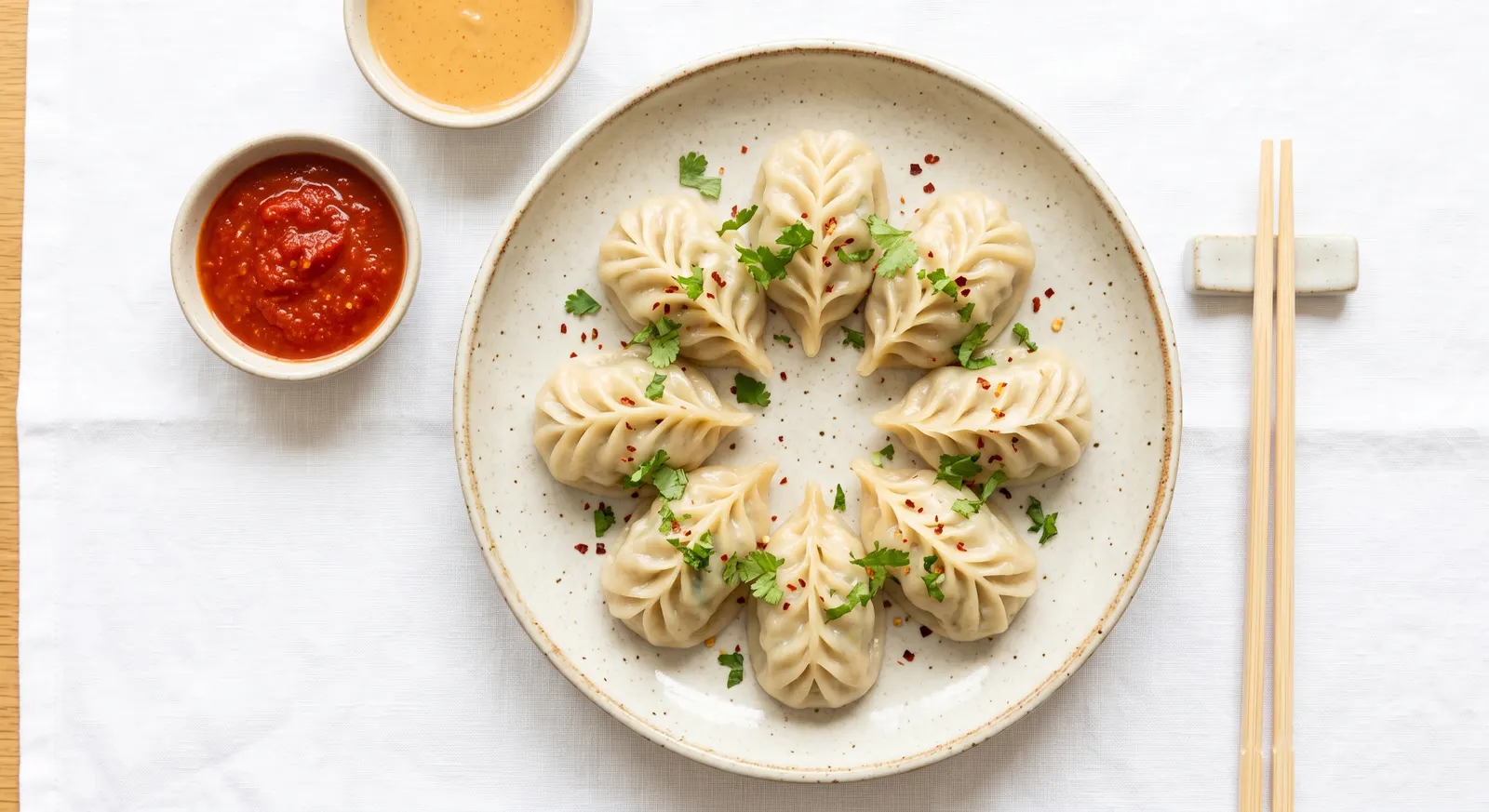
The vegetarian momo, where the filling has to be seasoned harder to carry itself.
- Prep
- 50 min
- Cook
- 10 min
- Total
- 60 min
- Serves
- 4
- Heat
- Mild
What Veg Momo is
Veg momo swap the minced meat for finely chopped cabbage, carrot and onion, bound with a little oil and sharpened with ginger and garlic. Because vegetables release water rather than fat, the filling is salted and drained first, and the seasoning is pushed further than in the chicken version.
Where it comes from
Vegetarian momo are not an afterthought in Nepal — a large share of households eat meat only occasionally, and festival cooking is often meat-free by design. Cabbage and carrot are the standard filling because both hold their texture through steaming, unlike softer vegetables that collapse into the wrapper. Kathmandu's version is deliberately plain, which is why the seasoning and the chutney matter so much.
How to eat it
The same hand method as chicken momo, but there is less juice to save, so you can dip more freely. Veg momo take the green coriander chutney better than the sesame achar — the sesame tends to overwhelm a vegetable filling. Ask for the chutney on the side if it arrives already poured over, because the momo soften under it within a couple of minutes. With no fat in the filling they cool faster than meat momo, and the wrapper goes from tender to chewy in about five minutes, so eat them straight from the steamer rather than waiting for the whole table to be served.
Goes well with
- Coriander-chilli chutney
- Masala chai
- A bowl of dal to make it a meal
How it varies
The vegetarian momo is where regional differences show most clearly, because every kitchen uses what is cheap and in season. Kathmandu versions are cabbage-led, and some add green beans or spring onion when cabbage is expensive. Some Nepali households add a spoonful of ground roasted sesame or peanuts to the filling, which stands in for the fat the meat would have brought. Indian versions lean on paneer, soya granules or sweetcorn, and are usually listed as separate items rather than as the plain veg option. Some Tibetan Buddhist kitchens in Nepal and Bhutan leave out onion and garlic on fasting days and push the ginger instead, which changes the filling noticeably. The wrapper can be coloured with spinach or beetroot juice, a restaurant habit rather than a home one. The chutney varies as much as the dumpling: sesame achar, green coriander chutney, or a thin tomato one, and in Darjeeling a fiery dried-chilli paste that is used sparingly.
After the meal
Veg momo keep a little better than meat ones but not by much. There is no fat to set, so the filling stays loose and the wrapper is what suffers: in the fridge it goes from tender to firm within a few hours, and by the next day the pleats are hard. Re-steam for three minutes to bring it back; a microwave makes the cabbage smell strongly and leaves the wrapper leathery at the edges. The green chutney is the opposite problem — it is best fresh and turns dull and dark within a day, because the coriander leaf oxidises once it is blended. Push it down under a film of oil and use it within two days. Uncooked veg momo freeze as the chicken ones do, for about a month before the cabbage starts to smell of the freezer; steam them from frozen for ten to twelve minutes. Cold cooked momo can instead be pan-fried in a little oil with the lid on for a minute, which crisps the base and softens the top, the way street stalls revive a previous batch.
Ingredients
- 300 g Plain flour
- 400 g Cabbage, very finely shredded
- 1 large Carrot, grated
- 1 medium Onion, finely chopped
- 4 cloves Garlic, grated
- 1 tbsp Ginger, grated
- 1 small bunch Coriander leaf, chopped
- 3 tbsp Oil — Vegetables bring no fat of their own; this supplies it.
- 1.5 tsp, plus extra for drawing water from the cabbage Salt
- 1 bunch, 2 chillies Coriander and green chilli, for the chutney
How to cook it
1Salt the cabbage and squeeze it dry
Toss the shredded cabbage with a teaspoon of salt and leave for twenty minutes, then squeeze out the water with your hands. Skipping this is the single most common mistake: unsalted cabbage floods the wrapper during steaming and the momo collapse. You want cabbage that squeaks slightly between the fingers; if it still drips, squeeze it again in a clean cloth.
2Make and rest the dough
Mix the flour with about 160 ml water and a pinch of salt, knead until smooth, and rest covered for thirty minutes.
3Season the filling generously
Combine the drained cabbage, carrot, onion, garlic, ginger, coriander, oil and salt. Taste it raw — it should taste slightly too salty and too gingery at this stage, because steaming mutes both.
4Roll, fill and pleat
Roll 8 cm circles with a thicker centre, add a heaped teaspoon of filling, pleat around the edge and pinch closed.
5Steam for eight minutes
Veg momo need slightly less time than meat — eight minutes over rolling water on an oiled tray. Over-steaming turns the cabbage grey and soft.
6Blend the green chutney
Blitz coriander, green chilli, a little garlic, salt and a splash of water into a loose green chutney. Taste it before it goes on the table: the heat of a raw green chilli builds over the next half hour, so a chutney that tastes right straight from the blender will be hotter by the time the momo are ready.
Calories and nutrition
Per serving — 8 pieces with chutney (about 270 g)
| Calories | 390 kcal |
|---|---|
| Protein | 10 g |
| Carbohydrate | 60 g |
| Fat | 12 g |
| Fibre | 6 g |
| Sodium | 870 mg |
Approximate values for a typical restaurant portion, calculated from standard ingredient tables. Actual figures vary with the kitchen, the oil used and the portion served. Not intended as medical or dietary advice.