Butter Chicken
Tandoori chicken finished in a tomato and cream gravy — mild, and deliberately so.
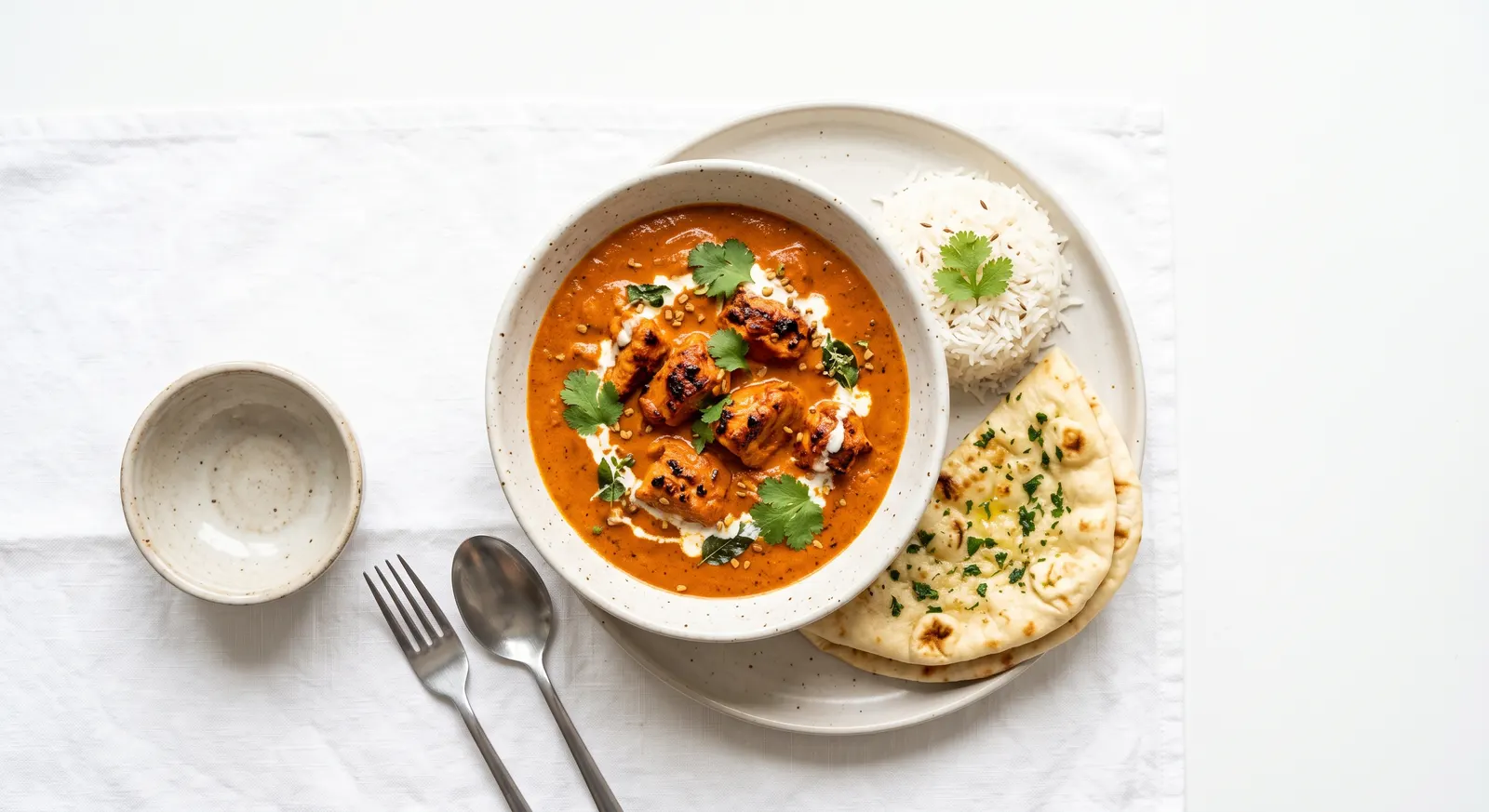
- Prep
- 25 min
- Cook
- 45 min
- Total
- 70 min
- Serves
- 4
- Heat
- Mild
What Butter Chicken is
Butter chicken is chicken cooked twice: marinated in yoghurt and spices and charred first, then simmered in a smooth tomato gravy enriched with butter and cream. The flavour is mild, slightly sweet and heavy on dairy, with the smoke from the first cooking still detectable underneath.
Where it comes from
The dish was invented in Delhi in the 1950s at Moti Mahal, reportedly to use leftover tandoori chicken by simmering it in a tomato and butter gravy rather than discarding it. That origin explains its structure: the two cooking stages are not a refinement, they are the whole recipe. It became the template for how much of the world imagines Indian food, which is worth knowing — it is a modern restaurant dish, not an ancient one. The word makhani means, plainly, with butter, and the same tomato, butter, cream and fenugreek finish is used for paneer makhani and dal makhani, so the family resemblance on a menu is not a coincidence.
How to eat it
Eat it with naan rather than rice if you want the traditional pairing — the bread is used to scoop, holding the gravy better than a spoon does. Tear a piece of naan, fold it, and use it to pick up a piece of chicken with sauce. If you are eating with rice, spoon the gravy over only the portion of rice you are about to eat, so the rest stays dry and separate. Whatever you eat it with, keep the gravy hot, because a butter sauce that has gone lukewarm coats the mouth instead of the bread. At the end of the meal a spoon is more use than bread for what is left in the bowl.
Goes well with
- Garlic naan
- Plain basmati rice
- A cucumber raita to cut the dairy richness
How it varies
Butter chicken is a restaurant dish with a narrow range and a very wide set of home imitations. The Delhi restaurant version, closest to the one above, is sweetish, orange and completely smooth, with cashew paste for body. Punjabi home versions often skip the cashew, use less cream, and leave the gravy a shade coarser and more tomato-forward. British curry-house versions tend to be sweeter and redder, sometimes thickened with cornflour rather than nuts, and served with far more sauce than chicken. Some kitchens thicken with melon seeds instead of cashews, which is cheaper and gives a similar body with less flavour. The chicken itself varies: thigh is standard because it survives the second cooking, while breast appears in kitchens that grill to order. Chicken tikka masala is the usual cousin on British menus: the same charred chicken, but in a spicier, onion-based and less sweet sauce, and a dish whose origin is disputed. In Japan the dish is usually served milder than in Delhi, with naan and a small side salad.
After the meal
The gravy is an emulsion of butterfat and cream in tomato, and it behaves like one. Cold, it sets with a pale layer of butter on top and the tomato below; stir that fat back in as it warms rather than pouring it off, because it carries most of the aroma. Reheat in a pan over low heat, stirring, until it steams and reads about 60 to 70°C on a thermometer; a microwave works in short bursts with a stir between each, since the edge of the bowl overheats before the centre. The chicken improves overnight, taking up gravy and staying moist, though reheated hard it tightens. Loosen it with a splash of water or milk if it has thickened too far, and crush fresh kasuri methi over the top, since the fenugreek aroma is the first thing to go. It keeps two days in the fridge and freezes for a month; add the cream after reheating, not before.
Ingredients
- 700 g Boneless chicken thigh
- 150 g Thick yoghurt — For the marinade; its sugars help the char.
- 2 tbsp Ginger-garlic paste
- 2 tsp Kashmiri chilli powder — Colour without much heat.
- 2 tsp Garam masala
- 700 g Tomatoes — Ripe; tinned works better than underripe fresh.
- 80 g Butter
- 120 ml Double cream
- 40 g Cashews — Blended in, they thicken the gravy without flour.
- 1 tbsp Kasuri methi (dried fenugreek leaf) — Crushed in at the end; the signature aroma.
- 1 tsp Sugar — Balances the tomato's acidity.
- to taste Salt
Spices in this dish
How to cook it
1Marinate the chicken
Mix the yoghurt, ginger-garlic paste, chilli powder, half the garam masala and salt, coat the chicken and refrigerate for at least four hours, ideally overnight. The acid in the yoghurt does the tenderising; rushing this stage is why home versions often come out tough.
2Char it hard and fast
Grill, broil or pan-sear the chicken at high heat until the edges blacken in places. It does not need to cook through — it will finish in the gravy. The black edges are the flavour the gravy is built around, so do not be timid here.
3Cook down the tomatoes
Simmer the tomatoes with the cashews and a little water for twenty minutes until soft and broken down.
4Blend until genuinely smooth
Blend the tomato and cashew mixture, then pass it through a sieve. Butter chicken is defined by a gravy with no texture at all; the sieve is what separates it from an ordinary tomato curry. Push it through with the back of a ladle and scrape the underside as you go; what stays behind is tomato skin and cashew grit, and discarding it is what gives the gravy its flat, glossy surface.
5Build the gravy
Melt the butter, add the strained purée, the remaining garam masala, sugar and salt, and simmer for ten minutes until it thickens and the colour deepens to orange.
6Finish with cream and fenugreek
Return the charred chicken, pour in the cream and simmer gently for five minutes. Crush the kasuri methi between your palms over the pan just before serving — added earlier, its aroma cooks off. Keep the pan below a simmer once the cream is in: a hard boil makes the cream grain and the sauce loses its shine, even though it tastes the same.
Calories and nutrition
Per serving — 1 portion with rice (about 400 g)
| Calories | 720 kcal |
|---|---|
| Protein | 38 g |
| Carbohydrate | 45 g |
| Fat | 42 g |
| Fibre | 4 g |
| Sodium | 1120 mg |
Approximate values for a typical restaurant portion, calculated from standard ingredient tables. Actual figures vary with the kitchen, the oil used and the portion served. Not intended as medical or dietary advice.