Lamb Curry
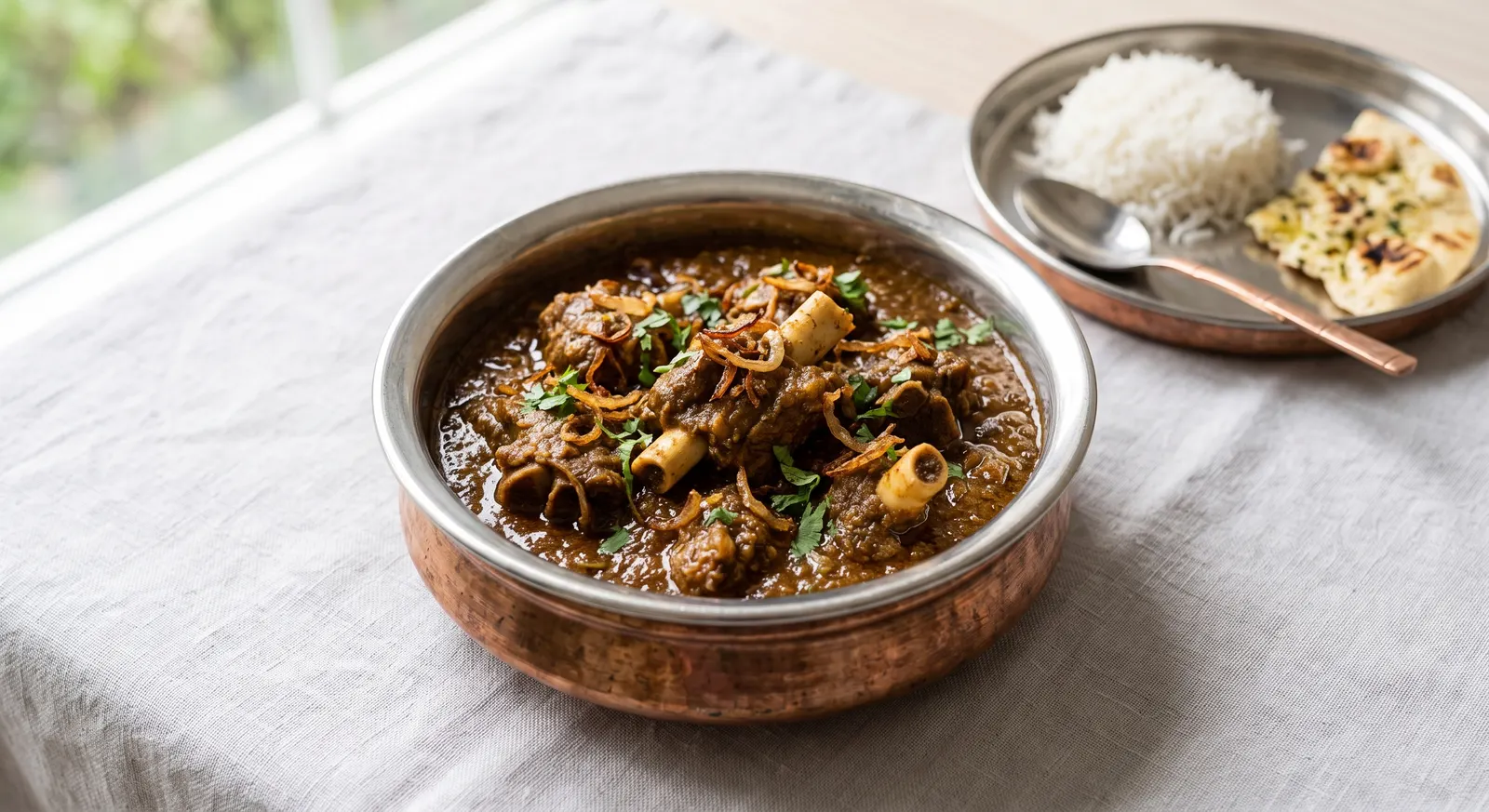
Bone-in lamb cooked slowly until the sauce thickens around it.
- Prep
- 20 min
- Cook
- 130 min
- Total
- 150 min
- Serves
- 5
- Heat
- Medium
What Lamb Curry is
A dark, slow-cooked curry built on browned onions, ginger, garlic and whole spices, with bone-in lamb simmered until it gives way. The gravy is thicker and less oily than a chicken curry because it reduces for far longer, drawing body from the bones rather than from cream.
Where it comes from
Slow-cooked mutton curries run through the whole subcontinent under many names, and in Nepali and North Indian kitchens the method is broadly shared: brown the onion properly, bloom whole spices in fat, then give the meat the time it needs. Goat is the traditional meat across much of the region; lamb is the common substitute where goat is harder to buy, including in Japan. What changes from kitchen to kitchen is less the method than the ingredients to hand — yoghurt or tomato for the sourness, mustard oil or ghee for the fat — and the bone-in cut is close to universal.
How to eat it
Bone-in curry is eaten slowly and with your hands where that is the custom — the bones are part of it, and the marrow is considered the best portion. Use rice rather than bread if the gravy is thin, bread if it has reduced thick. Take one piece at a time onto your plate rather than serving yourself the whole bowl at once; the dish is meant to be shared across a table. Put the bones back on the serving plate rather than on your own, and spoon a little gravy over each piece of rice as you go, so nothing sits and cools. If the gravy has set in the bowl, ask for it back on the heat for a minute rather than thinning it with water.
Goes well with
- Plain basmati rice
- Naan or roti
- Sliced raw onion with lemon
How it varies
Slow-cooked lamb or goat changes character from one region to the next, mostly in what supplies the sourness and how dark the base is cooked. The Punjabi and Delhi form is the one here: thick and dark. Kashmiri yakhni takes the opposite route: no browned onion or tomato, the meat cooked in yoghurt with fennel and dried ginger, and a pale, thin gravy. Bengali mutton curry adds potato, uses mustard oil, and is hotter and thinner, eaten with rice. Nepali mutton curry tends to be lighter on the cream and heavier on timur and garlic, with more liquid to pour over rice. In Pakistan the same meat cooked fast in a wok is called karahi; cooked slow, it is simply mutton curry. The British curry-house lamb curry is a different construction altogether, built on a pre-made base gravy and thickened at the end. Japanese curry rice shares only the word: it is thickened with a roux and carries no yoghurt or whole spices.
After the meal
Bone-in lamb curry is better on the second day. Collagen from the bones and connective tissue has already turned to gelatine, which is what makes the cooled gravy set, and the fat, having taken up the whole spices, redistributes through the meat and sauce. Cold, the fat sets into an opaque lid on the surface — leave it, or lift some off if the gravy was rich, but do not discard all of it. Reheat gently to a bare simmer for five to eight minutes, stirring, and add a little hot water first if the gravy has set solid; cooked lamb should be in the fridge within two hours of leaving the stove, and reheated until steaming throughout. If you added potato, expect it to crumble on the second day. It keeps three days in the fridge and freezes well for two months, bones and all. Crush a pinch of fresh garam masala over it when it comes back to the table.
Ingredients
- 1 kg Bone-in lamb shoulder or leg, cut into chunks — Keep it bone-in; boneless chunks cook in about an hour and give a thinner gravy.
- 3 large Onions, thinly sliced
- 3 tbsp Ginger-garlic paste
- 3 medium Tomatoes, chopped
- 150 g Yoghurt
- 1 stick, 4 pods, 4 cloves, 2 leaves Cinnamon stick, green cardamom, cloves, bay leaf
- 1 tsp Cumin seeds
- 2 tbsp Coriander powder
- 1 tsp Turmeric
- 1 to 2 tsp Chilli powder
- 1 tsp Garam masala — At the end, not the start.
- 4 tbsp Mustard oil or ghee
Spices in this dish
How to cook it
1Brown the onions properly
Fry the sliced onions in the oil over medium heat for fifteen to twenty minutes until genuinely deep brown, not merely golden. This is the longest and most important step; They should end up the colour of dark toffee and shrunk to about a third of their raw volume; onions that are still pale when the meat goes in leave the gravy thin and sweet.
2Bloom the whole spices
Push the onions aside, add the cinnamon, cardamom, cloves, bay and cumin to the hot fat and let them sizzle for thirty seconds until fragrant.
3Seal the lamb
Raise the heat, add the lamb and ginger-garlic paste, and stir until the meat is browned on all sides and no raw garlic smell remains.
4Add tomato, yoghurt and ground spices
Stir in the tomatoes, coriander, turmeric and chilli, then the yoghurt a spoonful at a time off the heat so it does not split. Cook until the fat separates and pools at the edges — that visual cue means the masala is done.
5Simmer low and long
Add just enough hot water to half-cover the meat, cover, and simmer on the lowest heat for ninety minutes to two hours. Lamb on the bone will not shortcut; at sixty minutes it is usually still tough. Test it by pulling at a bone: if the meat still grips, give it another twenty minutes. The surface should tremble rather than bubble hard, since a rolling boil tightens the meat and clouds the fat.
6Reduce and finish
Uncover, raise the heat and reduce until the gravy clings to the meat. Stir in the garam masala, rest for ten minutes off the heat, and serve.
Calories and nutrition
Per serving — 1 portion with rice (about 420 g)
| Calories | 690 kcal |
|---|---|
| Protein | 45 g |
| Carbohydrate | 38 g |
| Fat | 38 g |
| Fibre | 5 g |
| Sodium | 1050 mg |
Approximate values for a typical restaurant portion, calculated from standard ingredient tables. Actual figures vary with the kitchen, the oil used and the portion served. Not intended as medical or dietary advice.