Dal Bhat
Nepal's everyday meal — lentils, rice and greens, eaten twice a day.
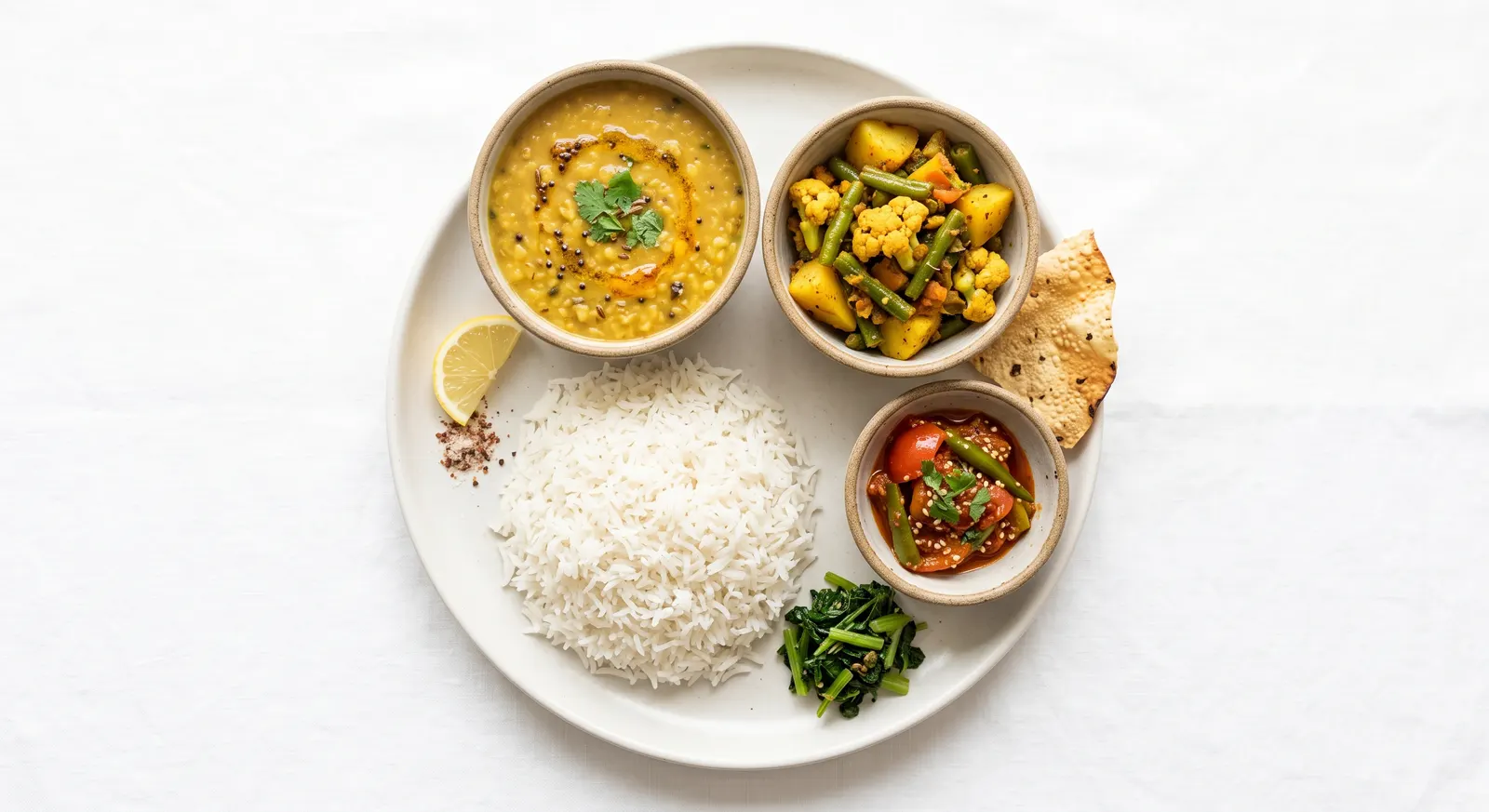
- Prep
- 20 min
- Cook
- 45 min
- Total
- 65 min
- Serves
- 4
- Heat
- Mild
What Dal Bhat is
Dal bhat is rice with lentil soup, a vegetable, usually a green such as saag, and pickle. It is not a special-occasion dish; across Nepal it is what most people eat for both main meals. The dal is thinner than Indian versions and is poured over the rice rather than eaten from the bowl.
Where it comes from
The phrase means simply lentils and rice. It is the staple of Nepal from the Terai to the hills, with the accompanying vegetables changing by altitude and season — saag in the hills, more gourd and bean in the lowlands. The trekking phrase 'dal bhat power, 24 hour' is a joke, but the nutritional logic is real: lentils and rice together supply a complete protein, which is why the combination persists across so many cuisines.
How to eat it
Pour some of the dal over part of the rice and mix with your right hand, then eat that before pouring more — the point is that the rice never sits sodden. Take the saag and pickle in small amounts alongside rather than mixing everything at once. Refills of dal, rice and vegetable are traditionally unlimited and offered without asking, so take a modest first serving. Eating with the hand is normal and not considered informal.
Goes well with
- Gundruk ko achar
- A piece of fried fish or chicken curry
- Plain yoghurt
Ingredients
- 300 g Rice — Ordinary long grain; basmati is not traditional here.
- 200 g Masoor or mixed lentils
- 1 tsp Turmeric
- 1 tsp Cumin seeds
- 2 Dried red chilli
- 4 cloves Garlic, sliced
- 1 tsp Jimbu or dried onion herb — The distinctly Nepali aromatic; optional but characteristic.
- 300 g Mustard greens or spinach
- 3 tbsp Ghee or mustard oil
- to taste Salt
- to serve Pickle and lemon
Spices in this dish
How to cook it
1Simmer the lentils thin
Cook the lentils with turmeric, salt and plenty of water until completely soft and soupy. Nepali dal is pourable, not thick — if a spoon stands up in it, add water.
2Temper with jimbu and chilli
Heat ghee, add cumin, dried chilli, sliced garlic and jimbu until they crackle and the garlic turns pale gold, then pour the whole thing into the dal and cover immediately to trap the aroma.
3Cook the saag hot and fast
Fry garlic and dried chilli in mustard oil, add the chopped greens and cook on high heat for three or four minutes. Mustard greens are meant to keep a slight bitterness; long cooking removes it and the dish loses its balance.
4Steam the rice plainly
Plain steamed rice, no aromatics. It is the neutral base everything else is poured over, and seasoning it fights the dal.
5Serve on a divided tray
Rice in the largest section, dal in its own bowl, saag and any curry in the smaller compartments, pickle at the edge.
Calories and nutrition
Per serving — 1 tray (about 600 g)
| Calories | 720 kcal |
|---|---|
| Protein | 24 g |
| Carbohydrate | 112 g |
| Fat | 19 g |
| Fibre | 13 g |
| Sodium | 1280 mg |
Approximate values for a typical restaurant portion, calculated from standard ingredient tables. Actual figures vary with the kitchen, the oil used and the portion served. Not intended as medical or dietary advice.