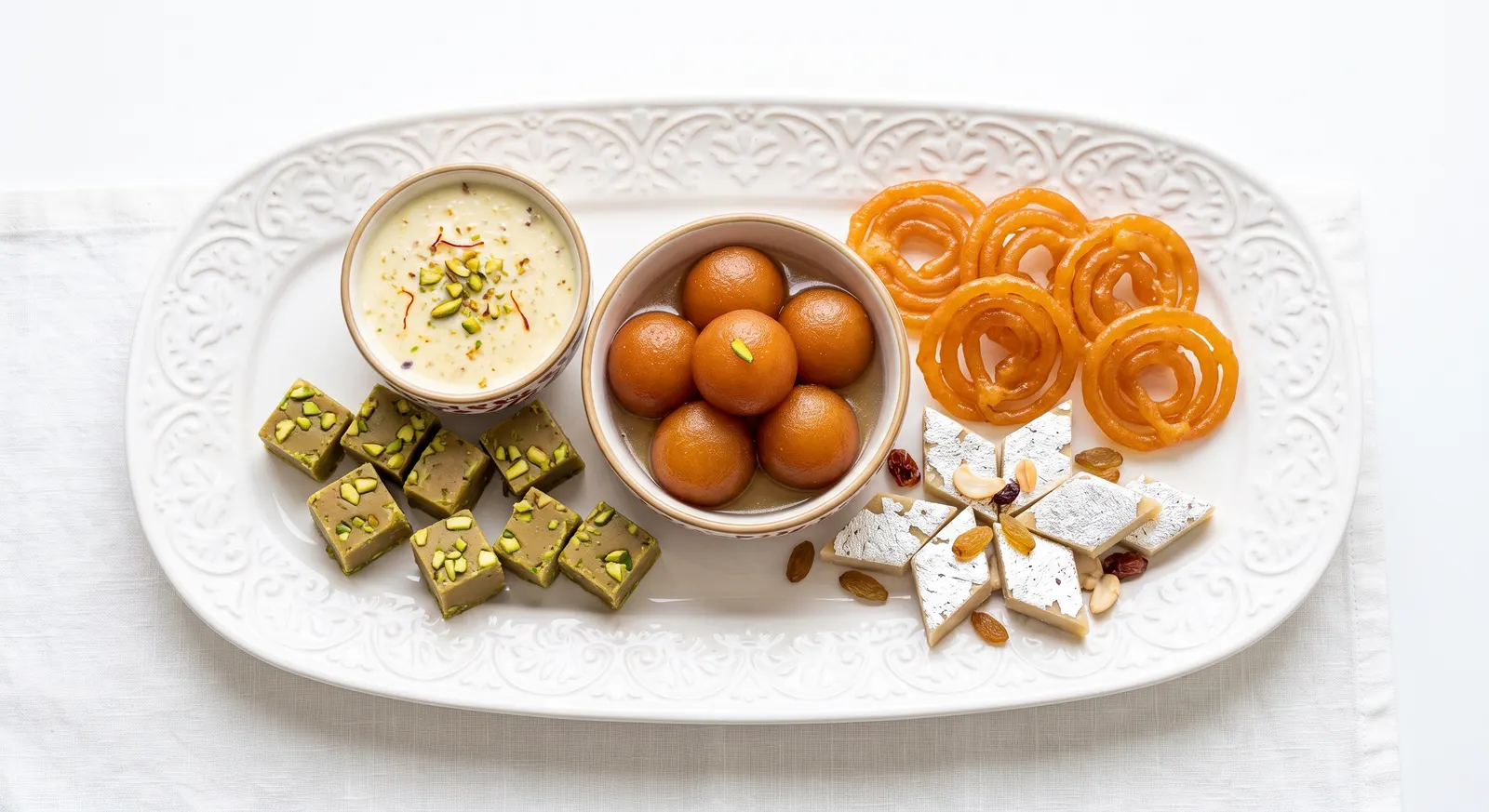
Gulab Jamun
Milk-solid dumplings fried gently and left to drink warm cardamom syrup.
- Prep
- 30 min
- Cook
- 25 min
- Total
- 55 min
- Serves
- 6
- Heat
- Not spicy
What Gulab Jamun is
Gulab jamun are small dumplings made from khoya — milk cooked down to solids — fried until deep brown and then soaked in warm sugar syrup scented with cardamom and rose. They should be saturated all the way through and give no resistance at all when pressed with a spoon.
Where it comes from
The name joins gulab, rose water, with jamun, a dark Indian berry the dumplings resemble. The dish descends from Persian luqmat al-qadi and arrived with Mughal cooking, and it is now the default celebration sweet across India, Pakistan, Nepal and Bangladesh — served at weddings, festivals and almost every restaurant that offers dessert at all.
How to eat it
Eat them warm, with a spoon, taking a little of the syrup with each piece — the syrup is part of the dish, not packing. Two is a normal portion and they are very sweet, so they are usually served at the end of a heavy meal rather than alongside anything. In many homes they are offered before good news or after a fast, and refusing one outright is taken as slightly unfriendly.
Goes well with
- Vanilla ice cream, for a warm-cold contrast
- Masala chai
- Strong black coffee
Ingredients
- 200 g Khoya (milk solids), grated — Full-fat milk powder works as a substitute.
- 40 g Plain flour
- 1/4 tsp Baking soda — A pinch too much and they disintegrate in the syrup.
- 2 to 3 tbsp, to bind Milk
- 400 g Sugar
- 400 ml Water
- 5 pods Green cardamom, crushed
- 1 tsp Rose water
- a few strands Saffron
- for the pan Ghee or oil, for frying
- to finish Pistachios, slivered
Spices in this dish
How to cook it
1Make a one-string syrup
Boil the sugar and water with the cardamom and saffron for six or seven minutes until slightly sticky between finger and thumb, then add rose water off the heat. A syrup boiled further sets to candy and will not soak in.
2Bring the dough together without kneading
Mix the khoya, flour and baking soda, then add milk a spoonful at a time until it just comes together. Knead it and the dumplings turn rubbery — handle it as little as possible.
3Roll crack-free balls
Roll smooth balls about 2 cm across between your palms. Any visible crack will open in the oil and the dumpling will fall apart; smooth them until the surface is unbroken.
4Fry at a low temperature
Fry at around 120°C, moving them constantly, for eight to ten minutes until deep golden brown. Hot oil colours the outside in seconds while the centre stays raw, and a raw centre never absorbs syrup.
5Transfer hot into warm syrup
Both must be warm. Hot dumplings into cold syrup, or cold into hot, and they refuse to absorb — the temperature match is the whole trick.
6Soak for at least two hours
Leave them to swell to nearly double. Cut one open to check: the syrup should have reached the centre with no dry core.
Calories and nutrition
Per serving — 2 pieces with syrup (about 120 g)
| Calories | 390 kcal |
|---|---|
| Protein | 6 g |
| Carbohydrate | 58 g |
| Fat | 15 g |
| Fibre | 0 g |
| Sodium | 85 mg |
Approximate values for a typical restaurant portion, calculated from standard ingredient tables. Actual figures vary with the kitchen, the oil used and the portion served. Not intended as medical or dietary advice.