Vegetable Samosa
Spiced potato and pea in a pastry triangle, fried slowly so the crust stays blistered.
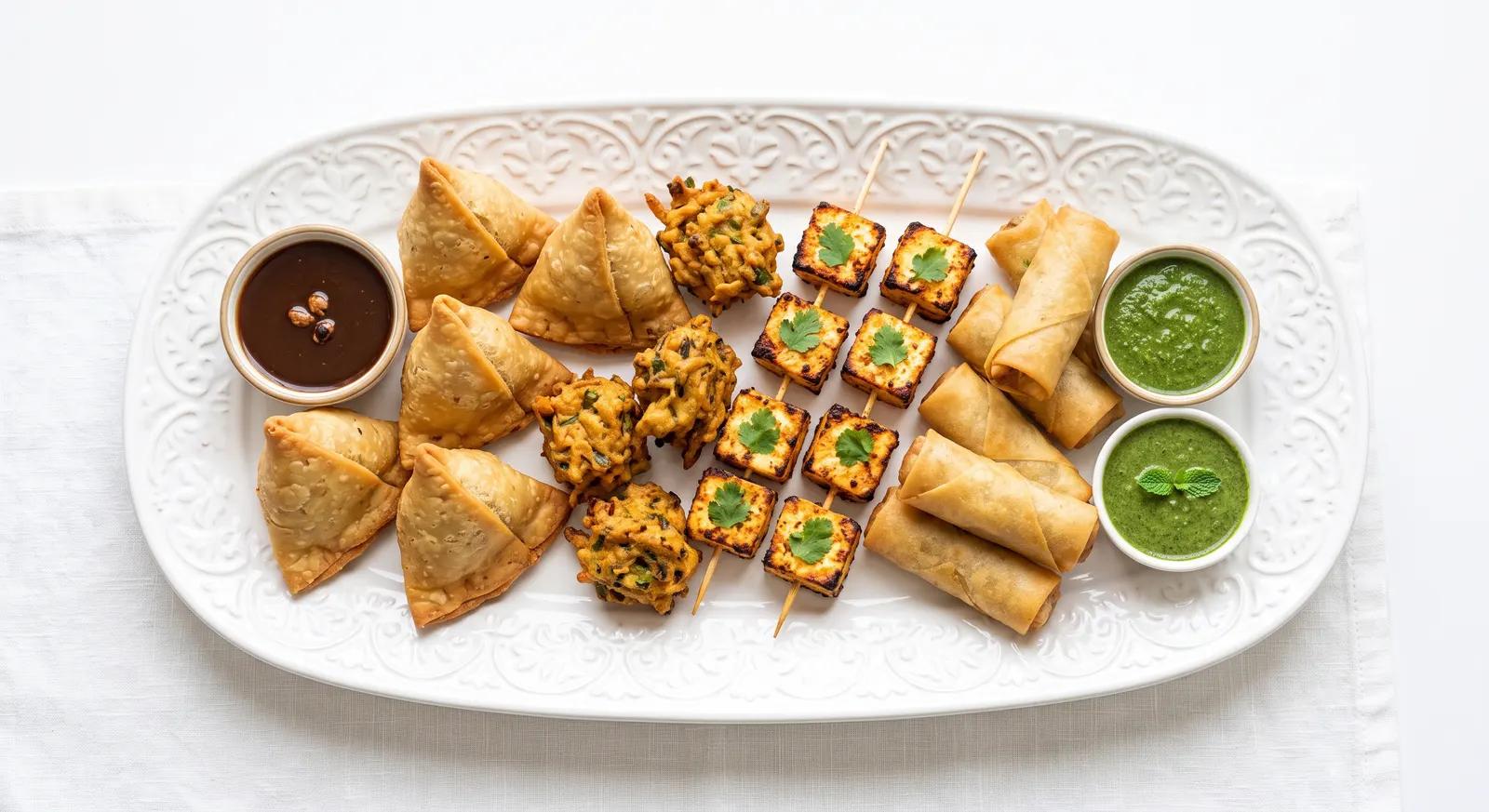
- Prep
- 45 min
- Cook
- 25 min
- Total
- 70 min
- Serves
- 5
- Heat
- Mild
What Vegetable Samosa is
A samosa is a triangular fried pastry filled with spiced potato and pea. The filling is cooked and cooled before it goes in, so the frying is only about the pastry. The texture everyone is chasing — a hard, bubbled, flaky shell rather than a soft one — comes from a stiff dough and a low frying temperature.
Where it comes from
The samosa arrived in South Asia from Central Asia and Persia, where similar filled pastries are recorded a thousand years ago, and was originally filled with minced meat. The potato version is comparatively modern — potatoes only reached India in the seventeenth century — and is now overwhelmingly the default.
How to eat it
Break a samosa open with your fingers rather than biting straight in — the filling holds steam and will burn your mouth. Spoon tamarind chutney into the opened half; dipping the point only gets sauce on the pastry, not the filling. Samosas are a tea-time snack more than a restaurant starter, and are traditionally eaten standing up with a cup of chai.
Goes well with
- Tamarind chutney
- Mint and coriander chutney
- Masala chai
Ingredients
- 250 g Plain flour
- 4 tbsp Ghee or oil, for the dough — Rubbed in; this is what makes it flaky.
- 1 tsp Carom seeds (ajwain)
- 500 g Potatoes, boiled and roughly crushed — Crushed, not mashed — texture matters.
- 100 g Green peas
- 1 tsp Cumin seeds
- 1 tbsp, 2 Ginger and green chilli, chopped
- 1 tsp each Coriander powder, garam masala, amchur
- 1 small bunch Coriander leaf
- for the pan Oil, for deep frying
Spices in this dish
How to cook it
1Make a stiff dough with plenty of fat
Rub the ghee into the flour with the carom seeds until it clumps when squeezed, then add only enough cold water to bring it together. The dough should be firm and slightly difficult — a soft dough gives a soft, bready samosa.
2Rest the dough for thirty minutes
Cover and rest at room temperature. Resting lets the flour hydrate fully and relaxes what little gluten has formed, so the dough rolls out thin and stays there instead of shrinking back as you shape the cones.
3Cook and cool the filling
Temper cumin in oil, add ginger and chilli, then the crushed potato, peas, ground spices, amchur and coriander. Cook for five minutes and then cool completely. Warm filling steams inside the pastry and bursts the seam.
4Shape a cone and fill it
Roll each piece into an oval, cut in half, and form a cone by wetting the straight edge and overlapping it. Fill two-thirds full, then seal the top edge firmly. Overfilling is the usual reason samosas split in the oil.
5Fry low and slow
Fry at around 130°C for twelve to fifteen minutes, then raise the heat at the end to colour them. Hot oil from the start browns the outside while the pastry inside stays raw, and gives a smooth shell instead of a blistered one.
6Drain upright
Stand them on a rack rather than laying them on paper, so the base does not steam itself soft.
Calories and nutrition
Per serving — 2 samosas with chutney (about 200 g)
| Calories | 470 kcal |
|---|---|
| Protein | 9 g |
| Carbohydrate | 56 g |
| Fat | 24 g |
| Fibre | 5 g |
| Sodium | 640 mg |
Approximate values for a typical restaurant portion, calculated from standard ingredient tables. Actual figures vary with the kitchen, the oil used and the portion served. Not intended as medical or dietary advice.