Atta
Also known as: chakki atta, whole wheat flour
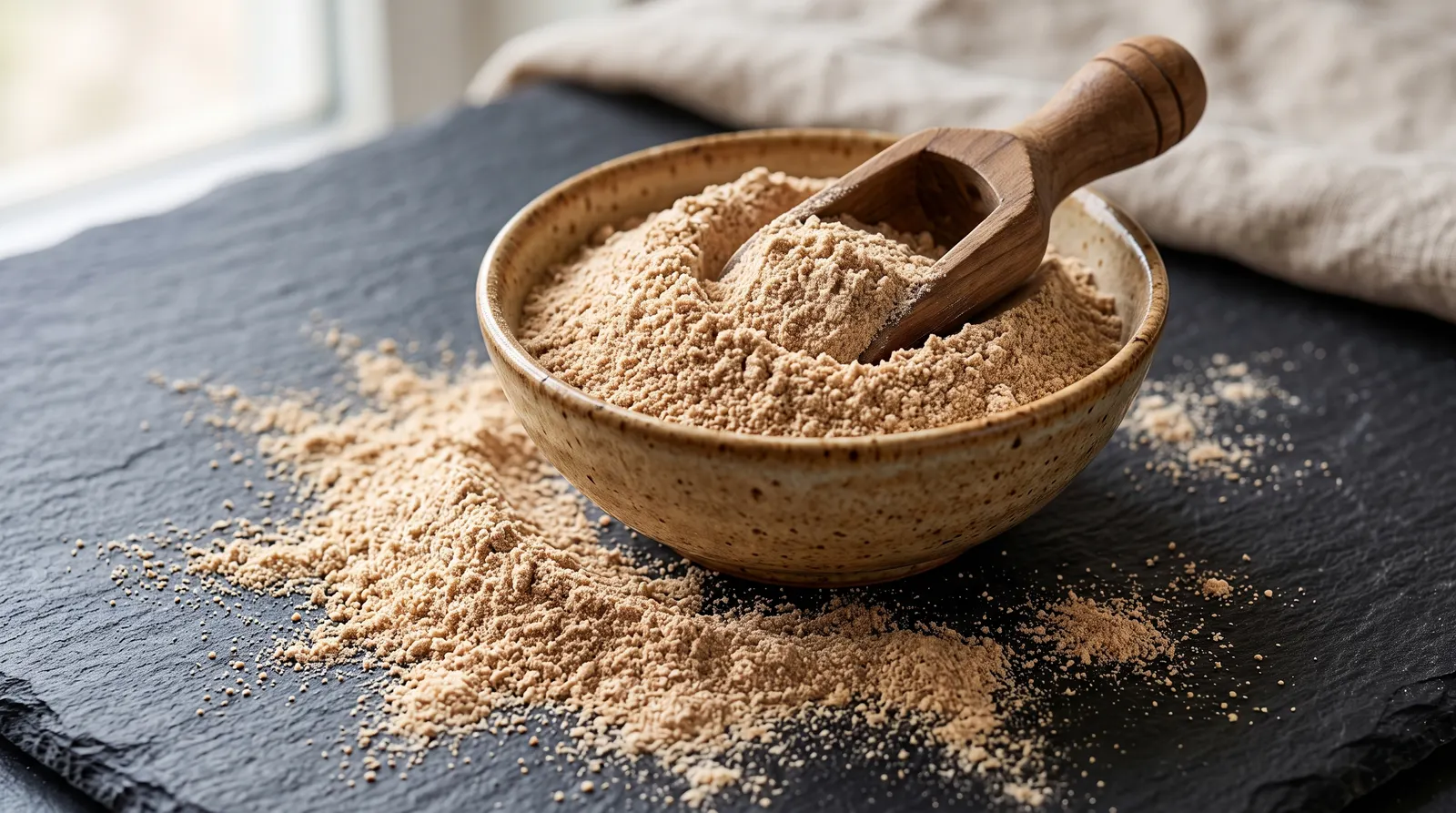
What Atta is
Whole-wheat flour milled the Indian way — between stone discs that grind the bran fine — and the daily flour behind roti and chapati. Half the shelf of an Indian grocery in Japan exists to feed this one habit, at prices Japanese flour does not approach.
Chakki atta: whole wheat run through a stone mill so the bran stays finely distributed rather than sifting out. It is fully extracted — nothing removed — which makes it darker, denser and more perishable than any white flour. Its protein sits in the middle of the Japanese range, which matters when substituting: strong bread flour over-develops into leathery chapati, weak cake flour tears, and medium flour is closest — though being white-milled it still lacks the bran that makes roti taste like roti. Chakki names the mill, not a brand: a slow stone mill keeps the flour cool, while a fast steel mill heats it and leaves a coarser, greyer result. Fresh atta is slightly damp and clumps when squeezed in the hand, and that moisture is part of why it makes a pliable dough — and part of why a bag kept warm goes sour.
Taste and texture
Faintly sweet and nutty from the germ, speckled brown, with a distinctive wet-dough smell. Kneaded soft and rested, it rolls thin and puffs on a hot pan; the finished roti is pliable, with char-spotted surfaces and a clean wheat flavour. Resting develops what little gluten there is, and that is the difference between a roti that rolls thin and one that springs back.
Forms to buy
- Standard chakki atta — The 5 kg bag most households buy, typically ¥400–¥700 in Japan.
- Multigrain blends — Wheat mixed with other grains; sold beside the standard bags for variety.
How to cook it
Knead atta with warm water and a little salt and oil to a soft, pliable dough — softer than looks right, since it tightens as it rests — and rest it 20–30 minutes. Roll golf-ball portions thin, cook on a hot pan until spots darken, then finish seconds over an open flame or pressed with a cloth until it puffs; brush with ghee. Naan is not an atta bread: it uses white flour and leavening, which is why it tastes different. Atta also makes paratha and poori; poori dough is kneaded stiffer than roti dough, with a spoon of oil, so that it holds its shape in hot oil. A rope of atta dough pressed around a pot's rim under the lid seals in steam for dum cooking. The dough wants a full five minutes of kneading, until it is smooth and barely tacky, and the pan has to be properly hot before the first roti goes on. Stack finished rotis in a cloth-lined box rather than on a plate, or they go leathery as they cool.
Buying note
It is the cheapest staple in the shop. Smell it through the bag where you can: fresh atta is sweet and grainy, never musty. Stock turns over quickly at most grocers, which matters more than brand. A 5 kg bag is the usual size, but a household of two will take months to finish it; the 1 kg bags cost more per gram and are the better buy when the flour is going to sit. Through the plastic, the flour should not have settled into a hard block at one end.
Storing it
Atta is the most perishable thing in this section. Whole-wheat flour carries the germ and its oil, and that oil goes rancid within weeks of the bag being opened in warm weather. Keep it in a sealed jar or a heavy bag in the fridge from late spring through autumn, and in a cool dark cupboard in winter; a cupboard beside the stove is the worst place in the kitchen. Expect two to three months at room temperature and six months refrigerated. The first sign of trouble is smell: old atta smells sour, musty or of old oil, and a roti made from it tastes flat and faintly bitter. Weevils are the classic failure: whole-wheat flour attracts them faster than white, and they show as small tunnels through the flour and a fine dust at the bottom of the bag. Freezing is effective for a large bag: divide it into week-sized portions, freeze them, and take one out as needed. Let frozen atta come to room temperature before kneading, or the dough will be cold and slow to come together.
What goes wrong
- The rotis are stiff and tear at the edges when rolled. — The dough was too stiff or was not rested. Rest it under a damp cloth for at least twenty minutes; dough tightens as it stands, which is why one that seemed perfect rolls badly an hour later.
- The roti will not puff and stays flat and dry on the pan. — The pan was not hot enough, or the roti was pressed before it had bubbled. Heat the pan until a drop of water skitters across it, roll the roti thin and even, and press it gently with a cloth only once bubbles have formed.
- The flour smells sour and the rotis taste of the cupboard. — The bag was old or had been kept warm. Buy atta in sizes you will finish in two or three months and smell it before use. Rancid flour cannot be rescued, and ghee will not disguise it.