Tadka: The Art of Tempering
Also known as: baghar, chaunk, tempering spices
What this guide solves
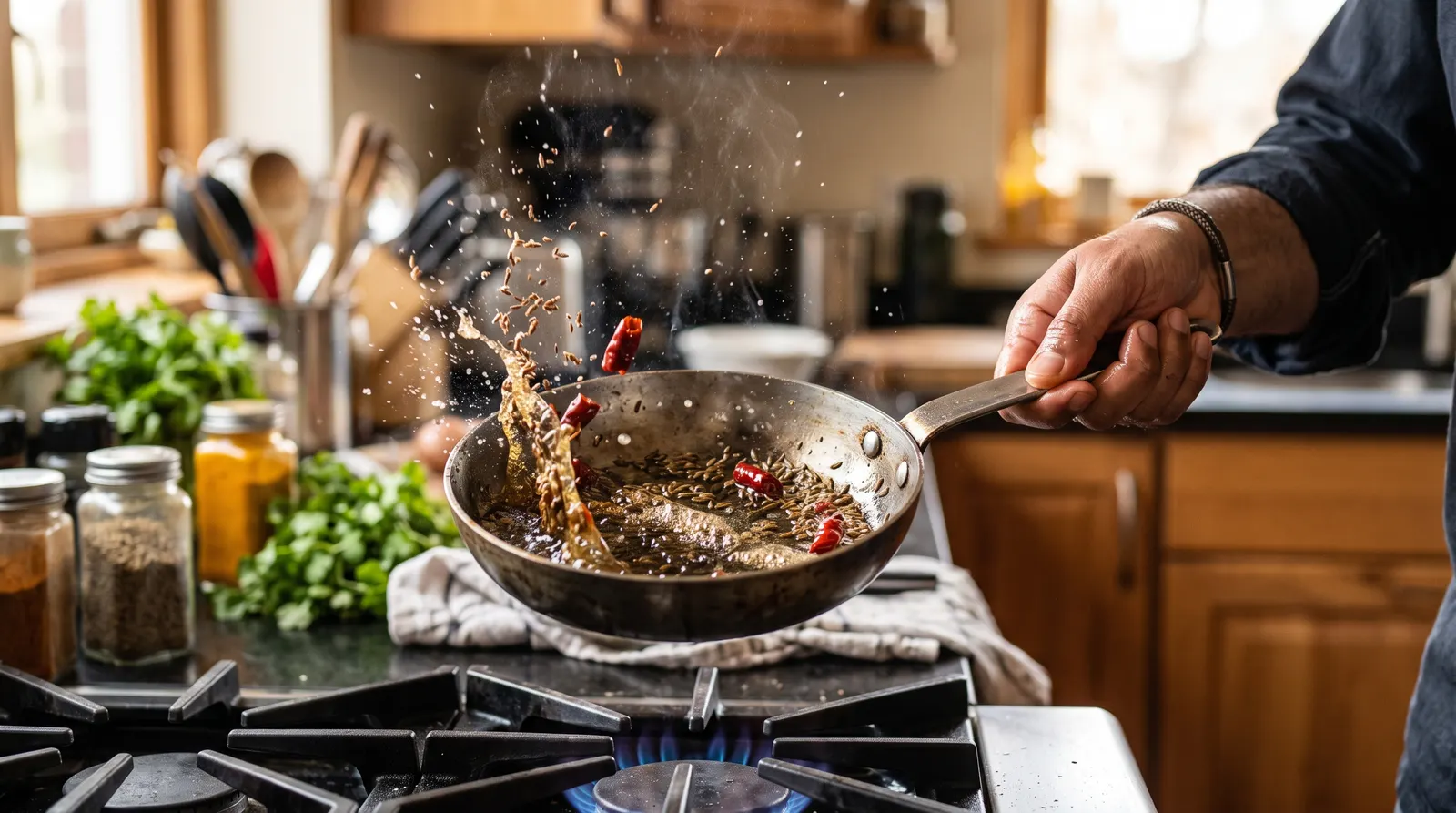
The thirty-second technique that finishes most Indian and Nepali dishes: whole spices bloomed in hot fat until they crackle, then poured over the finished dal or curry. What order to add them, how hot the fat should be, and why the pan goes to the dish and not the other way round.
Where it goes wrong
Spices dumped into the pot taste raw and dusty, because their aromatics need hot fat to unlock — water cannot do it. The reverse mistake is just as common: the tadka stirred into the dal and boiled, which kills the very aroma it was made to add. Both come from treating tempering as an ingredient step rather than a last-second finishing move. There is a temperature window and it is narrow, and the pan, the amount of fat and the order the spices go in all move it around.
The method
- 1. Choose the fat — Ghee carries aroma furthest and is the default for dals; a neutral oil stands up better to mustard seed and the sharper South Indian temperings, which want a fat that can take more heat without smoking. Mustard oil, if you use it, needs heating almost to its smoking point first to mellow the raw bite, then a moment off the heat before anything goes in.
- 2. Heat to medium-high, test with one cumin seed — Drop in a single seed: if it sizzles and swims at once, the fat is ready. If it sits, wait; if it blackens instantly, pull the pan off the heat and start cooler. On an induction hob the pan matters more than the setting — a thin pan spikes and drops, a heavy one holds its heat.
- 3. Add spices in order of burn speed — Hing first, for seconds only. Mustard seeds next until they stop popping, then cumin until it darkens one shade. Dried red chillies and curry leaves last — they only need to blister. Count in seconds: mustard takes 15 to 30 to finish popping, cumin 10 to 20 to darken. Powders go in only once the pan is off the heat.
- 4. Pour the sizzling fat over the finished dish — Take the pan to the dal, not the dal to the pan. The dal should be hot and the fat still sizzling when it lands; the sound is part of the point.
- 5. Cover for thirty seconds — Lid on, heat off. The trapped aroma soaks back into the dal instead of escaping the kitchen. Thirty seconds is enough — leave it longer and the steam softens the fried crispness of the curry leaves.
Pro tips
- Burnt tadka smells sharply bitter and has no rescue. Bin it, wipe the pan, start again; it costs one minute.
- North Indian cooking usually builds its spice into the fat at the start of the dish; South Indian cooking more often finishes with a fresh tadka on top. Same technique, opposite ends of the cooking.
- Double tadka: bloom half into the pot while it cooks, then pour a fresh one over the top at the table. The second is the one diners smell first.
- Curry leaves spit hard in hot fat — hold a lid over the pan like a shield as they go in.
- Curry leaves are the one ingredient here worth buying fresh: dried ones smell of hay and give the oil nothing. Frozen leaves keep most of their character.
- A small tadka pan of 12–15cm is more useful than a big one: the fat sits deep enough to cover the seeds, and the whole thing is hot in a minute.
Why it works
The aromatics in whole spices are oils held inside the seed. Heat alone will not get them out; heat with fat will, because those oils dissolve in fat and not in water. That is the whole mechanism of a tadka: hot fat soaks the spice, dissolves the aromatic compounds and then carries them, evenly, across the surface of the dish. There is a window. Below roughly 120°C the oils come out too slowly to matter; by about 180°C they are being destroyed about as fast as they are released, and the sugars and proteins on the outside of the seed begin to char — that is the bitter taste of a burnt tadka. The window is those ten or fifteen seconds of crackling before the seed darkens to black. The order follows from surface area. A whole seed has to be heated through before its oils move, so it tolerates a minute. A powder is all surface, so it scorches in five seconds and takes the fat with it. Hing, a resin, is in between: it needs only seconds, which is why it goes first and why the next ingredient must be ready in your hand. Pouring the fat over the dish rather than stirring it in is mechanical too. Fat floats, the aroma rises off it, and the nose gets the spice before the tongue does. Stir it in and the fat disperses through a thick liquid that gives the aroma up slowly.
If it went wrong
- The pan is smoking, the seeds go in, and four seconds later they are black and the kitchen smells of carbon. — Test one seed first. If it darkens in a second the fat is too hot: pull the pan off, count to ten, and start again on medium heat.
- The tadka is made with a teaspoon of oil, so the spices sit in a film of fat and scorch in patches. — Seeds need to swim. Use about a tablespoon of fat for two cups of dal.
- The tadka is made twenty minutes ahead and left in the pan, and is flat by the time the dal is ready. — Make it last, or keep it off the heat and covered. The aromatic compounds are volatile and leave the pan within minutes.