Dal Tadka
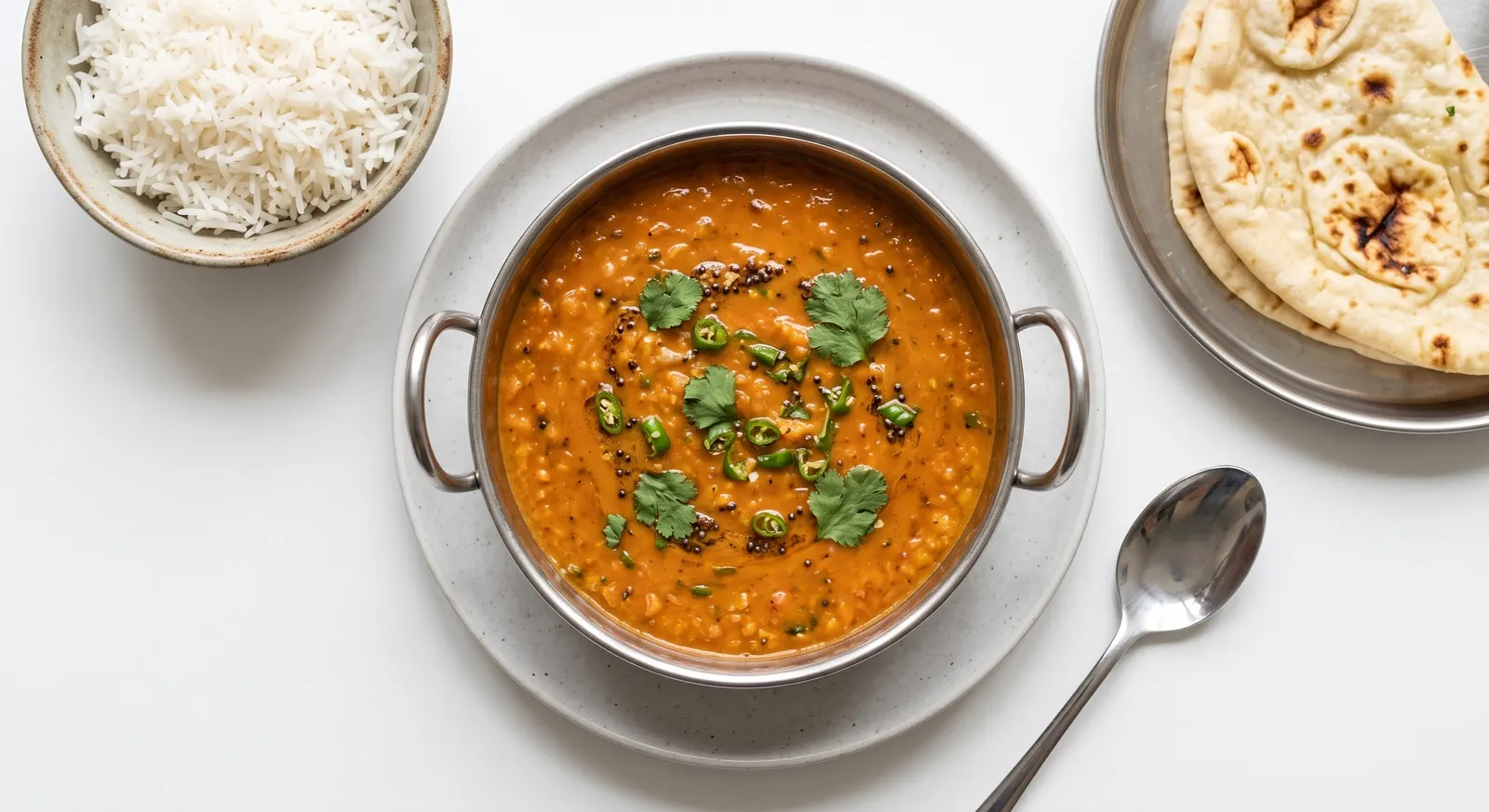
Yellow lentils finished with spices bloomed in hot ghee and poured over at the table.
- Prep
- 10 min
- Cook
- 40 min
- Total
- 50 min
- Serves
- 4
- Heat
- Mild
What Dal Tadka is
Dal tadka is cooked lentils given a tempering — whole spices fried in ghee until they crackle, then poured over the pot at the last moment. The tempering is not a garnish, and it is added late precisely so the aromatics do not have time to cook away.
Where it comes from
Tadka, also called chhaunk or phoron, is a technique rather than a recipe, used across the whole subcontinent and applied to far more than lentils. Frying whole spices in hot fat extracts the oil-soluble compounds that water-based simmering cannot reach, which is why the same lentils taste flat before the tempering and complete after it. The technique is older than any of the names it carries.
How to eat it
Dal is poured over rice rather than eaten alone from the bowl, though a thin dal is sometimes drunk at the end of a meal. Take only as much rice as you will eat in the next few mouthfuls and pour over that. With bread, use the bread to scoop rather than dipping the whole piece. A squeeze of lemon at the table lifts a dal that has been sitting, which is why the wedge is served rather than stirred in.
Goes well with
- Plain steamed rice
- Jeera rice
- Roti and a dry vegetable
How it varies
Dal tadka is one technique applied to a dozen lentils, and each region has its own name for the tempering. In Bengali it is chhaunk, often with panch phoron, the five-seed mix; in Odia, baghar; in Kannada, oggarane; in Telugu, popu or talimpu. The fat changes with the region — ghee in the north, mustard oil in Bengal, Odisha and Assam, coconut oil in Kerala — and that single choice changes the flavour more than the spice mix does. The lentil changes too: toor dal in Maharashtra and Gujarat, masoor in Bengal, moong in the south and in light meals, and a mixture of five in Rajasthani panchmel dal. Andhra pappu adds tamarind and often greens, and is cooked until the dal is almost a purée. Dal fry, the restaurant cousin, cooks onion and tomato into the dal and is thicker and sweeter than a tadka poured over plain lentils. Jain and temple kitchens leave out garlic and onion and use asafoetida, and some add a pinch of sugar to balance the chilli. The tempering itself can be poured at the table from a small pan, which is how dhabas serve it.
After the meal
Dal sets solid in the fridge, because the lentil starch gels as it cools, and the ghee from the tempering rises and sets on top. It loosens again with heat and hot water — cold water makes it grainy — and a whisk brings back a smooth, pourable texture. Reheat it to a simmer for three or four minutes, stirring, and add water a little at a time until it coats a spoon. It keeps three or four days, and it is one of the few dishes that is reliably better the next day: the lentils and spices meld, and the raw edge of garlic and asafoetida softens. What fades is the tempering. The fried garlic goes soft, the cumin aroma disappears and the chilli heat drops, so a fresh spoonful of ghee with cumin and a dried chilli, poured over just before serving, does more than reheating the old one. It freezes for two months without harm, since the texture is already a purée. Leftover dal makes excellent dal paratha, with the dal rolled inside a stiff dough, or a quick khichdi with rice.
Ingredients
- 250 g Toor (pigeon pea) or masoor dal
- 1 tsp Turmeric
- 3 tbsp Ghee — Butter or oil works, but ghee is the traditional fat and tolerates the heat.
- 1 tsp Cumin seeds
- 1/2 tsp Mustard seeds
- 2 Dried red chillies
- 5 cloves Garlic, sliced
- a pinch Asafoetida — Contains wheat in most commercial blends.
- 1 Tomato, chopped
- 1 tsp Kashmiri chilli powder
- to finish Coriander leaf and lemon
Spices in this dish
How to cook it
1Cook the lentils until they collapse
Simmer the dal with turmeric, salt and water until completely soft and beginning to break down — around thirty minutes in a pan, or three whistles in a pressure cooker. Undercooked dal cannot be rescued by the tempering.
2Whisk it smooth and adjust the body
Beat the cooked dal briefly with a whisk or ladle to an even, pourable consistency, adding hot water as needed. It should coat a spoon but still run off it.
3Heat the ghee until it shimmers
The fat must be properly hot or the spices will stew instead of crackling. Test with one cumin seed — it should sizzle immediately.
4Bloom the spices in order of hardness
Mustard seeds first, then cumin, then the dried chillies and garlic, then asafoetida last. Each has a different tolerance for heat, and adding them together means either burnt garlic or raw mustard. The whole sequence takes under a minute.
5Add the tomato and chilli powder briefly
Stir in the chopped tomato and Kashmiri chilli and cook for two minutes until the tomato softens and the fat turns red.
6Pour over and cover immediately
Tip the whole tempering into the dal and put the lid on at once for two minutes so the aromatics are trapped rather than escaping into the kitchen. Finish with coriander.
Calories and nutrition
Per serving — 1 bowl (about 250 g)
| Calories | 280 kcal |
|---|---|
| Protein | 14 g |
| Carbohydrate | 36 g |
| Fat | 9 g |
| Fibre | 9 g |
| Sodium | 620 mg |
Approximate values for a typical restaurant portion, calculated from standard ingredient tables. Actual figures vary with the kitchen, the oil used and the portion served. Not intended as medical or dietary advice.