Aloo Gobi
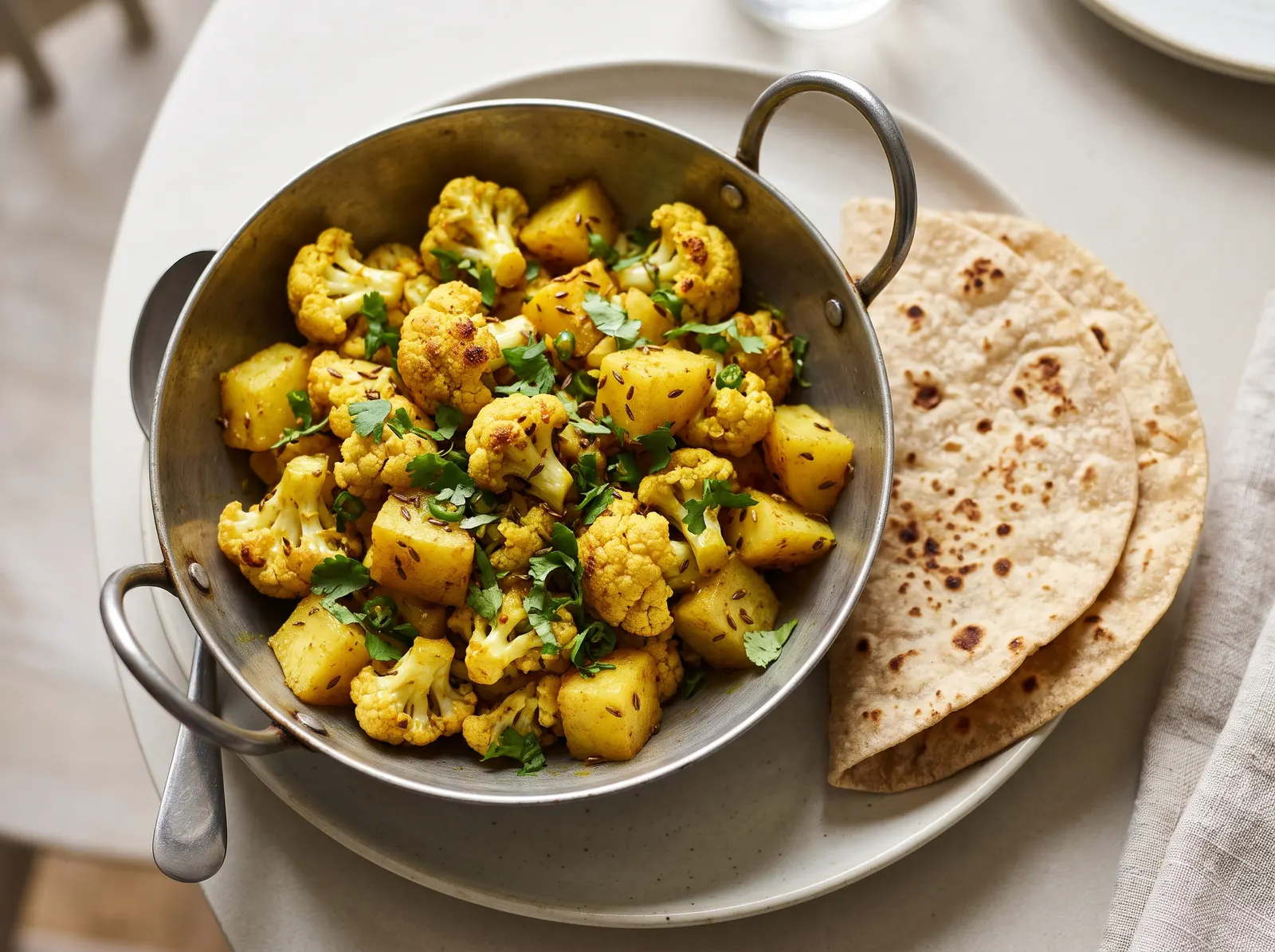
Potato and cauliflower dry-cooked with onion, tomato and cumin, finished with garam masala.
- Prep
- 15 min
- Cook
- 25 min
- Total
- 40 min
- Serves
- 4
- Heat
- Mild
What Aloo Gobi is
Potato and cauliflower are fried until the edges brown, then cooked with onion, tomato and spices until the sauce is reduced to a thin, clinging coating. The potatoes stay soft in the middle and the florets keep some bite. It is a simple everyday vegetable dish that relies on fat, heat and time rather than liquid.
Where it comes from
Aloo gobi is most often placed in Punjab, where it is a home staple, though no record fixes when or where it was first cooked. Potatoes came to the subcontinent from the Americas through European traders, and cauliflower was brought to India from Europe in the early nineteenth century, so the combination is recent by Indian culinary standards.
How to eat it
Eat aloo gobi hot with roti, paratha or puri, and tear the bread to pick up the vegetables. Because it is a dry dish, it needs something to scoop it with, which is why it is almost always served with bread at home. It is usually eaten alongside dal and rice for a full meal. The dish is already salted in the pan, so taste before reaching for the salt. Raw onion and a squeeze of lemon can be added to the plate if you like the extra sharpness.
Goes well with
- Plain roti or paratha
- Dal tadka
- Cucumber raita
How it varies
This is the dry Punjabi form, and the gravy version sold under the same name is a different dish. In the restaurant version the vegetables are usually fried first and then folded into a tomato-onion masala with enough water to make a sauce, so it can be eaten with rice as well as bread. Punjabi home cooking sometimes adds ajwain or a little amchur, and often lets the vegetables catch on the pan for a charred edge. Bengali phulkopir torkari takes another route: cauliflower and potato with panch phoron, ginger and often green peas, no tomato and no garam masala, and rather more oil. Some Gujarati homes add a pinch of sugar to round off the cauliflower's bitterness. The British curry-house aloo gobi is generally closer to the gravy version and sweeter than either. Adding peas turns it into gobi matar; adding paneer or chickpeas makes it a fuller main.
After the meal
Potatoes and cauliflower both suffer overnight, in different ways. Cold potato starch retrogrades and the cubes turn firm and slightly glassy, while the cauliflower takes up the oil and softens at the stem. Reheating in a covered pan with two tablespoons of water for four minutes, then uncovering to dry it off, gets closer to the original than a microwave, which steams the cauliflower and brings out a sulphurous smell. Better still, fry the leftovers again in a little oil: the browned edges come back and the potato crisps at the corners. The spice deepens overnight, so the second-day dish tastes fuller but softer. Keep it three days in the fridge, in a shallow container so it does not sit in its own oil. Do not freeze it: the potatoes turn watery and grainy on thawing and the cauliflower collapses.
Ingredients
- 500 g Potatoes, waxy, cut into 2.5 cm cubes — Waxy varieties keep their shape in a dry curry better than floury ones.
- 600 g Cauliflower, cut into small florets
- 1 medium (about 150 g) Onion, finely chopped
- 2 medium (about 200 g) Tomatoes, chopped
- 1 tbsp Ginger, grated
- 2 Green chillies, finely chopped
- 3 tbsp Vegetable oil
- 1 tsp Cumin seeds
- 1 tsp Ground coriander
- 1 tsp Turmeric
- 1/2 tsp Red chilli powder
- 1 tsp Garam masala — Added at the end.
- 1 tsp Salt
- 1 small bunch, to finish Fresh coriander leaf
Spices in this dish
How to cook it
1Parboil the potatoes briefly
Boil the potato cubes for about four minutes, then drain them well. Part-cooking them means they can brown in the pan while the middle finishes, instead of turning mushy as the cauliflower steams beside them.
2Fry the potatoes and cauliflower until spotted brown
Fry the potato and cauliflower in the hot oil for about eight minutes, turning them, until the edges are browned in spots. Dry, hot frying gives a roasted flavour; steaming the vegetables straight away would give a soft, wet curry. Lift them out and keep the oil in the pan.
3Brown the onion and cook out the ginger
Fry the onion in the remaining oil until golden, about six minutes, then add the ginger and green chillies for one minute. The browned onion gives the curry its colour and sweetness, and the ginger loses its raw bite once it has been fried.
4Bloom the cumin and ground spices
Add the cumin seeds for about twenty seconds, then the ground coriander, turmeric and chilli for thirty seconds. Spices fried in oil taste rounder than spices stirred into a wet dish. If the pan is too hot they scorch, so lower the heat or add a splash of water.
5Cook the tomato down until the oil separates
Stir in the tomatoes and salt and cook for about five minutes, until soft and the oil starts to separate. In a dry curry the tomato supplies the moisture and sourness, and cooking it removes the raw taste before the vegetables go back in.
6Return the vegetables and steam them covered
Add the fried potatoes and cauliflower with two tablespoons of water, cover and cook on low for ten to twelve minutes, stirring once. The trapped steam cooks the vegetables through without making the curry soggy, and then the lid comes off to dry the sauce.
7Finish with garam masala and coriander leaf
Uncover, sprinkle in the garam masala and most of the coriander leaf, and cook for two more minutes until the pan is almost dry. Garam masala goes in last because its aromatic compounds fade with long cooking.
Calories and nutrition
Per serving — 1/4 of the pan, about 300 g, without bread or rice
| Calories | 260 kcal |
|---|---|
| Protein | 7 g |
| Carbohydrate | 37 g |
| Fat | 11 g |
| Fibre | 7 g |
| Sodium | 630 mg |
Approximate values for a typical restaurant portion, calculated from standard ingredient tables. Actual figures vary with the kitchen, the oil used and the portion served. Not intended as medical or dietary advice.