Buff Momo
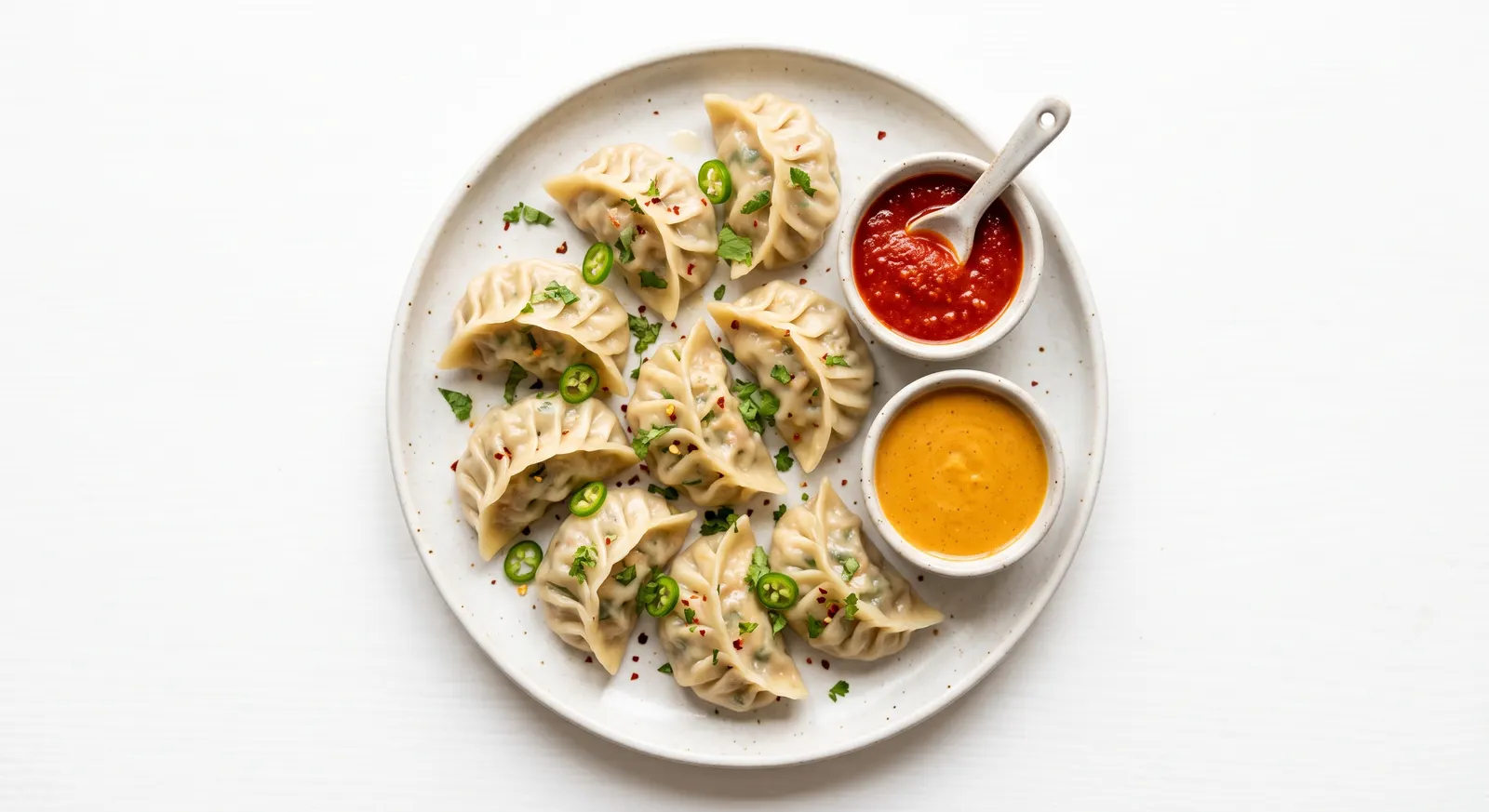
The Kathmandu default — buffalo mince, a thicker wrapper and a darker achar.
- Prep
- 45 min
- Cook
- 20 min
- Total
- 65 min
- Serves
- 4
- Heat
- Hot
What Buff Momo is
Buff momo are filled with minced water buffalo, which is leaner and more strongly flavoured than chicken and stands up to heavier seasoning. The wrapper is usually rolled a little thicker to carry the denser filling, and the achar served with it is darker and more sesame-heavy.
Where it comes from
Buffalo is the everyday red meat of the Kathmandu Valley, where cow slaughter is prohibited and goat is expensive, so buff momo is what most momo shops in the city actually sell. Outside Nepal it is harder to find, and Nepali restaurants abroad often substitute lamb or beef — worth asking, because the flavour is noticeably different. The dumpling itself is commonly traced to Tibetan cooking, and it spread through the valley with the traders and refugees who arrived in the middle of the twentieth century; the Nepali version kept the shape and changed the filling to what was cheap and plentiful. Momo are sold by the plate, usually ten to a plate, and a shop's reputation rests on its achar as much as on the filling. In Kathmandu the meat is minced finer than a home cook would bother to mince it, which is part of why the filling holds together and stays juicy.
How to eat it
The same method as any momo: lift by the pleats, bite a small opening at the side, and take the juice first. Dip the opened side into the achar rather than submerging the dumpling. A squeeze of lime over the plate cuts the fat. If you are offered jhol, pour a little into the plate and eat the momo sitting in it.
Goes well with
- Sesame-tomato achar
- Jhol momo broth
- Chiya (Nepali milk tea)
How it varies
Momo changes with the community that makes it and the meat that is available. In Kathmandu the default is buff, served with the sesame-tomato achar used here. In Pokhara and the western hills chicken is more widely sold, and in the eastern hills pork is common. Kothey momo are half-moon shaped and pan-fried after steaming so the base crisps; c-momo — fried momo tossed with capsicum, onion and chilli sauce — is an Indo-Chinese invention sold from street carts in Kathmandu and Darjeeling rather than a Nepali home dish. Jhol momo arrive swimming in a thin, sour achar broth, which is a serving style rather than a different filling. In Darjeeling and Sikkim the achar is often made with dalley khorsani, the small round chilli that grows there and is far hotter than the dried red chillies used in the valley. Tibetan momo, the ancestor, is usually simpler: beef or yak, onion, salt and little else. The Newar kitchens of the valley have their own dumpling traditions, and the momo sold in shops is the Tibetan-derived one rather than a Newar dish. Wrapper thickness, the fat in the mince and the heat of the achar vary more between shops than between recipes.
After the meal
Steamed momo are at their best within minutes. In the fridge the wrapper dries and turns leathery, the filling fat sets, and the pleats harden into little knots. They keep two days covered, but the better route is to freeze them raw: stand the uncooked momo on a tray until solid, bag them, and steam from frozen with three or four extra minutes, which gives a result close to fresh. Cooked momo come back best by re-steaming for three or four minutes, or by pan-frying in a little oil with a splash of water and a lid, the kothey treatment. A microwave makes the wrapper rubbery and heats the filling unevenly. The achar keeps far better than the momo, four or five days in the fridge, and it improves as the sesame and tomato settle; a little hot water loosens it if it has thickened. Leftover momo can be flattened in a hot pan and tossed with achar as a rough sandheko, or dropped into a clear broth. Reheat once only, and throw away achar that has stood out overnight.
Ingredients
- 300 g Plain flour
- 400 g Minced buffalo (or beef)
- 50 g Beef or lamb fat, finely chopped — Buffalo is lean enough to come out dry without it.
- 1 large Onion, very finely chopped
- 5 cloves, 1 tbsp Garlic and ginger, grated
- 1 tsp Timur pepper, ground
- 1 tsp each Cumin and coriander powder
- 1 bunch Coriander leaf
- 4 medium, 4 tbsp Tomatoes and toasted sesame, for the achar
- 3 to 5 Dried red chillies
- 1.5 tsp Salt
How to cook it
1Make and rest the dough
Knead the flour with about 160 ml water and a pinch of salt until smooth, then rest covered for thirty minutes so it rolls without springing back. The dough is ready when it is smooth, faintly tacky and a pressed thumbprint fills back slowly; a dough that snaps back as you roll it has not rested enough, and the pleats will tear.
2Add fat to the lean mince
Mix the buffalo with the chopped fat, onion, garlic, ginger, timur, ground spices, coriander leaf and salt. Chop the fat as finely as the onion so it melts evenly through the filling and becomes part of the juice as the momo steam.
3Roll slightly thicker than for chicken
Roll circles about 8 cm across, a little thicker than you would for a chicken momo. The denser filling tears a very thin wrapper during pleating.
4Fill and seal firmly
A heaped teaspoon per wrapper, pleated around and pinched hard at the top. Check each seal — buff filling releases a lot of liquid and an open momo empties itself.
5Steam for twelve minutes
Slightly longer than chicken, on an oiled tray over rolling water. Red meat needs the extra time. They are done when the wrappers look translucent and the tops feel firm to a fingertip; if they still look chalky and pale, give them two more minutes rather than testing one by biting it, which lets the steam out of that one only.
6Make a darker achar
Char the tomatoes until blackened, then blend with a heavier hand of toasted sesame and more dried chilli than the chicken version takes. It should be thick, dark and hot enough to answer the richness of the meat.
Calories and nutrition
Per serving — 8 pieces with achar (about 285 g)
| Calories | 520 kcal |
|---|---|
| Protein | 30 g |
| Carbohydrate | 52 g |
| Fat | 21 g |
| Fibre | 3 g |
| Sodium | 1020 mg |
Approximate values for a typical restaurant portion, calculated from standard ingredient tables. Actual figures vary with the kitchen, the oil used and the portion served. Not intended as medical or dietary advice.