Chana Masala
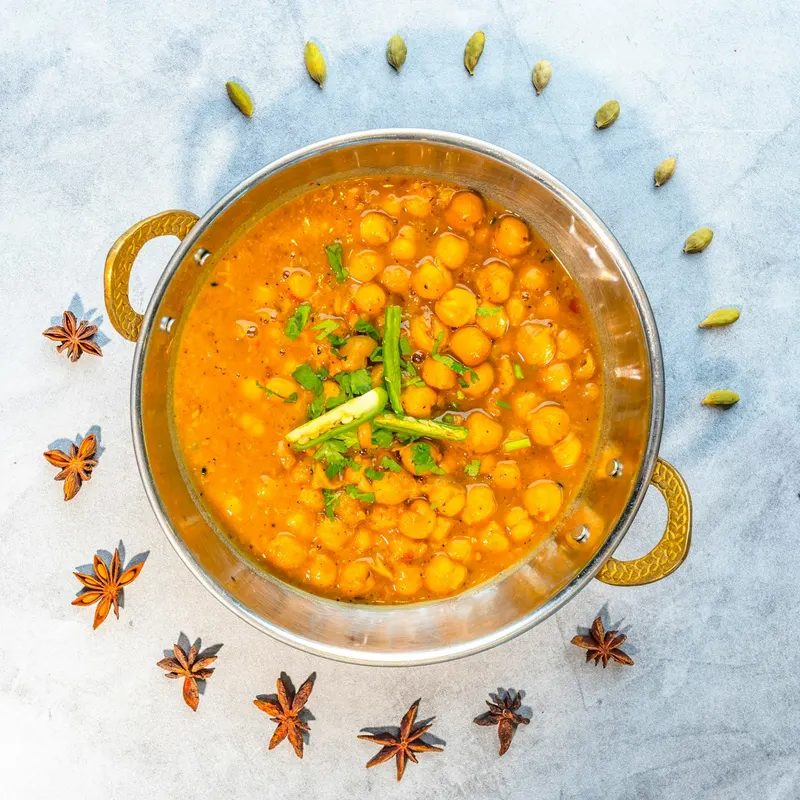
Chickpeas in a thick tomato and onion masala, brightened with lemon at the end.
- Prep
- 20 min
- Cook
- 100 min
- Total
- 120 min
- Serves
- 4
- Heat
- Medium
What Chana Masala is
Chickpeas are simmered in a thick gravy of browned onion, tomato and warm spices, then finished with lemon and fresh coriander. The sauce is hearty and slightly coarse, because some of the beans are mashed into it as they cook. It is one of the most common vegetarian curries on Indian menus.
Where it comes from
Chole, the chickpea curry, is a North Indian staple, and its best-known form is the Punjabi and Delhi version, often eaten with bhature, a deep-fried leavened bread. Chickpeas have long been grown on the subcontinent, but there is no documented inventor or date for this particular masala. The spice blend, chana masala powder, is a later commercial and home-blended mix that varies from house to house. Abroad it has become a standard vegetarian dish in Indian and Pakistani restaurants.
How to eat it
Eat chana masala with bhature, puri, roti or rice, tearing the bread and using it to scoop the gravy. Spoon the chickpeas over rice and mash a few into the sauce on the plate. Start with a small amount, because the lemon and chilli are easy to overdo. A few slices of raw red onion and a wedge of lemon on the side are the usual accompaniment, and they cut through the richness.
Goes well with
- Bhature or puri
- Jeera rice
- Sliced red onion and lemon wedges
How it varies
Chole changes most in its colour and in how sour it is. Punjabi versions, especially around Delhi and Amritsar, are cooked dark: some kitchens put a tea bag or a piece of dried amla in the pot with the chickpeas, which stains them deep brown and adds a tannic edge. Sindhi chole are sharper, soured with dried pomegranate seed or extra tamarind, and served with a thinner gravy. Gujarati chana leans sweet, with jaggery and a lighter hand on the chilli, and is often eaten with puri rather than bhature. In Trinidad and Guyana the dish arrives as channa, curried with a West Indian curry powder and eaten with roti. British curry houses serve chana masala as a side, usually with more sauce and less body than a home pot. Canned chickpeas change the result in a specific way: they are already soft and salted, so they need about half the simmering, and no added salt until the end.
After the meal
Chickpeas firm up in the fridge as the starch in them retrogrades, and they pull liquid back out of the gravy, so a pot that was saucy at dinner is stiff by the next day. Add about 100 ml of water per two portions and reheat to a simmer, mashing a few beans against the side of the pan to bring the body back. The flavour genuinely improves overnight, because the ground spices and the browned onion have time to settle into the beans, but the lemon does not: its aroma is gone by morning, so squeeze fresh juice in after reheating. Leftover bhature are not worth keeping, since they go leathery; fry a fresh batch or eat the chana with rice. It keeps three days in the fridge and freezes well, though the gravy thins slightly on thawing and wants ten minutes of reduction.
Ingredients
- 200 g Dried chickpeas, soaked overnight — About 500 g cooked. The figures here are for dried.
- 2 medium (about 300 g) Onions, finely chopped
- 3 medium (about 400 g) Tomatoes, chopped
- 1 tbsp of each Ginger and garlic, grated
- 3 tbsp Vegetable oil
- 2 tsp Cumin seeds
- 2 tsp Ground coriander
- 2 tsp Chana masala powder — Garam masala is a poor stand-in; the flavour changes.
- 1/2 tsp Turmeric
- 1/2 tsp Red chilli powder
- 2 Green chillies, slit — Optional; leave whole for less heat.
- 1.5 tsp Salt
- 1 tbsp Lemon juice
- 1 small bunch, to finish Fresh coriander leaf
Spices in this dish
How to cook it
1Soak, then cook the chickpeas until soft
Soak the dried chickpeas overnight, then drain and simmer them in fresh unsalted water for 45 to 60 minutes until one crushes easily between finger and thumb. Keep about 150 ml of the cooking water, because the starch in it thickens the gravy and carries the flavour.
2Brown the onions to a deep gold
Fry the chopped onion in the oil over medium heat for about ten minutes until golden. The sweetness and body of the gravy come from this step, and rushing it on high heat scorches the edges before the middle has softened.
3Cook the ginger and garlic out
Add the ginger, garlic and green chillies and fry for one to two minutes until the raw smell is gone. Raw garlic left in the base tastes harsh once the gravy has finished cooking.
4Bloom the cumin and ground spices in the oil
Add the cumin seeds and let them sizzle for about twenty seconds, then the ground coriander, turmeric, chilli and chana masala powder for thirty seconds. Many spice flavour compounds dissolve into fat rather than water, so blooming them in oil tastes fuller than stirring them into the finished gravy. Add a splash of water if they catch.
5Cook the tomato until the oil separates
Add the tomatoes and salt and cook over medium heat for about fifteen minutes, mashing them as they soften, until the mixture thickens and oil pools at the edges. This removes the raw, watery taste of the tomato.
6Simmer the chickpeas in the masala
Add the chickpeas with 150 ml of their cooking water and simmer uncovered for 15 to 20 minutes, mashing a few against the side of the pan. The chickpeas take on more of the spice while they simmer.
7Finish with lemon and herbs off the heat
Turn off the heat, stir in the lemon juice and most of the coriander leaf, then rest for five minutes. Acid added at the end keeps its brightness; cooked for long it turns dull and sour.
Calories and nutrition
Per serving — 1/4 of the pot, about 350 g, without bread or rice
| Calories | 330 kcal |
|---|---|
| Protein | 11 g |
| Carbohydrate | 41 g |
| Fat | 14 g |
| Fibre | 11 g |
| Sodium | 890 mg |
Approximate values for a typical restaurant portion, calculated from standard ingredient tables. Actual figures vary with the kitchen, the oil used and the portion served. Not intended as medical or dietary advice.