Chicken Curry
The everyday bone-in curry — browned onion, tomato and spice, with no cream.
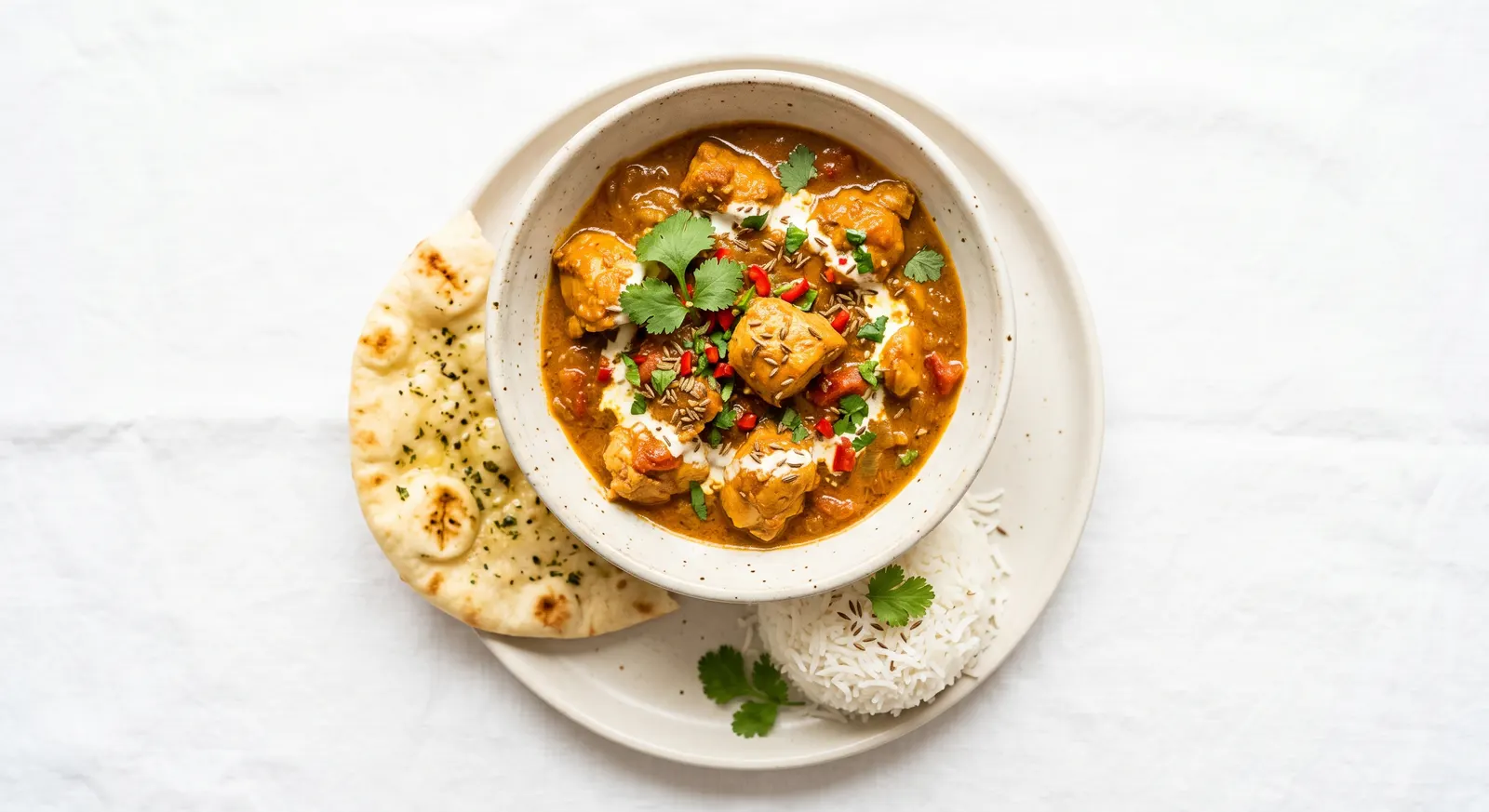
- Prep
- 20 min
- Cook
- 50 min
- Total
- 70 min
- Serves
- 4
- Heat
- Medium
What Chicken Curry is
This is the plain, home-style chicken curry that most households cook, not a restaurant preparation. Bone-in chicken is simmered in a masala of browned onion, tomato, ginger and garlic until the oil separates and floats. It is thinner and sharper than butter chicken and gets its body from the bones rather than dairy.
Where it comes from
There is no single chicken curry — the name covers a family of dishes that changes house by house, let alone region by region. What is broadly shared in North Indian and Nepali kitchens is the order of work, with the meat added last. Learn that order and most curries on a menu become legible. The word curry is an English convenience, applied abroad to dishes that have their own names at home, which is why a menu needs a plain chicken curry to mean anything at all. In a restaurant kitchen the base is usually made in bulk and the meat added to order, so the gravy is smoother and the spice rounder than a home pot; at home the same dish is cooked in one pan and tastes sharper for it.
How to eat it
Bone-in curry is eaten slowly, and the bones are expected to be picked up. With rice, spoon gravy over a portion at a time. With roti, tear a piece, fold it into a rough scoop and use it to lift meat and sauce together — the bread should do the work a fork would. A plate for bones is normal. The layer of separated oil on top is a sign the masala was cooked properly, not a fault.
Goes well with
- Plain rice
- Roti or naan
- Sliced onion, lemon and green chilli
How it varies
The chicken curry family is the clearest argument that there is no single recipe. Bengali mangshor jhol is thin and dark with mustard oil, with whole potato cooked in it. A Kashmiri yakhni is yoghurt-based, with fennel and dried ginger and almost no tomato. Goan versions use coconut and vinegar, and Chettinad cooking builds the masala from black pepper, fennel and roasted coconut. Punjabi restaurant curry adds cream, butter or cashew paste, and is sweeter and heavier than what is cooked at home. Nepali kukhura ko masu is close to the recipe here, with more garlic, a looser gravy and a finish of coriander, and it is eaten with rice or with chiura, beaten rice. Andhra kodi kura is hotter, with more chilli and curry leaf. The technique varies as much as the spicing: some kitchens add the chicken to the masala raw and let it release its own water, which gives a stronger, brothier gravy, while others brown the pieces first in a separate pan for colour. Yoghurt replaces tomato in much of the north-west, and the risk there is splitting, so it goes in off the heat a spoon at a time.
After the meal
Chicken curry is one of the dishes that genuinely improves overnight: the spices have time to infuse, the meat relaxes, and the gravy thickens as starch from any potato goes back into it. In the fridge it sets into a jelly because the bones have given up gelatine, with a layer of fat on top, which is normal for a bone-in curry. Reheat it in a covered pan with a splash of hot water, bringing it to a simmer for five minutes but not a hard boil, which would shred the chicken and split a yoghurt-based gravy. Skim the fat if you like, but leave a little, because it carries the spice. It keeps three days and freezes for two months, though potato turns grainy and breast meat dries out. If a yoghurt gravy has split, stir in a spoon of cream or a little cornflour slurry off the heat. What does not survive is the fresh coriander and the crispness of any fried onion used as a garnish; add both again at the table. Leftovers are best shredded into rice, a sandwich or a paratha filling.
Ingredients
- 1 kg Bone-in chicken, cut into pieces — Bone-in; boneless makes a thinner, flatter gravy.
- 3 medium Onions, finely chopped
- 3 medium Tomatoes, chopped
- 2 tbsp Ginger-garlic paste
- 1 tsp Turmeric
- 2 tbsp Coriander powder
- 1 tsp Cumin powder
- 1 to 2 tsp Kashmiri chilli powder
- 1 tsp Garam masala — Added at the end.
- 4 tbsp Mustard oil or vegetable oil
- to finish Coriander leaf
Spices in this dish
How to cook it
1Brown the onions past golden
Fry the chopped onion in the oil for twelve to fifteen minutes until deep brown. This is where the colour and the sweetness of the gravy come from, and it cannot be shortened by raising the heat without burning it.
2Cook out the ginger and garlic
Add the ginger-garlic paste and fry for two minutes until the raw smell goes. Raw garlic left in the base gives the finished curry a harsh edge.
3Add ground spices to the fat, not the water
Stir in turmeric, coriander, cumin and chilli and fry for thirty seconds. Ground spices release their flavour into oil, not water, so they go in before the tomato.
4Cook the tomato until the oil separates
Add the tomatoes and salt and cook, stirring, until the mixture darkens, thickens and oil pools visibly at the edges. Underripe or tinned tomatoes may need a few extra minutes, and a splash of hot water stops the masala catching on the pan.
5Seal the chicken in the masala
Add the chicken and turn it in the masala over medium-high heat for five minutes so every surface is coated and lightly browned.
6Simmer, then finish with garam masala
Add hot water to come halfway up, cover, and simmer for twenty-five minutes until the chicken is tender. Stir in the garam masala, rest off the heat for five minutes, and scatter coriander over.
Calories and nutrition
Per serving — 1 portion with rice (about 400 g)
| Calories | 560 kcal |
|---|---|
| Protein | 42 g |
| Carbohydrate | 40 g |
| Fat | 25 g |
| Fibre | 5 g |
| Sodium | 980 mg |
Approximate values for a typical restaurant portion, calculated from standard ingredient tables. Actual figures vary with the kitchen, the oil used and the portion served. Not intended as medical or dietary advice.