Garlic Naan
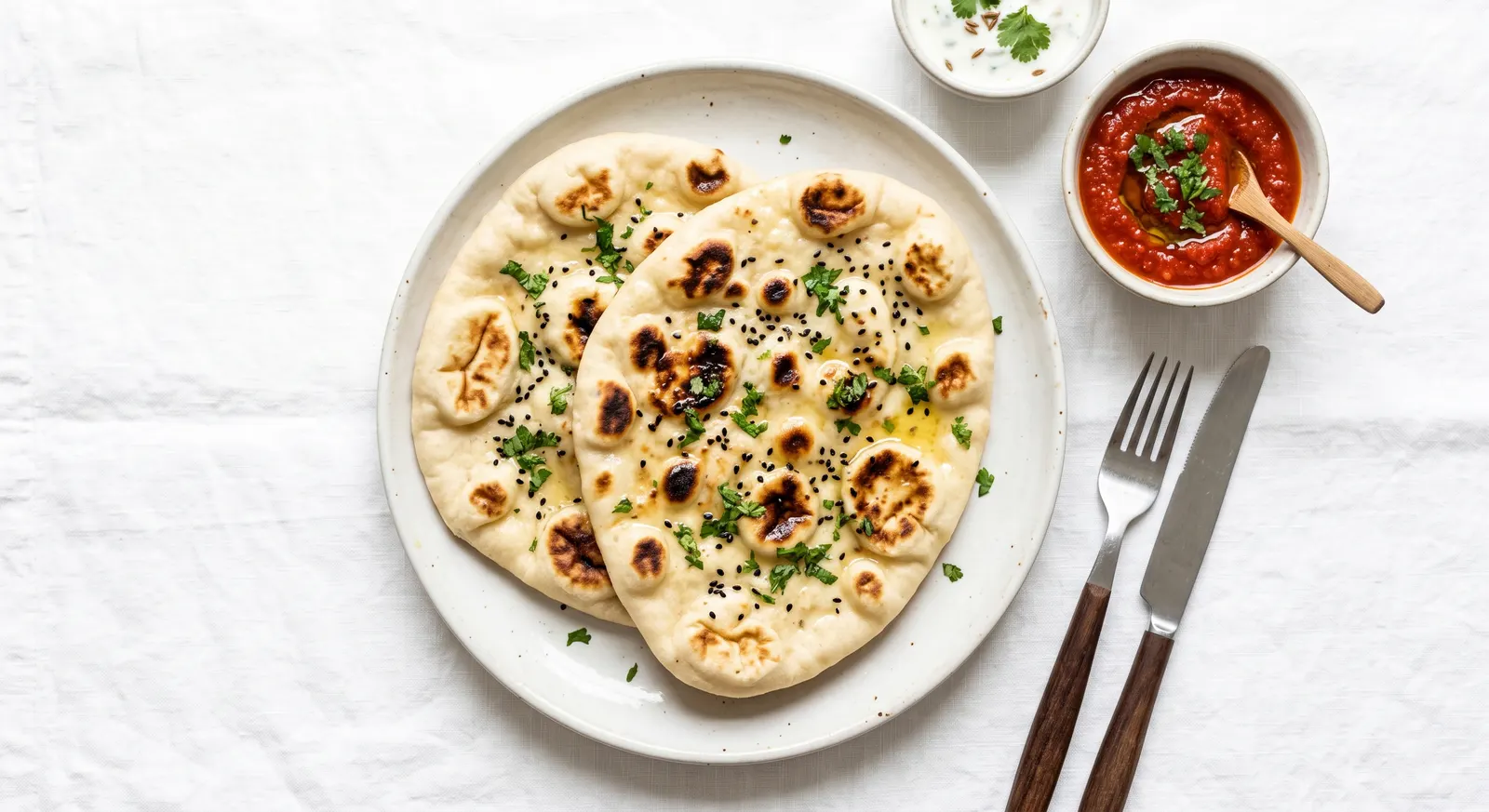
Leavened flatbread slapped onto the wall of a clay oven and blistered in ninety seconds.
- Prep
- 80 min
- Cook
- 15 min
- Total
- 95 min
- Serves
- 6
- Heat
- Not spicy
What Garlic Naan is
Naan is a soft, leavened flatbread enriched with yoghurt and cooked at very high heat, which is what produces the dark blisters and the chewy, uneven crumb. Garlic naan is brushed with butter and chopped garlic as it comes off the oven wall, while the surface is hot enough to cook the garlic without burning it.
Where it comes from
Naan belongs to the tandoor, a clay oven that reaches temperatures a domestic oven cannot approach, and it spread with tandoor cooking from Central Asia through Persia into North India. It is a restaurant bread more than a home one for exactly that reason — most households cook roti on a flat tawa instead, because they have no tandoor.
How to eat it
Tear naan with your hands rather than cutting it, and tear only the piece you are about to eat so the rest stays warm. Fold the torn piece into a rough scoop and use it to pick up curry and a piece of meat together. Naan is for thick gravies — with a thin dal, rice works better. It is meant to be shared from the centre of the table, and it goes stiff quickly, so order it to arrive with the curry rather than before.
Goes well with
- Butter chicken
- Dal makhani
- Any thick, gravied curry
How it varies
Naan is made differently in every kitchen that has the heat for it. Tandoor naan depends on a dough soft enough to slap onto a clay wall; a domestic version can be finished by holding the stretched dough over a gas flame with tongs, which chars it fast but leaves the top pale. The quick home version skips yeast altogether and uses baking powder with yoghurt and a little oil, giving a soft bread closer to a kulcha than to a true naan. Kulcha is the stuffed cousin from Punjab — Amritsari kulcha is layered with potato or paneer — and is a different bread with a different crumb. Restaurant menus add keema naan, cheese naan and peshwari naan, the last sweet with coconut and almonds. Fat changes the result: ghee gives a nutty finish, butter a softer one, and oil keeps it suitable for a dairy-free table. Nigella seeds are common in the north, and roghni naan in Pakistan is finished with sesame.
After the meal
Naan stales faster than most bread because it is thin and lean, and the change is starch retrogradation: within a day the crumb goes leathery rather than brittle, and reheating it dry makes that worse. It keeps a day at room temperature wrapped in cloth, and the fridge is the worst place for it, because retrogradation is fastest at fridge temperature and bread goes stale there sooner than on the counter. To bring it back, wet the surface with a hand dipped in water, wrap it in foil and give it five minutes at 180°C, or hold it over a flame for twenty seconds a side, or press it in a hot dry pan. Butter and garlic go on after reheating, never before. It freezes well if wrapped tightly within a day and reheated from frozen in foil at 180°C for ten minutes. Day-old naan is better cut into strips and fried or grilled as a crisp to dip, or used flat as a base for a quick cheese and chilli toast.
Ingredients
- 500 g Plain flour
- 120 g Thick yoghurt — Softens the crumb and adds a faint sourness.
- 150 ml Milk, warm
- 1 tsp Instant yeast
- 1 tsp Sugar
- 1 tsp Salt
- 1/2 tsp Baking powder
- 60 g Butter, melted
- 6 cloves Garlic, finely chopped
- small handful Coriander leaf, chopped
- 1 tsp Nigella seeds — Optional; the small black seeds on restaurant naan.
How to cook it
1Make a soft, slack dough
Combine flour, yeast, sugar, salt and baking powder, then work in the yoghurt and warm milk. The dough should be noticeably softer and stickier than a bread dough — a stiff naan dough bakes into a cracker.
2Prove until doubled
Knead for eight minutes, then cover and leave in a warm place for an hour until doubled. The yoghurt and yeast together are what make it puff rather than merely cook.
3Get the pan or oven as hot as it will go
Without a tandoor, use a cast-iron pan on the highest heat for ten minutes, or an oven at its maximum with a steel or stone inside. The blisters come from thermal shock, so a moderately hot surface gives pale, dense bread.
4Shape by hand into a teardrop
Stretch each piece by hand rather than rolling it flat — hand-stretching leaves the uneven thickness that makes some parts puff and others stay chewy. Aim for a teardrop about 20 cm long.
5Cook ninety seconds a side
Wet one side lightly with water and lay that side down; it helps the bread stick and steam. Cook until large bubbles rise and the underside is charred in spots, then flip briefly.
6Butter and garlic it straight off the heat
Brush immediately with melted butter and scatter the chopped garlic, coriander and nigella. Adding the garlic before cooking burns it; adding it after, on a hot surface, cooks it just enough.
Calories and nutrition
Per serving — 1 naan (about 110 g)
| Calories | 340 kcal |
|---|---|
| Protein | 9 g |
| Carbohydrate | 50 g |
| Fat | 11 g |
| Fibre | 2 g |
| Sodium | 520 mg |
Approximate values for a typical restaurant portion, calculated from standard ingredient tables. Actual figures vary with the kitchen, the oil used and the portion served. Not intended as medical or dietary advice.