Haldi Doodh (Turmeric Milk)
Warm milk with turmeric, black pepper and ginger — a home drink with a long family tradition.
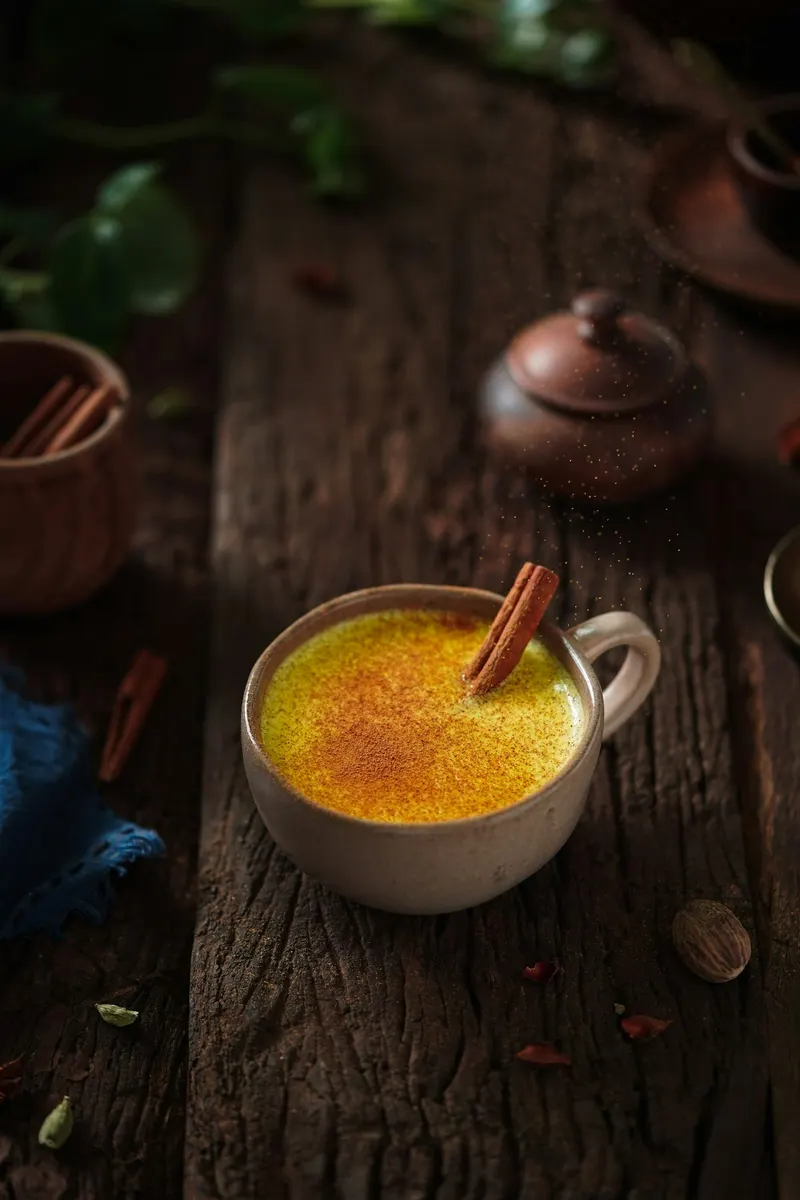
- Prep
- 5 min
- Cook
- 10 min
- Total
- 15 min
- Serves
- 2
- Heat
- Mild
What Haldi Doodh (Turmeric Milk) is
Haldi doodh is warm milk stirred with ground turmeric, a pinch of black pepper and a little fresh ginger, usually sweetened with honey. Turmeric gives it a yellow colour and a faintly bitter, earthy taste that the milk and ginger soften. It takes about fifteen minutes and is drunk as a warm cup on its own.
Where it comes from
Haldi is the Hindi word for turmeric and doodh means milk, so the drink is named for its two main ingredients. Turmeric has been part of South Asian cooking for a very long time and has a long place in traditional Ayurvedic medicine, although sources disagree on exactly how old that medical use is. Haldi doodh itself is a family tradition rather than a documented recipe: it is usually taught by a parent or grandparent, and it is often made at home in winter. The names golden milk and turmeric latte are recent, coming from Western cafés and social media.
How to eat it
Sip it warm rather than hot, from a cup, and stir before each mouthful, because the turmeric settles to the bottom. A faint earthiness and a little foam on the surface are normal. Turmeric stains cups and fabric, so rinse the cup straight away. It can also be left unsweetened.
Goes well with
- Plain biscuits or rusks
- Masala chai, for a more caffeinated cup
- Sliced fresh fruit
How it varies
Haldi doodh is a home habit, so there are as many versions as kitchens. Punjabi households often add a teaspoon of ghee and a few crushed almonds, and some use jaggery instead of honey. In Tamil Nadu the same drink is manjal paal, sometimes with palm sugar rather than honey, and the colour is judged by eye rather than measured. Some families use fresh turmeric root, grated and squeezed for its juice, which is brighter and more floral than the powder and stains far worse. Black pepper is not universal: many homes leave it out for children. The commercial version sold as golden milk or a turmeric latte is a different drink, a sweetened concentrate or a paste of turmeric, pepper and water steamed with milk in a café, often with coconut or oat milk instead of dairy, which changes the body completely. Dry ginger powder, sonth, sometimes stands in for fresh root and gives a hotter, more peppery edge. Cinnamon, cardamom, nutmeg and ginger all appear; the only constant is turmeric.
After the meal
Milk does not keep once it has been spiced and heated, and haldi doodh is best drunk within the hour. Cooled and refrigerated it separates: the fat rises, the turmeric settles to the bottom and the milk proteins form a skin, and reheating brings it back only partly. Warm it to steaming over low heat, whisking, and no further; a hard boil makes it grainy and gives it a cooked, faintly sour note. It keeps a day in the fridge at most, and it should not be frozen, because the water in the milk forms ice crystals that break the emulsion, so it thaws with a grey, settled look. Leftover haldi doodh is more useful cold than hot, in a smoothie or poured over oats, where the graininess does not show. The paste is the part worth keeping: turmeric and pepper mixed with water keeps two weeks in the fridge and freezes in an ice-cube tray, so one cup costs a spoonful rather than a mess.
Ingredients
- 400 ml Whole milk
- 1/2 tsp (about 1.5 g) Ground turmeric
- 1 pinch (about 0.3 g) Black pepper, freshly ground
- 1 tsp (about 3 g) Fresh ginger, grated
- 2 tbsp Water, for the turmeric paste
- 1 tsp (about 7 g), optional Honey
- 1 small piece, optional Cinnamon stick
Spices in this dish
How to cook it
1Mix the turmeric and pepper into a paste
Stir the turmeric and black pepper into the 2 tbsp of water to make a smooth paste before it meets the milk. Turmeric powder clumps and floats when it is dropped into hot milk, while a paste disperses evenly. Black pepper is included because a 1998 study in rats and in people found that piperine from pepper raised blood curcumin after much larger oral doses of curcumin than a cup contains. That is a finding about absorption; it does not show what a cup of this drink does.
2Warm the milk gently with the cinnamon
Pour the milk into a small pan with the cinnamon, if using, and heat over medium-low until steam rises and the surface begins to tremble. Hot milk scalds easily and forms a thick skin, so a low, steady heat avoids both problems.
3Whisk in the paste and ginger
Whisk the turmeric paste and the grated ginger into the warm milk, then let it simmer gently for five minutes, stirring now and then. The simmer gives the turmeric time to disperse through the milk and the ginger time to flavour it.
4Sweeten off the heat, then strain
Take the pan off the heat, stir in the honey if you are using it, and pour through a fine sieve into a cup. Adding honey off the heat stops it from being cooked further, and straining removes ginger fibres and any turmeric grit.
Calories and nutrition
Per serving — 1 cup (about 200 ml)
| Calories | 138 kcal |
|---|---|
| Protein | 7 g |
| Carbohydrate | 13 g |
| Fat | 7 g |
| Fibre | 1 g |
| Sodium | 87 mg |
Approximate values for a typical restaurant portion, calculated from standard ingredient tables. Actual figures vary with the kitchen, the oil used and the portion served. Not intended as medical or dietary advice.