Jeera Rice
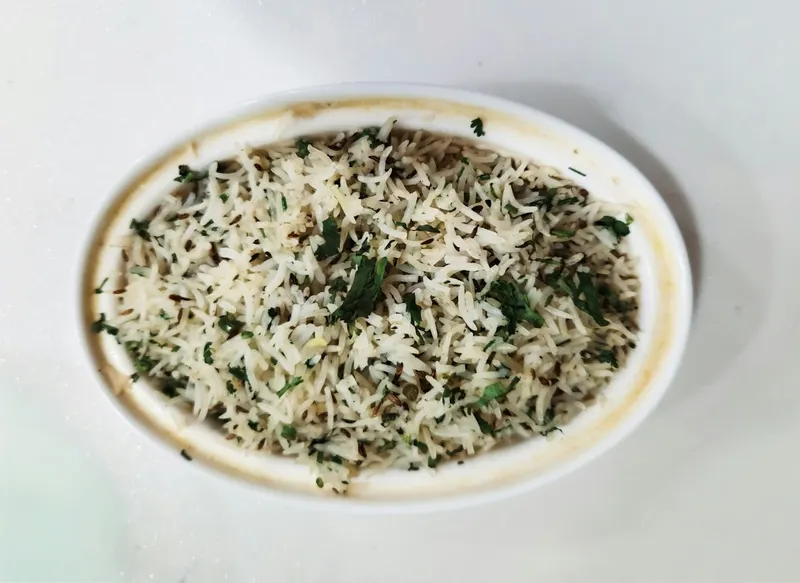
Basmati cooked with toasted cumin seed in ghee — plain rice that tastes deliberately made.
- Prep
- 30 min
- Cook
- 20 min
- Total
- 50 min
- Serves
- 4
- Heat
- Not spicy
What Jeera Rice is
Jeera rice is basmati cooked in ghee that has been flavoured with whole cumin seed, plus a little bay and cardamom. The seeds crackle and darken in the fat before the rice goes in, so every grain carries a nutty, toasted flavour. It is quieter than a pulao and is built to sit beside dal and curry.
Where it comes from
Jeera is the Hindi word for cumin, and jeera rice has no single documented origin. It is a home-kitchen method rather than a named regional recipe. The same tempering habit runs through North Indian and Pakistani home cooking, and jeera rice is most often the plain rice course served with dal, a dry vegetable or a curry. The rice usually chosen is basmati, grown mainly in the Indo-Gangetic plain of India and Pakistan and valued for its long, separate grains.
How to eat it
Eat it with dal and a curry or dry vegetable, taking a little of each in every mouthful rather than eating the rice on its own. If you are serving it with a rich curry, keep the ghee to a light spoonful, since the rice already carries it.
Goes well with
- Dal tadka
- Chicken curry
- Cucumber raita
How it varies
Jeera rice changes most in the fat and the cumin, not in the method. The Punjabi and Delhi method is the one used here. Restaurant kitchens more often use shahi jeera, the longer, darker seed used in Kashmiri and Mughlai cooking, which is sweeter and less resinous than ordinary jeera and scorches less easily in a hot pan. A cook in a hurry boils the soaked rice in a large pot of salted water, drains it while a grain still has a white core, then tosses it in cumin-ghee on the side: the same look, one pan fewer, and looser grains because they never sit in starch. Some homes add a handful of fried onion and a few cashews and call the result jeera pulao; others leave out the aromatics altogether and use only cumin and salt. Where mustard oil is the everyday fat, as in much of eastern India, it can replace the ghee and gives a sharper, more pungent edge. A restaurant version often finishes with a knob of butter and chopped coriander, which the home version usually leaves out.
After the meal
Cooked jeera rice firms up in the fridge within a few hours. The starch that gelatinised during cooking re-crystallises as it cools, which is why the grains turn opaque, hard and separate rather than soft and sticky. Cover the rice while it is still just warm so the surface does not dry, refrigerate it within an hour, and eat it within a day: spores that survive cooking can multiply in rice left warm, so smell it before reheating. Reheat a portion with a tablespoon or two of water sprinkled over, covered, for ninety seconds in a microwave at medium power, or in a covered pan on low heat for five minutes with a splash of water in the base. Water and heat together reverse part of the retrogradation. Fish out the bay leaf and cardamom before keeping, since both go medicinal after a day. Cold jeera rice fries better than it microwaves — an egg fried rice, or a lemon rice with peanuts and curry leaves, is the usual second life.
Ingredients
- 300 g Basmati rice — Dry weight; rinsed and soaked.
- 2 tbsp (about 28 g) Ghee — Vegetable oil works if you need dairy-free.
- 1 tsp Cumin seeds
- 1 Bay leaf
- 2 pods, lightly crushed Green cardamom
- 1 small piece Cinnamon stick
- 3/4 tsp Salt
- 450 ml Water
Spices in this dish
How to cook it
1Rinse and soak the rice
Rinse the basmati in several changes of cold water until the water runs almost clear, then soak it in fresh water for twenty minutes and drain. Surface starch left on the grains is what makes plain rice clump, and soaking lets the grains lengthen and cook through evenly.
2Bloom the cumin in ghee
Warm the ghee over medium heat in a heavy pan with the cumin seeds, bay leaf, cardamom and cinnamon. Wait for the seeds to sizzle and turn a shade darker, about thirty seconds. The aroma compounds in cumin dissolve into fat rather than water, so this is the step that gives the rice its flavour.
3Fry the drained rice briefly
Add the drained rice and stir gently for about two minutes, until each grain is glossy with fat and the edges look slightly opaque. Coating the grains before the water goes in is a common way to keep them separate once cooked.
4Add the water and cook covered
Pour in the 450 ml water with the salt and bring it to a boil. Drop the heat to its lowest setting, cover tightly and cook for fifteen minutes. The water is matched to the soaked rice, so do not add more to rescue it; a loose lid lets the steam out and leaves the top grains undercooked.
5Rest the rice, then fluff it
Switch off the heat and leave the pan covered for five minutes so the grains finish steaming. Then fork the rice gently from the edges inwards. Stirring it with a spoon breaks the grains and turns the rice gummy.
Calories and nutrition
Per serving — 1/4 of the pot (about 225 g cooked)
| Calories | 339 kcal |
|---|---|
| Protein | 5 g |
| Carbohydrate | 60 g |
| Fat | 8 g |
| Fibre | 1 g |
| Sodium | 444 mg |
Approximate values for a typical restaurant portion, calculated from standard ingredient tables. Actual figures vary with the kitchen, the oil used and the portion served. Not intended as medical or dietary advice.