Khichdi
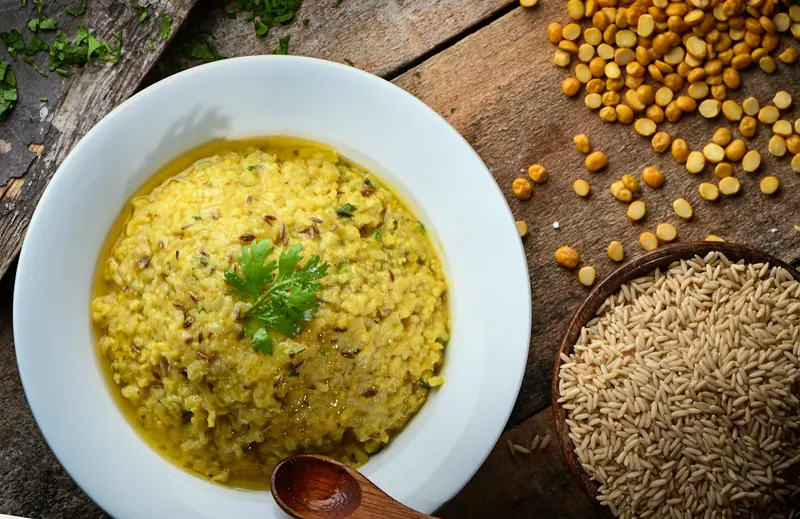
Rice and yellow moong dal cooked soft with ghee, cumin, ginger and black pepper.
- Prep
- 10 min
- Cook
- 30 min
- Total
- 40 min
- Serves
- 4
- Heat
- Not spicy
What Khichdi is
Rice and split yellow moong dal are cooked together with ghee, cumin, ginger and black pepper into a soft, spoonable porridge. It is mild, warming and very simple to make. Families usually eat it with pickle, yoghurt or extra ghee, and it is a common everyday meal across north India.
Where it comes from
Khichdi is one of the oldest dishes on the subcontinent. Its name is traced to the Sanskrit word khiccā, and some writers link it to early Sanskrit rice-and-pulse dishes. In the 14th century the traveller Ibn Battuta described a dish of rice and mung beans eaten with butter, and the Ain-i-Akbari, the 16th-century Mughal record, gives a recipe for khichri made with equal parts rice, mung dal and ghee. Khichdi is also eaten at Makar Sankranti in north India, and it is offered as bhog at the Gorakhnath temple in Gorakhpur. The Gorakhnath origin story is folklore rather than documented history.
How to eat it
Eat khichdi warm, from a bowl, with a spoon. It is usually served with a dollop of ghee, plain yoghurt or a sharp pickle alongside. Papad is a common crisp accompaniment. Let it cool a little before eating, since the thick porridge holds its heat for longer than plain rice does.
Goes well with
- Plain yoghurt or raita
- Mango or lime pickle
- Papad
How it varies
Khichdi is less a recipe than a family of them, and the ratio of rice to dal moves more than the spicing. The version above is the north Indian everyday one. Gujarati khichdi is often softer and sweeter, sometimes with a little sugar, and is eaten with kadhi rather than on its own. Bengali khichuri uses gobindobhog rice and moong dal, is cooked looser, and is served with labra, a mixed vegetable dish, or with fried aubergine. In Bihar khichdi is plainer still, with ghee poured over at the table and a mashed potato chokha alongside. Hyderabadi khichdi is made with keema or with whole spices, and is a richer dish altogether. Nepali khichdi, part of the dal bhat tradition, is usually thinner and finished with timur and ghee. South Indian pongal is the close relative, made with the same dal and rice and finished with pepper, cumin and cashew. Most households judge the result by texture rather than by measurement.
After the meal
Khichdi sets into a solid block in the fridge. The rice and dal starches retrograde and bind, and the porridge loses the loose, spoonable texture it had in the pot. Reheat it in a pan over low heat with two to three tablespoons of hot water per portion, breaking it up with the back of a spoon and stirring until it is even; add the water gradually, because it goes from stiff to soupy quickly. A microwave heats the middle far faster than the edges, leaving the rim dry and the centre molten, so stir it halfway if you use one. The texture stays slightly pastier on the second day whatever you do, which is why a fresh spoonful of ghee and a crack of black pepper at the table helps. It keeps two days; beyond that the dal tastes flat and the edges of the pot begin to sour.
Ingredients
- 150 g Basmati rice, washed
- 100 g Split yellow moong dal, washed — Skinned and split; it collapses faster than most dals, which is what makes khichdi soft.
- 2 tbsp Ghee — Contains milk solids; it is dairy.
- 1 tsp Cumin seeds
- 1 tbsp Ginger, grated
- 1 tsp Black peppercorns, lightly crushed
- 1/2 tsp Turmeric
- 1 medium (about 80 g) Carrot, diced
- 80 g Green peas, fresh or frozen
- 1 tsp Salt
- 1 litre, plus more if needed Water
- small bunch, to finish Fresh coriander leaf
Spices in this dish
How to cook it
1Wash and soak the rice and dal
Rinse the rice and dal together until the water runs mostly clear, then soak them for 20 minutes. Washing removes surface starch that would make the khichdi gluey, and soaking helps the grains and dal cook evenly and more quickly.
2Bloom the cumin, pepper and ginger in ghee
Heat the ghee in a heavy pot, add the cumin, black pepper and ginger, and fry for about 30 seconds until fragrant. Whole spices fried in ghee release their aroma into the fat, and that fat carries the flavour through the whole pot.
3Add the turmeric and vegetables
Stir in the turmeric, carrot and peas and cook for about one minute, coating them in fat. Turmeric burns quickly in a dry pan, so it needs the fat and the vegetables to protect it while it cooks.
4Add the rice, dal and water
Drain the rice and dal and add them to the pot with the water and salt. Bring it to the boil and skim any foam from the surface.
5Cook low and covered until soft and loose
Cover and simmer on the lowest heat for 20 to 25 minutes, stirring every five minutes so the bottom does not stick, until the grains are soft and the mixture is porridge-like. The lid traps steam so the rice and dal cook through together, and the stirring keeps the texture even.
6Adjust the consistency and finish
Add hot water if the khichdi has thickened too far, stir in a little more ghee and the coriander leaf, and rest for five minutes. Khichdi thickens as it stands, so it should look looser than you want when it leaves the pot.
Calories and nutrition
Per serving — 1/4 of the pot, about 350 g, without pickle or yoghurt
| Calories | 314 kcal |
|---|---|
| Protein | 10 g |
| Carbohydrate | 52 g |
| Fat | 8 g |
| Fibre | 7 g |
| Sodium | 600 mg |
Approximate values for a typical restaurant portion, calculated from standard ingredient tables. Actual figures vary with the kitchen, the oil used and the portion served. Not intended as medical or dietary advice.