Palak Paneer
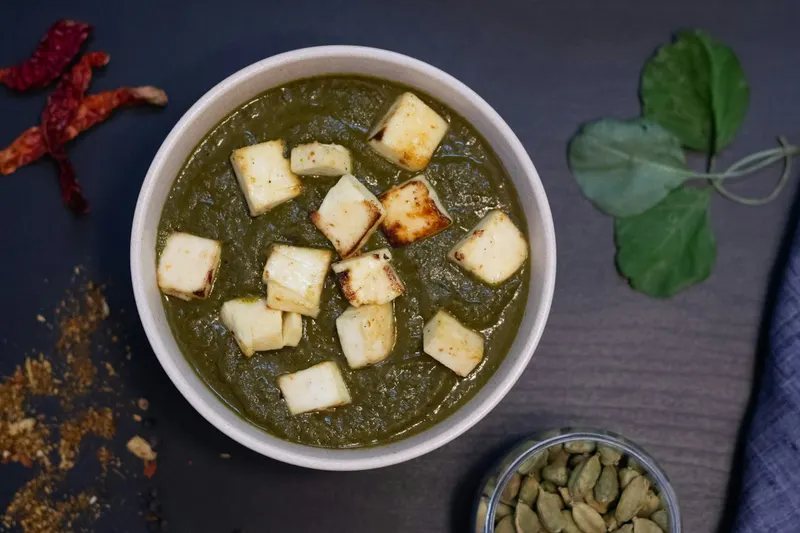
Soft cubes of paneer in a smooth spinach gravy, with ginger, cumin and garam masala.
- Prep
- 15 min
- Cook
- 25 min
- Total
- 40 min
- Serves
- 4
- Heat
- Mild
What Palak Paneer is
Spinach is blended into a smooth, bright green purée and cooked with onion, tomato and mild spices, then finished with soft cubes of paneer. The gravy is rich without being heavy, and the spinach keeps a clean, grassy flavour rather than tasting of cream.
Where it comes from
Palak paneer is most often placed in Punjab, where the older saag tradition of cooking leafy greens with spices is strong. Paneer, the fresh cheese, has no clearly dated origin in Indian cooking. The dish spread to curry houses in Britain and beyond through the diaspora, where it became a standard vegetarian item. The specific inventor or restaurant is not documented, so the Punjab attribution is a widely repeated account rather than a settled history.
How to eat it
Eat palak paneer with roti, naan or paratha. Tear the bread and fold the paneer into the green gravy so each piece picks up some sauce. Handle the paneer gently with the side of the bread, since the cubes break easily when pushed around. It also works well with rice. Serve it hot, because paneer firms as it cools. A spoonful of plain yoghurt on the side is a common and mild way to take the edge off the chilli.
Goes well with
- Garlic naan
- Jeera rice
- Plain yoghurt or cucumber raita
How it varies
The dish sits on a spectrum from bright green to dark and coarse. The version above is the home Punjabi one: spinach only, a little tomato in the base, and cream as a finish rather than a main ingredient. Restaurant palak paneer usually blends in cashew paste or more cream and cooks the spinach longer, so the colour dulls towards olive and the texture turns velvety. Saag paneer is the neighbouring dish and not the same thing: it mixes mustard greens, bathua and spinach, is chopped rather than blended, and is coarser, darker and more bitter, traditionally eaten with makki di roti. Many Punjabi homes leave the tomato out entirely, using only onion, ginger and garlic under the spinach. Some cooks chop the blanched leaves with a knife instead of blending them, which keeps a little texture in the gravy. The paneer can be swapped for tofu, chickpeas or boiled egg, and the dish is then named for what went in.
After the meal
Spinach gravy does not keep its colour. Chlorophyll breaks down with heat and with the acid in the tomato, and the bright green of a fresh pan goes olive within a day; that is cosmetic, but it is why the dish is a poor candidate for a packed lunch. Reheat it in a pan over low heat with a splash of water, stirring, until it steams and reads about 65 to 70°C on a thermometer, and no further. Boiling dulls the colour and turns the paneer rubbery, because the cheese proteins tighten and squeeze out their moisture. The cream will grain if it is reheated hard, so stir a fresh spoonful in off the heat instead. It keeps two days in the fridge. Freezing is possible but not kind: the emulsion breaks, the spinach weeps, and the paneer comes back spongy.
Ingredients
- 500 g Fresh spinach, stems trimmed — Mature leaf spinach holds up better than baby leaf, which collapses in the pan.
- 250 g Paneer, cut into 2 cm cubes — Fresh and unsalted.
- 1 medium (about 150 g) Onion, finely chopped
- 2 medium (about 200 g) Tomatoes, chopped
- 2 Green chillies, slit
- 1 tbsp of each Ginger and garlic, grated
- 2 tbsp Ghee or vegetable oil
- 1 tsp Cumin seeds
- 1/2 tsp Turmeric
- 1 tsp Garam masala — Added at the end.
- 3 tbsp Heavy cream — Stirred in off the heat.
- 1 tsp Salt
Spices in this dish
How to cook it
1Blanch the spinach and blend it smooth
Boil the spinach for two minutes, then plunge it into iced water and drain. Blend it with a splash of water until completely smooth. Brief blanching keeps the chlorophyll bright, so the gravy stays green instead of turning dull olive as raw spinach cooks down in the pan.
2Shallow-fry the paneer until golden
Heat a teaspoon of the fat in a pan and fry the paneer cubes for three to four minutes, turning them until lightly golden on the outside. Frying seals the surface, so the cubes keep their shape and do not dissolve into the sauce. Set them aside.
3Brown the onion and cook out the ginger and garlic
Fry the onion in the remaining fat until soft and lightly golden, about eight minutes, then add the ginger, garlic and green chillies for two minutes. Softened onion gives the gravy its body, and cooking out the raw garlic removes the sharp edge it would otherwise leave.
4Bloom the cumin and turmeric in the fat
Add the cumin seeds and let them sizzle for about twenty seconds until they smell toasted. Stir in the turmeric for a few seconds only. Turmeric scorches more easily than cumin, so it goes in briefly and last, just before the tomato.
5Cook the tomato until it breaks down
Add the tomatoes and salt and cook for about six minutes, mashing them, until they are soft and the fat starts to separate. This removes the raw, acidic taste of the tomato, and it gives the base a flavour that the spinach will not overpower.
6Combine the spinach and heat it through briefly
Stir in the spinach purée and cook for three to four minutes, no longer. The spinach only needs to be heated through and mixed with the base.
7Add the paneer and finish with cream and garam masala
Fold in the paneer and garam masala and simmer for two minutes. Take the pan off the heat and stir in the cream last. Cream added at the end stays smooth, whereas stirring it into a fiercely boiling pan can make it separate.
Calories and nutrition
Per serving — 1/4 of the pan, about 330 g, without bread or rice
| Calories | 367 kcal |
|---|---|
| Protein | 18 g |
| Carbohydrate | 15 g |
| Fat | 27 g |
| Fibre | 5 g |
| Sodium | 700 mg |
Approximate values for a typical restaurant portion, calculated from standard ingredient tables. Actual figures vary with the kitchen, the oil used and the portion served. Not intended as medical or dietary advice.