Rajma
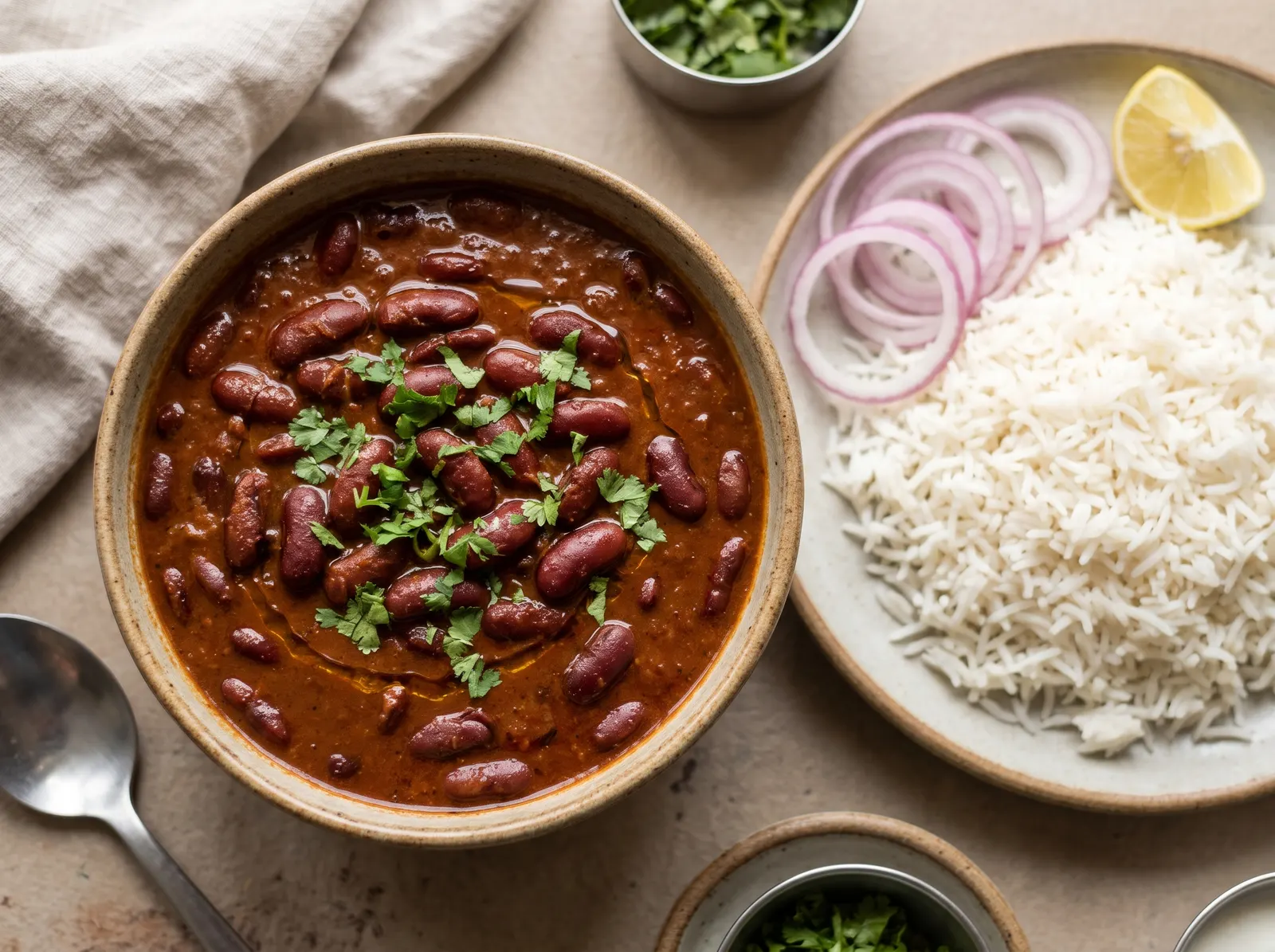
Red kidney beans in a thick, mild tomato gravy, cooked slowly and finished with garam masala.
- Prep
- 20 min
- Cook
- 110 min
- Total
- 130 min
- Serves
- 4
- Heat
- Mild
What Rajma is
Red kidney beans are cooked in a thick, mildly spiced tomato and onion gravy until the beans are creamy and the sauce clings to them. Rajma has a deep, earthy flavour and a soft texture, and it is almost always eaten with plain rice. The method is simple, but it depends on boiling the beans properly before they are simmered.
Where it comes from
Red kidney beans are native to the Americas, most likely central Mexico and Guatemala, and reached the Indian subcontinent through Portuguese and later colonial-era trade and agriculture. The dish itself developed after that, and is now a regular part of the diet across North India, Nepal and the Punjab region of Pakistan. Punjab is often described as its heartland in food writing, and the hill states of Himachal Pradesh and Uttarakhand, and Jammu, are known for growing good beans. The exact dating of the bean's arrival is uncertain and rests mostly on secondary sources.
How to eat it
Eat rajma with plain rice, mixing a spoonful of the gravy into the rice so the grains take up the sauce. Mash a few beans against the plate with the back of a spoon to thicken each mouthful. In North India it is a classic home lunch, often served with a little sliced onion and a wedge of lemon. A spoonful of plain yoghurt or a pickle on the side is common.
Goes well with
- Steamed basmati rice
- Sliced onion and lemon
- Cucumber raita
How it varies
Rajma changes with the bean before it changes with the spice. Punjabi rajma, the version above, uses the large red kidney bean, and restaurant versions finish it with butter or cream as rajma makhani. Kashmiri rajma uses a much smaller, darker bean, cooks it in a thin gravy that in many homes has no onion or garlic at all, and lets fennel and asafoetida carry the aroma. In Himachal Pradesh and Jammu the beans are often cooked with more whole spices and eaten with locally grown rice. In Nepal rajma is thinner and sharper, with tomato, garlic and timur, poured over rice as rajma bhat. Sindhi and Gujarati kitchens add dried pomegranate or amchur for a sourer edge. Caribbean and Guyanese versions use the same bean over a curry-powder base with coconut milk, which is a different dish with a shared ingredient. The variable worth adjusting at home is the bean itself: old dried beans stay firm however long they cook, so buy from a shop with fast turnover, and a pinch of bicarbonate in the soaking water softens stubborn ones.
After the meal
Beans keep absorbing liquid after the pot comes off the heat, so rajma sets almost solid when cold — the starch that thickened the gravy at dinner retrogrades into a gel in the fridge. Loosen it with 100 to 150 ml of hot water and reheat to a simmer, mashing a few beans again to bring the body back without thinning it. The flavour is better on the second and third day, because the beans take the spice into the centre rather than just the skin, and the tomato loses its raw edge completely. Reheat it to a full simmer rather than a bare warm: a bean stew eaten lukewarm tastes of nothing and sits heavily. It keeps three days in the fridge, and freezes better than most curries because the starch is already cooked and the beans hold their shape. Cook fresh rice rather than reheating yesterday's.
Ingredients
- 200 g Dried red kidney beans, soaked overnight — About 500 g cooked.
- 2 medium (about 300 g) Onions, finely chopped
- 4 medium (about 400 g) Tomatoes, puréed
- 1.5 tbsp in total Ginger and garlic, grated
- 3 tbsp Vegetable oil
- 1 tsp Cumin seeds
- 1 tsp Ground coriander
- 1 tsp Kashmiri red chilli powder — Gives colour more than heat.
- 1/2 tsp Turmeric
- 1 tsp Garam masala — Added at the end.
- 1 tsp Salt
- 1 small bunch, to finish Fresh coriander leaf
Spices in this dish
How to cook it
1Soak the beans, then boil them hard first
Soak the beans overnight, drain, and boil them hard in fresh water for at least ten minutes before lowering the heat. Raw or undercooked red kidney beans contain a lectin that boiling destroys, and a gentle simmer from the start does not reliably do the same. Then simmer for 60 to 75 minutes until the beans crush easily. Keep the cooking water.
2Brown the onions slowly
Fry the onion in the oil over medium heat for about ten minutes until deep golden. The gravy is mostly the sweetness of the onion and the oil, so the colour matters more than the speed of cooking.
3Cook the ginger and garlic out
Add the ginger and garlic paste and fry for two minutes until the raw smell fades. Raw ginger and garlic taste sharp in a gravy that has little else to balance them.
4Bloom the cumin and ground spices
Add the cumin seeds for twenty seconds, then the ground coriander, Kashmiri chilli and turmeric for thirty seconds. Kashmiri chilli brings red colour with little heat, and blooming it briefly in oil brings the colour out without scorching the powder.
5Cook the tomato purée until the oil separates
Pour in the tomato purée and cook for ten to twelve minutes, stirring, until it is thick and the oil shines at the edges. Tomato purée needs this long to lose its raw, watery taste, and the gravy will not thicken properly until it does.
6Combine the beans and simmer them together
Add the cooked beans with about 400 ml of their cooking water and the salt, then simmer for 15 to 20 minutes, mashing some of the beans against the side of the pan. The bean starch thickens the gravy so that it clings to rice instead of running off it.
7Finish with garam masala and rest
Stir in the garam masala and most of the coriander leaf, then take the pan off the heat and rest it for five minutes. Garam masala goes in last so its aromatics survive, and resting lets the gravy thicken and the flavours settle.
Calories and nutrition
Per serving — 1/4 of the pot, about 320 g, without rice
| Calories | 311 kcal |
|---|---|
| Protein | 13 g |
| Carbohydrate | 42 g |
| Fat | 11 g |
| Fibre | 11 g |
| Sodium | 590 mg |
Approximate values for a typical restaurant portion, calculated from standard ingredient tables. Actual figures vary with the kitchen, the oil used and the portion served. Not intended as medical or dietary advice.