Rasam
A thin, sharp broth of tamarind, tomato and black pepper, finished with curry leaves and mustard seed.
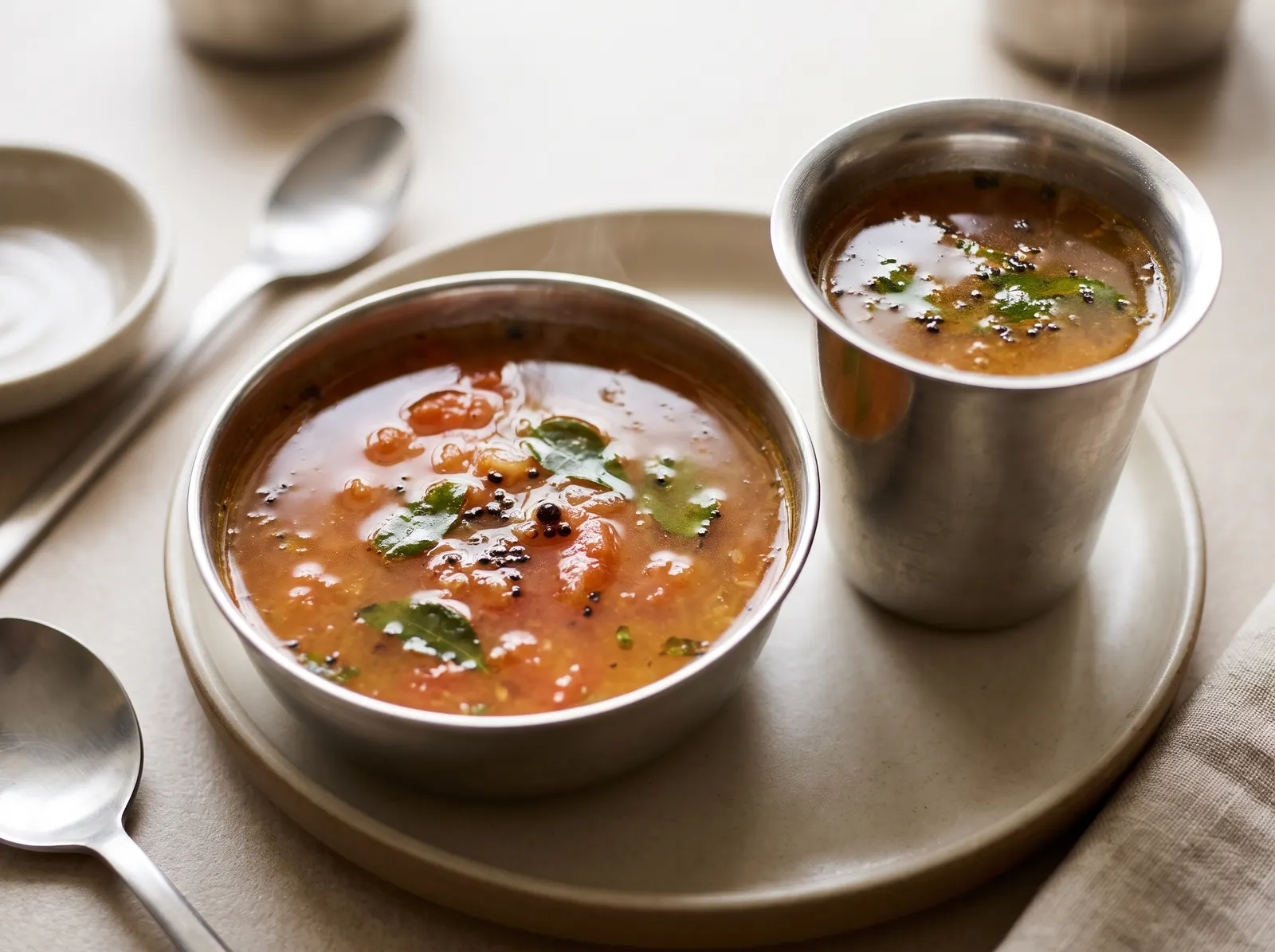
- Prep
- 15 min
- Cook
- 25 min
- Total
- 40 min
- Serves
- 4
- Heat
- Medium
What Rasam is
Rasam is a thin South Indian broth built on tamarind, tomato, black pepper and cumin, with a hot tempering of mustard seed and curry leaves poured in at the end. It is sour, peppery and light, and it is usually eaten with rice rather than as a starter. A spoonful of cooked toor dal gives this version a little body without making it thick.
Where it comes from
The Tamil word rasam, like the Kannada saaru, comes from the Sanskrit rasa, meaning juice, essence or sap. The earliest form is usually described as a pepper and tamarind broth, valued for its flavour and as a light, warming liquid at the end of a meal. Some accounts link it to Ayurvedic cooking, but the dating is not firmly established. Tomato rasam is a later variant, since tomatoes are usually dated to after the Portuguese arrived in India in the sixteenth century. The English word mulligatawny is commonly traced to the Tamil milagu thanni, meaning pepper water, though mulligatawny is a different dish from the rasam here.
How to eat it
Spoon it over a plateful of rice and mix it in, then eat with a spoon or with the right hand. It can also be drunk from a small cup as a warming finish to a meal. Sip it hot rather than boiling, since the pepper and tamarind are harsh when swallowed fast. In South Indian homes a meal often ends with curd rice, which cools the palate after the sourness of the rasam.
Goes well with
- Steamed basmati rice
- Crisp papadum
- Cucumber raita
How it varies
Rasam is a technique with a dozen names. Tamil kitchens distinguish thakkali rasam, built on tomato, from milagu rasam, which is almost all black pepper and tamarind and is made when someone has a cold; paruppu rasam adds cooked toor dal, and kollu rasam uses horse gram. Karnataka calls the same broth saaru, and Mysore rasam thickens it with roasted coconut and sweetens it slightly with jaggery. In Andhra and Telangana it is charu, often sourer and served with a great deal of rice, and Kerala makes a thinner rasam with more pepper. Sri Vaishnava and many temple kitchens leave out garlic and onion and use asafoetida instead, which changes the smell more than the taste; Iyer homes use garlic freely. Many households keep a jar of rasam powder, made from coriander seed, chilli, pepper, cumin, toor dal and curry leaf, dry-roasted and ground, and use it in place of pounding the spices fresh, which gives a rounder and less sharp broth. The tempering can be mustard and curry leaf, as here, or a simpler one of ghee, cumin and crushed pepper. No version is the original; the constants are tamarind, pepper and heat.
After the meal
Rasam keeps unusually well because tamarind is acidic and the broth has no dairy. In a covered jar in the fridge it holds three or four days, and it usually tastes better on the second day, once the pepper and cumin have settled into the tamarind. What fades is the aroma: curry leaf, mustard and crushed pepper are volatile, so a reheated rasam smells flatter than it tastes. Bring it to a bare simmer for a minute or two rather than a rolling boil, and add a fresh tempering of mustard seed and curry leaf afterwards if it has lost its edge, or just a squeeze of lemon. If it has reduced and turned salty, thin it with hot water rather than more tamarind. Leftover rasam is the base for rasam rice, cooked rice stirred into hot rasam and eaten with a spoon, or for cooking a vegetable: simmer drumstick or okra in it and the broth seasons them. It freezes for a month, though the curry leaf note goes. Reheat it in a pan rather than an aluminium one, which the acid pits.
Ingredients
- 1 1/2 tbsp (about 25 g) Tamarind paste
- 2 medium (about 200 g) Tomatoes, chopped
- 3 tbsp (about 50 g cooked), mashed Cooked toor dal — Optional; without it the rasam is thin and clear.
- 1 tsp (about 2.5 g) Black peppercorns, coarsely crushed
- 1 tsp (about 2 g) Cumin seeds, coarsely crushed
- 3 cloves (about 9 g) Garlic, crushed
- 8 to 10 leaves Curry leaves
- 1 tbsp Vegetable oil
- 1/2 tsp Mustard seeds
- 1 Dried red chilli
- 1 pinch Asafoetida (hing) — Check the label; some brands are cut with wheat flour.
- 1/4 tsp Ground turmeric
- 3/4 tsp Salt
- 1 litre (1000 ml), in two parts Water
- 1 small handful Fresh coriander leaf, chopped
Spices in this dish
How to cook it
1Simmer the tamarind with the tomato
Dissolve the tamarind paste in 800 ml of the water, then add the chopped tomato, the turmeric and the salt. Simmer for about ten minutes, mashing the tomato with the back of a spoon, until it has broken down. Tamarind is strongly acidic and needs time over heat to round off its sharpness, and the cooked tomato gives the broth its body.
2Stir in the mashed dal
Mash the cooked toor dal to a smooth paste with a spoon, whisk it into the simmering broth with the remaining 200 ml water, and simmer for five minutes more.
3Crush the pepper, cumin and garlic
Pound the peppercorns, cumin seeds and garlic together in a mortar, leaving them coarse rather than powdered. Coarse pieces give bursts of heat and a clean flavour, while a fine powder would make the broth gritty and cloudy.
4Temper the spices and finish
Heat the oil in a small pan and add the mustard seeds, waiting until they pop. Add the dried chilli, curry leaves and asafoetida, then the crushed pepper, cumin and garlic, and fry for thirty seconds. Pour the hot tempering into the broth, stir in the coriander and cover for two minutes, which traps the aroma that would otherwise escape.
Calories and nutrition
Per serving — 1 bowl (about 250 ml)
| Calories | 80 kcal |
|---|---|
| Protein | 2 g |
| Carbohydrate | 10 g |
| Fat | 4 g |
| Fibre | 2 g |
| Sodium | 448 mg |
Approximate values for a typical restaurant portion, calculated from standard ingredient tables. Actual figures vary with the kitchen, the oil used and the portion served. Not intended as medical or dietary advice.