Rice Kheer
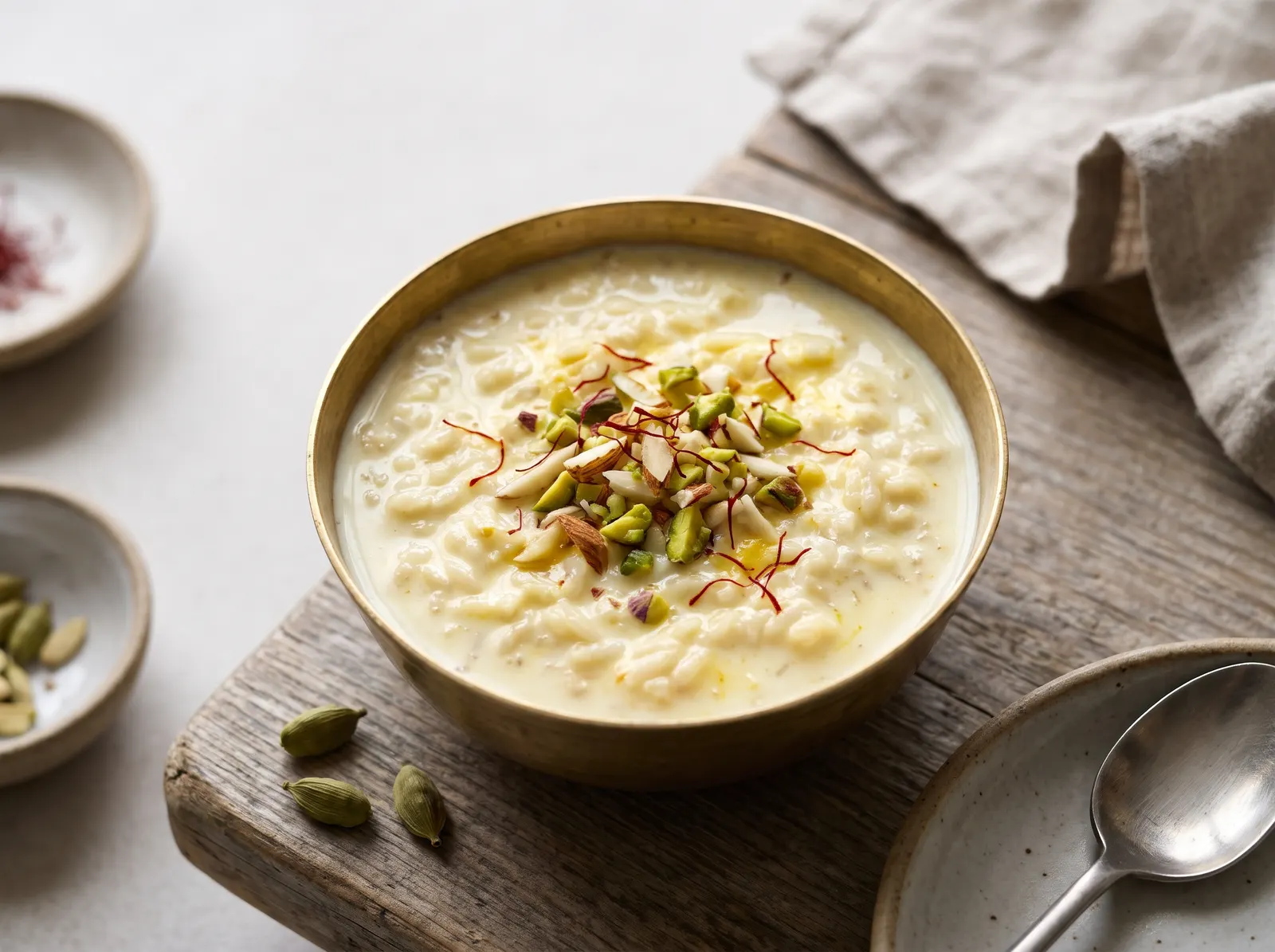
Whole milk slowly reduced with basmati, sugar and cardamom — a festival pudding finished with nuts.
- Prep
- 15 min
- Cook
- 45 min
- Total
- 60 min
- Serves
- 6
- Heat
- Not spicy
What Rice Kheer is
Rice kheer is whole milk simmered slowly with basmati rice, sugar and crushed cardamom until the grains soften and the milk thickens into a spoonable pudding. It is finished with toasted almonds and pistachio, and sometimes a few strands of saffron. It is served warm or chilled.
Where it comes from
Kheer takes its name from the Sanskrit kshira, meaning milk, and rice cooked in sweetened milk is found across India, Pakistan, Bangladesh and Nepal in many regional forms. The Persian sheer berenj and the Turkish sütlaç are the same idea of rice cooked in sweetened milk. Kheer is served as prasad, food offered to a deity and then shared with devotees, at festivals such as Janmashtami, Diwali, Navratri and Durga Puja. No single origin or date is documented for the dish.
How to eat it
Eat it from a small bowl with a spoon, warm or chilled as you prefer. It is rich and very sweet, so a small bowl is enough. Stir before each spoonful, since the nuts sink and the milk skin can settle at the edge. When it is offered as prasad at a temple or a festival in someone's home, it is usually received as a small portion from the shared offering rather than a full bowl.
Goes well with
- Masala chai
- Gulab jamun, at celebrations
- Fresh mango or sliced fruit in season
How it varies
Kheer goes by many names and the differences are real. In Tamil Nadu pal payasam is milk, rice and sugar reduced until it darkens to a pale pink, and paruppu payasam replaces the rice with moong dal and jaggery. Kerala's pradhaman is a different family altogether, built on coconut milk and jaggery, sometimes with rice ada or banana. Bengali payesh uses Gobindobhog, a small sticky aromatic rice, and in winter is sweetened with nolen gur, the date-palm jaggery that arrives when the sap runs. North Indian kheer is the version here, with basmati or a similar long grain; some homes use a short-grain rice instead so the pudding thickens faster. A few cooks reduce the milk by half before the rice goes in, and restaurant versions are often finished with condensed milk and a great deal of sugar. The garnish changes more than the base: raisins fried in ghee, slivered almonds, pistachio, saffron, a pinch of cardamom or nutmeg. Nepali kheer is usually thinner and less sweet, and it is one of the dishes made for Tihar, where it is eaten alongside sel roti.
After the meal
Kheer thickens dramatically in the fridge. Rice starch retrogrades as it cools and the pudding sets to a consistency where a spoon stands up in it, while the milk fat collects as a skin on the surface and a little whey separates underneath. That is normal, and it loosens again with heat and liquid. Reheat a portion with two or three tablespoons of milk per serving, in a pan over low heat, stirring constantly and scraping the base, until it just steams. Do not let it boil: the milk solids catch on the pan and the proteins can go grainy. In a microwave, heat in thirty-second bursts with a stir between them, which does the same job with less risk of scorching. Taste it, because it often needs a pinch more sugar or a pinch of salt. It keeps three days covered in the fridge and does not freeze: ice crystals break the starch gel and the milk proteins separate, so it thaws watery and grainy. Nuts should be added fresh each time, since they soften overnight. Cardamom and saffron are stronger the next day, which is the one thing that improves.
Ingredients
- 1 litre, full fat Whole milk
- 50 g (about 1/4 cup), rinsed and soaked twenty minutes Basmati rice
- 80 g (about 6 tbsp) Sugar — Adjust to taste; kheer thickens as it cools, so it tastes less sweet cold.
- 4 pods, crushed Green cardamom
- 6 threads, soaked in 1 tbsp warm milk Saffron — Optional.
- 1 tsp (about 5 g) Ghee
- 15 g Almonds, chopped
- 10 g Pistachios, chopped
Spices in this dish
How to cook it
1Bring the milk to a steady boil
Heat the milk in a heavy-based pan over medium heat and bring it to a rolling boil, then reduce to a steady simmer. A heavy base spreads the heat, and the milk is less likely to scorch on the bottom, which is the most common way kheer goes wrong.
2Simmer the rice until it breaks down
Add the drained rice and simmer on low heat for thirty-five to forty minutes, stirring every few minutes and scraping the base. The milk reduces by about a third and the rice softens until it mashes easily between two fingers. Frequent stirring keeps the rice from sticking and burning.
3Add the sugar and cardamom late
When the rice is soft, stir in the sugar, cardamom and the saffron milk, if using, and simmer for five minutes more. Many cooks add sugar late, because it can slow the rice from softening, and this way you can judge the texture before the sweetness goes in.
4Toast the nuts and serve loose
Warm the ghee in a small pan, toast the almonds for about a minute until fragrant, then add the pistachios. Scatter the nuts over the kheer. It thickens as it cools, so take it off the heat while it still looks slightly loose.
Calories and nutrition
Per serving — 1/6 of the pot (about 140 g)
| Calories | 216 kcal |
|---|---|
| Protein | 7 g |
| Carbohydrate | 29 g |
| Fat | 8 g |
| Fibre | 1 g |
| Sodium | 72 mg |
Approximate values for a typical restaurant portion, calculated from standard ingredient tables. Actual figures vary with the kitchen, the oil used and the portion served. Not intended as medical or dietary advice.