Sambar
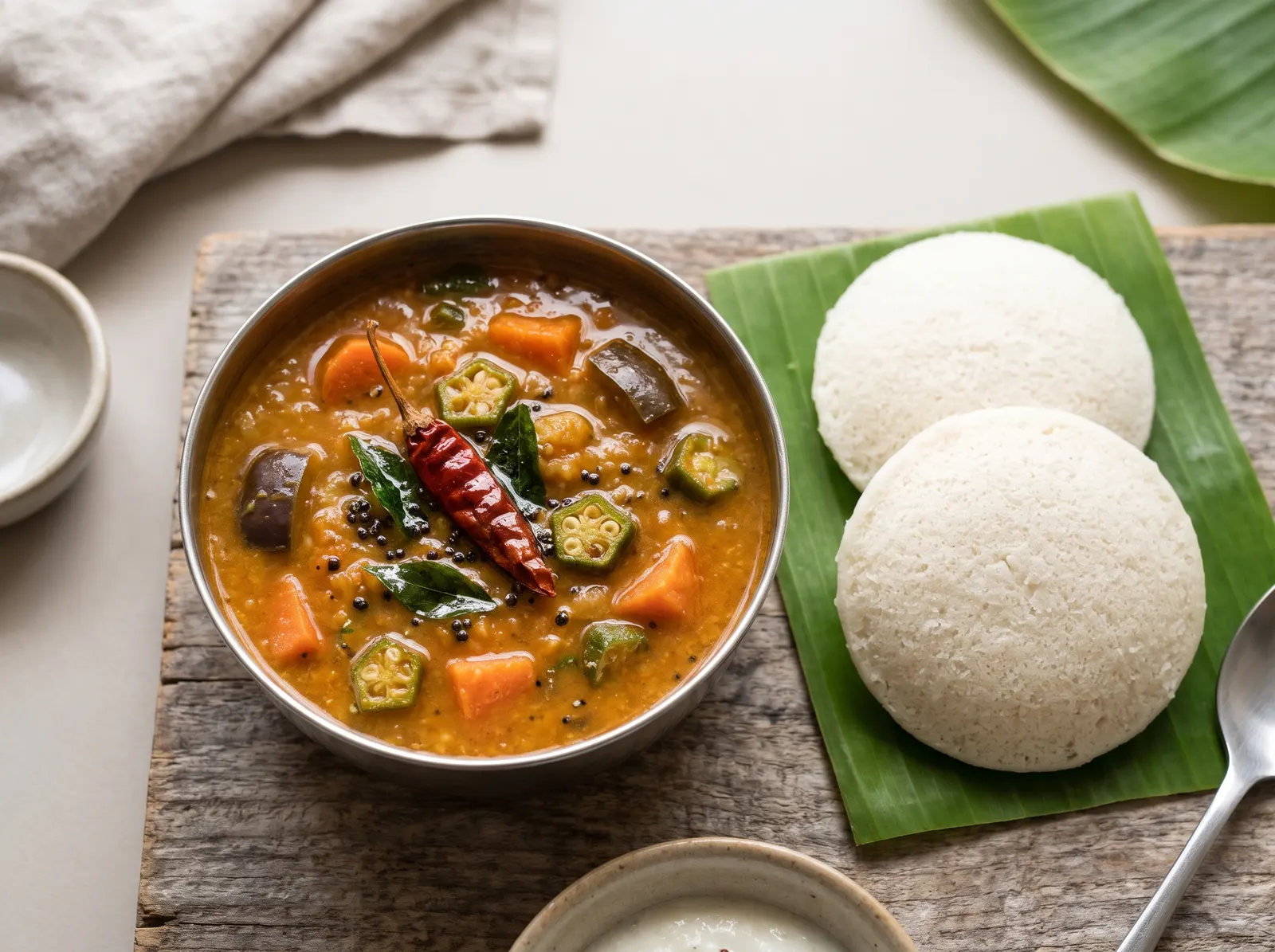
A tangy South Indian lentil stew of toor dal, tamarind and vegetables, finished with a mustard-seed tempering.
- Prep
- 20 min
- Cook
- 40 min
- Total
- 60 min
- Serves
- 4
- Heat
- Medium
What Sambar is
Toor dal is cooked until soft, then given a sour edge from tamarind and a warm, roasted note from sambar powder, with vegetables simmered through the stew. It is thinner than most North Indian dal and is eaten as a soupy stew with rice or with South Indian breakfast dishes. The sizzling tempering of mustard seeds and curry leaves on top gives it its characteristic finish.
Where it comes from
Sambar is a staple of Tamil Nadu and wider South India, and its origin is disputed. A popular account ties it to the Thanjavur court of the Maratha rulers, where a cook is said to have made a tangy dal for a visiting prince, but that story is not documented. A 1648 Kannada work about a Mysore king, the Kanthirava Narasaraja Vijaya, describes a similar dish, called huli in Karnataka, and some writers link it to the Tamil version. The name is often traced to a word for mixed spices or condiments, though etymologies differ.
How to eat it
Serve sambar in a deep bowl with steamed rice, pouring it over the rice, or with idli, dosa or vada for breakfast. In many South Indian homes it is eaten with the right hand, mixing rice and sambar into a soft mass, though cutlery is common in restaurants. Taste a spoonful before adding more, since tamarind sourness varies a lot between batches and brands. A spoonful of ghee on the rice is a common and mild addition, and coconut chutney on the side is traditional.
Goes well with
- Steamed rice
- Idli or dosa
- Coconut chutney
How it varies
Sambar varies more than almost any other dish on a South Indian menu, starting with the powder. Tamil home versions often grind their own from roasted coriander, chana dal, dried chilli and a little fenugreek, and the result is sharper and more fragrant than a packet blend. Udupi and Mangalorean sambar adds coconut and jaggery, so it is sweeter, thicker and paler, and it is the style most often served with idli in restaurants. Tamil Brahmin kitchens commonly leave out onion and garlic, use more tamarind and a heavier tempering, and keep the vegetables simple. Kerala sambar is built on coconut, curry leaves and a wider mix of vegetables, including drumstick, pumpkin and yam. Andhra versions push both the chilli and the tamarind further. Thickness is a kitchen decision as much as a regional one: sambar for idli is thin enough to soak into the cake, while sambar for rice is thicker. The vegetables follow the season rather than a fixed list, which is why no two households make the same pot.
After the meal
Sambar thickens into a jelly overnight, because the toor dal starch retrogrades as it cools; a pot that pours at dinner will need loosening the next day. Add water, as much as a third of the volume, and reheat to a simmer for five minutes, stirring so the gel dissolves evenly. The tamarind sourness reads sharper once the pot has reduced, and the sweetness of the jaggery fades, so taste before serving and adjust with a pinch of jaggery rather than more tamarind. The tempering is the real casualty: mustard seeds and curry leaves lose their volatile aroma within hours, so heat a fresh spoonful of oil with mustard seeds and curry leaves and pour it over the reheated pot. Okra does not survive at all, going slimy and grey — add it fresh, or keep it out of the batch you plan to reheat. The dal base keeps three days in the fridge.
Ingredients
- 150 g Toor dal (split pigeon peas), rinsed — Also sold as arhar. Split and skinned.
- 30 g Tamarind pulp — Soaked in 150 ml hot water and strained.
- 1 medium (about 150 g) Onion, chopped
- 2 medium (about 200 g) Tomatoes, chopped
- 1 medium (about 80 g) Carrot, cut into chunks
- 150 g Aubergine, cut into chunks
- 100 g Okra, cut into 2 cm pieces — Some kitchens leave it out altogether; it thickens the stew.
- 2 tbsp (about 12 g) Sambar powder — Brands differ a lot; start with less.
- 1 tsp (about 4 g) Jaggery, grated
- 1 tbsp Sesame or vegetable oil
- 1 tsp Mustard seeds
- 8 to 10 Curry leaves
- 1/4 tsp Asafoetida (hing) — Many blends are cut with wheat flour; check the label.
- 1 tsp Salt
- 900 ml Water
- small bunch, to finish Fresh coriander leaf
Spices in this dish
How to cook it
1Cook the toor dal until it mashes easily
Rinse the dal and simmer it in the 900 ml of water for 30 to 40 minutes, skimming off any foam, until the grains crush easily between finger and thumb. Cooking the dal fully soft first lets it become a smooth base, rather than staying as separate grains in the stew.
2Extract the tamarind water
Soak the tamarind pulp in 150 ml of hot water for ten minutes, squeeze it with your fingers, then strain out the fibres. Tamarind gives sambar its defining sourness, and straining out the fibres keeps the stew smooth rather than stringy.
3Simmer the vegetables with the tamarind and powder
Add the onion, tomato, carrot, aubergine, okra, tamarind water, sambar powder, jaggery and salt to the dal and simmer for about fifteen minutes until the vegetables are just tender. The powder needs heat to release its aromas, and gentle simmering keeps the vegetables in shape rather than letting them dissolve.
4Temper the mustard seeds and curry leaves in oil
Heat the oil in a small pan until it shimmers, then add the mustard seeds and wait until they pop. Add the curry leaves and asafoetida for about ten seconds. Blooming the seeds in hot oil gives sambar its nutty, sharp top note.
5Pour the tempering over and finish
Pour the hot tempering over the sambar, stir it in, cover for a minute, and then scatter the coriander leaf on top.
Calories and nutrition
Per serving — 1/4 of the pot, about 350 g, without rice
| Calories | 246 kcal |
|---|---|
| Protein | 11 g |
| Carbohydrate | 43 g |
| Fat | 5 g |
| Fibre | 10 g |
| Sodium | 610 mg |
Approximate values for a typical restaurant portion, calculated from standard ingredient tables. Actual figures vary with the kitchen, the oil used and the portion served. Not intended as medical or dietary advice.