Tandoori Mixed Grill
Yoghurt-marinated meat cooked hard against the wall of a clay oven.
- Prep
- 60 min
- Cook
- 25 min
- Total
- 85 min
- Serves
- 4
- Heat
- Medium
What Tandoori Mixed Grill is
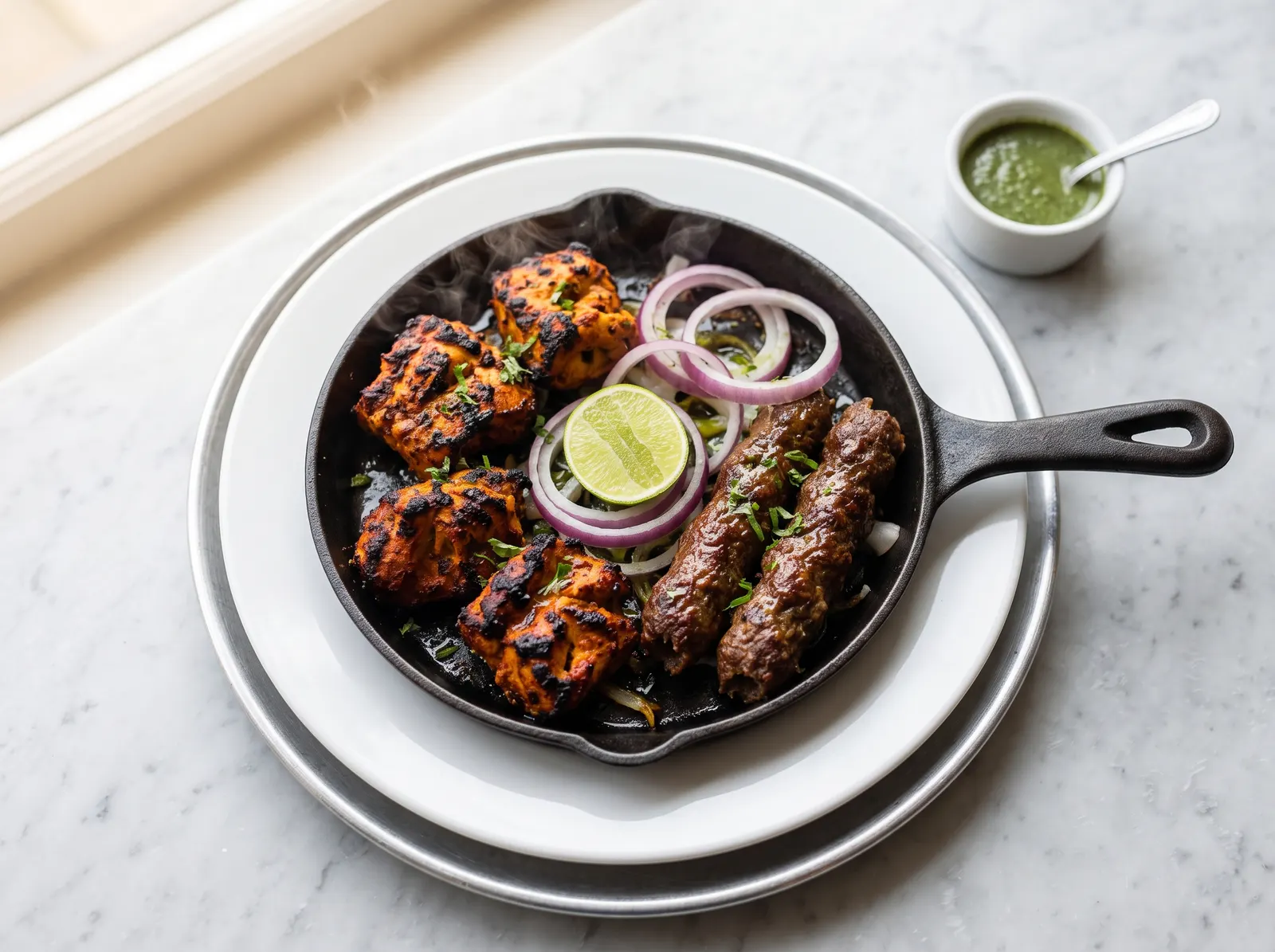
A tandoori platter brings together chicken tikka and seekh kebab, charred at the edges and served on a sizzling plate with raw onion and lime. The marinade is yoghurt-based, which does two things at once: the acid tenderises, and the milk solids cling to the meat and blacken, giving the characteristic spotted char.
Where it comes from
Tandoor cooking is ancient across Central and South Asia, but the restaurant tandoori platter is a twentieth-century invention, popularised in Delhi and then everywhere. The oven works by radiant heat from clay walls at 400°C or more, which cooks a skewer in minutes — far faster and drier than any grill, which is why tandoori meat is charred outside and still juicy inside.
How to eat it
Squeeze the lime over everything before you start — the platter is rich and the acid is part of the design, not a garnish. Eat the raw onion rings between pieces rather than all at once; they clear the palate. Tandoori meat is a starter in most restaurants, eaten with green chutney and no bread, before the curries arrive. If it comes on a sizzling plate, give it thirty seconds to stop spitting.
Goes well with
- Mint and coriander chutney
- Sliced onion with lemon
- A cold lassi
How it varies
Tandoori cooking in a restaurant is a whole menu of marinades on one heat source. Chicken tikka is the boneless cube version of tandoori chicken, which is cooked on the bone and comes out juicier; malai tikka is coated in cream and cheese and barely coloured; reshmi kebab uses a thinner, silkier marinade; seekh kebab is minced meat worked until it holds on a skewer; boti kebab is lamb or goat cubes. Punjabi and Delhi kitchens lean on Kashmiri chilli for colour and mustard oil for pungency, and many add raw papaya paste to tenderise chicken, which softens the fibres but can make the meat mealy if it is left too long. Pakistani tikka is hotter and more sour, with more chilli and lemon. Nepali sekuwa, skewered meat grilled over coals and seasoned with timur, is a different tradition that shares the skewer and the smoke. Tandoori chicken on the bone is slashed to the bone before marinating, so the marinade reaches the meat next to it and the heat can cook it through. Vegetarian platters swap in paneer tikka, tandoori aloo and mushrooms, and paneer needs a shorter marinade because it does not absorb like meat. The sizzling plate is theatre, but it also keeps the meat from going cold.
After the meal
Tandoori meat has already lost most of its surface moisture, so it dries out faster than a curry does. In the fridge the yoghurt crust sets and can turn slightly sour after two days, and the charred edges go soft. Reheat it covered, with a spoon of water or a knob of butter in the dish, at 160°C for eight minutes, or slice it into a covered pan over low heat with a splash of water for four minutes. The best use for leftovers is not reheating at all but a gravy: tikka simmered briefly in a tomato, butter and cream sauce is the home version of chicken tikka masala, and the meat's dryness matters less once it is coated. Kebabs made from mince dry out more than cubes, so crumble them into rice or a wrap rather than serving them whole. It freezes for two months if packed with a little of its marinade. What does not survive is the green chutney, which darkens and loses its heat within two days, and the raw onion, which turns pungent once dressed with lemon.
Ingredients
- 500 g Boneless chicken thigh, cubed
- 400 g Minced lamb, for the seekh
- 200 g Thick yoghurt — Hung or strained.
- 3 tbsp Ginger-garlic paste
- 2 tsp Kashmiri chilli powder — For the red colour without punishing heat.
- 1 tsp each Garam masala and cumin powder
- 2 tbsp Gram flour — Binds the seekh mince so it holds on the skewer.
- 3 tbsp Mustard oil
- 2 tbsp Lemon juice
- 1 Red onion, sliced into rings
- to serve Green chutney
Spices in this dish
How to cook it
1Strain the yoghurt first
Hang the yoghurt in a cloth for an hour, or use thick Greek-style. Watery yoghurt runs off the meat in the oven and takes the spices with it, leaving pale, steamed chicken.
2Marinate the chicken twice
First rub the cubes with lemon juice, salt and half the ginger-garlic paste for twenty minutes, then coat in the yoghurt mixed with the remaining paste, chilli, garam masala and mustard oil. Refrigerate four hours or more.
3Bind the seekh mince
Mix the lamb with gram flour, grated onion squeezed dry, chopped chilli and spices, then knead it hard for several minutes. Unlike momo filling, seekh mince needs working — that is what makes it stick to the skewer rather than dropping off.
4Rest the mince before shaping
Chill the kneaded mince for thirty minutes, then press it along flat skewers with wet hands into even sausages.
5Cook at the highest heat you have
In a domestic oven, use the grill element at maximum with the shelf near the top, or a very hot cast-iron pan. Turn once. You are aiming for black spots, not an even brown — an evenly coloured tikka has been cooked too gently and will be dry.
6Finish with smoke, if you want it
Place a small bowl in the pan with a lit piece of charcoal, pour a teaspoon of ghee over it and cover for two minutes. This dhungar method is how home cooks imitate the tandoor's smoke.
Calories and nutrition
Per serving — 1 mixed platter (about 320 g)
| Calories | 590 kcal |
|---|---|
| Protein | 52 g |
| Carbohydrate | 12 g |
| Fat | 37 g |
| Fibre | 2 g |
| Sodium | 1150 mg |
Approximate values for a typical restaurant portion, calculated from standard ingredient tables. Actual figures vary with the kitchen, the oil used and the portion served. Not intended as medical or dietary advice.