Vegetable Pulao
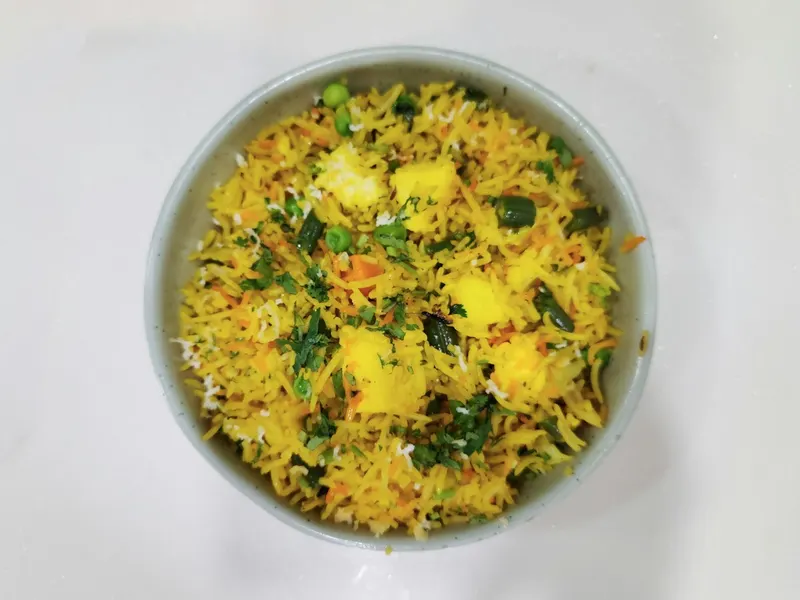
Spiced basmati cooked in one pot with carrot, peas and cauliflower, and fried cashews on top.
- Prep
- 25 min
- Cook
- 25 min
- Total
- 50 min
- Serves
- 4
- Heat
- Mild
What Vegetable Pulao is
Vegetable pulao is basmati fried with whole spices, onion and vegetables, then cooked in measured water until each grain is separate and fragrant. It is a complete one-pot meal, with cashews fried in ghee for richness and a little garam masala to finish. Unlike a biryani, nothing is layered or sealed for dum: the rice and vegetables cook together in one pan.
Where it comes from
Pulao is usually traced to Persia. The word comes from the Persian pilaw, which passed into Turkish as pilav, and the method of frying rice in fat and finishing it in liquid is associated with Persian and Central Asian cooking. Persian cooking reached South Asia largely through Muslim rulers, and it developed further in Mughal kitchens, where the rice met the spices of the subcontinent. The exact origin is not settled. Vegetarian pulao is ordinary home food across India and Pakistan.
How to eat it
A pulao is usually a meal on its own, so eat it in a bowl with a spoon or the right hand, with one side to cut through the richness. Raita is the classic partner, since its cold yoghurt sits well against the spiced, fatty rice. Stir the cashews through rather than leaving them all on top, so each mouthful gets a little of them.
Goes well with
- Cucumber raita
- Dal tadka
- Chicken curry
How it varies
Pulao is a family, and the family is wide. The simplest member is matar pulao, peas and rice with nothing else, which is what many Punjabi homes cook on a weeknight. Add chopped potato and a little turmeric, and often leave out the onion and garlic, and the same pot becomes tehri, the one-pot rice of Awadh and eastern Uttar Pradesh, eaten with pickle and nothing else. Bengali mishti pulao goes the other way, with raisins, cashews and a little sugar, and is served at weddings beside a rich meat curry. Kashmiri pulao is a festival dish with dried fruit and saffron, closer to a sweet rice than to this recipe. South Indian rice dishes built on a wet-ground coconut and coriander masala, such as Karnataka's masale bath, are close cousins rather than versions of this dish. Restaurant kitchens often parboil the rice in plenty of salted water, drain it, and fold in a separately cooked vegetable masala, which keeps the grains perfect but leaves the dish less integrated than a one-pot pulao. Where onion and garlic are avoided, as in Jain and some Brahmin kitchens, hing and ginger carry the base instead and the result is still recognisably the same dish.
After the meal
Pulao keeps better than most rice dishes because the fat and the vegetables slow the grains from drying, but it still changes. In the fridge the rice hardens while the carrot and cauliflower soften further. Reheat portions with two tablespoons of water per serving, covered, in a microwave at medium power for two minutes, or spread in a dish, cover with foil and give it twelve minutes at 160°C. The steam softens the retrograded starch; dry heat only makes the grains chewy. Scatter fresh cashews and coriander after reheating, not before, because both go limp and dull in the cold. It freezes for a month if pressed flat in bags and reheated from frozen with a splash of water. Cool it within an hour, keep it no more than a day, and reheat it only once. Leftover pulao also fries well in a little oil with a beaten egg stirred through, which suits the softened vegetables better than reheating them again.
Ingredients
- 250 g Basmati rice — Rinsed and soaked twenty minutes, then drained.
- 2 tbsp (about 28 g) Ghee — Split between frying the cashews and the base.
- 15 g Cashews, halved
- 1 tsp Cumin seeds
- 1 bay leaf, 5 cm cinnamon, 3 green cardamom pods, 3 cloves Whole spices
- 1 medium (about 150 g) Onion, thinly sliced
- 1 tbsp Ginger-garlic paste
- 1, optional Green chilli, slit
- 1 medium (about 100 g) Carrot, diced
- 100 g Cauliflower florets
- 100 g Frozen green peas
- 1/2 tsp Garam masala
- 3/4 tsp Salt
- 450 ml Water
- 1 small handful, to finish Fresh coriander leaf
Spices in this dish
How to cook it
1Fry the cashews first
Heat 1 tbsp of the ghee in a heavy pan and fry the halved cashews until pale gold, then lift them out with a slotted spoon and set them aside. Frying them on their own keeps them crisp; left in the pot they soften in the steam and lose their bite.
2Build the base with spices and onion
Add the rest of the ghee and the cumin, bay leaf, cinnamon, cardamom and cloves, and let them sizzle for thirty seconds. Add the sliced onion and fry over medium heat for about ten minutes until golden at the edges. The onion gives the rice its savoury sweetness, so it needs colour, not just softness.
3Add ginger-garlic, then the vegetables
Stir in the ginger-garlic paste and cook for two minutes until the raw smell fades. Add the carrot, cauliflower and green chilli and fry for three minutes so the vegetables take up the fat and spice before any water goes in.
4Add the rice, peas and water
Add the drained rice, garam masala, peas and salt and stir gently for a minute so everything is coated. Pour in the 450 ml water, bring it to a boil, then cover and cook on the lowest heat for fifteen minutes. The water is matched to the rice and vegetables, so there is nothing to drain off at the end.
5Rest, fluff and garnish
Turn off the heat and rest the pan covered for ten minutes, which lets the steam finish any grains still firm in the centre. Fork the rice through gently, scatter the fried cashews and the coriander over the top, and serve straight away.
Calories and nutrition
Per serving — 1/4 of the pot (about 240 g)
| Calories | 370 kcal |
|---|---|
| Protein | 8 g |
| Carbohydrate | 62 g |
| Fat | 10 g |
| Fibre | 4 g |
| Sodium | 471 mg |
Approximate values for a typical restaurant portion, calculated from standard ingredient tables. Actual figures vary with the kitchen, the oil used and the portion served. Not intended as medical or dietary advice.