Himalayan food
High-altitude food: noodles, dumplings and broth, built for cold and thin air rather than for spice.
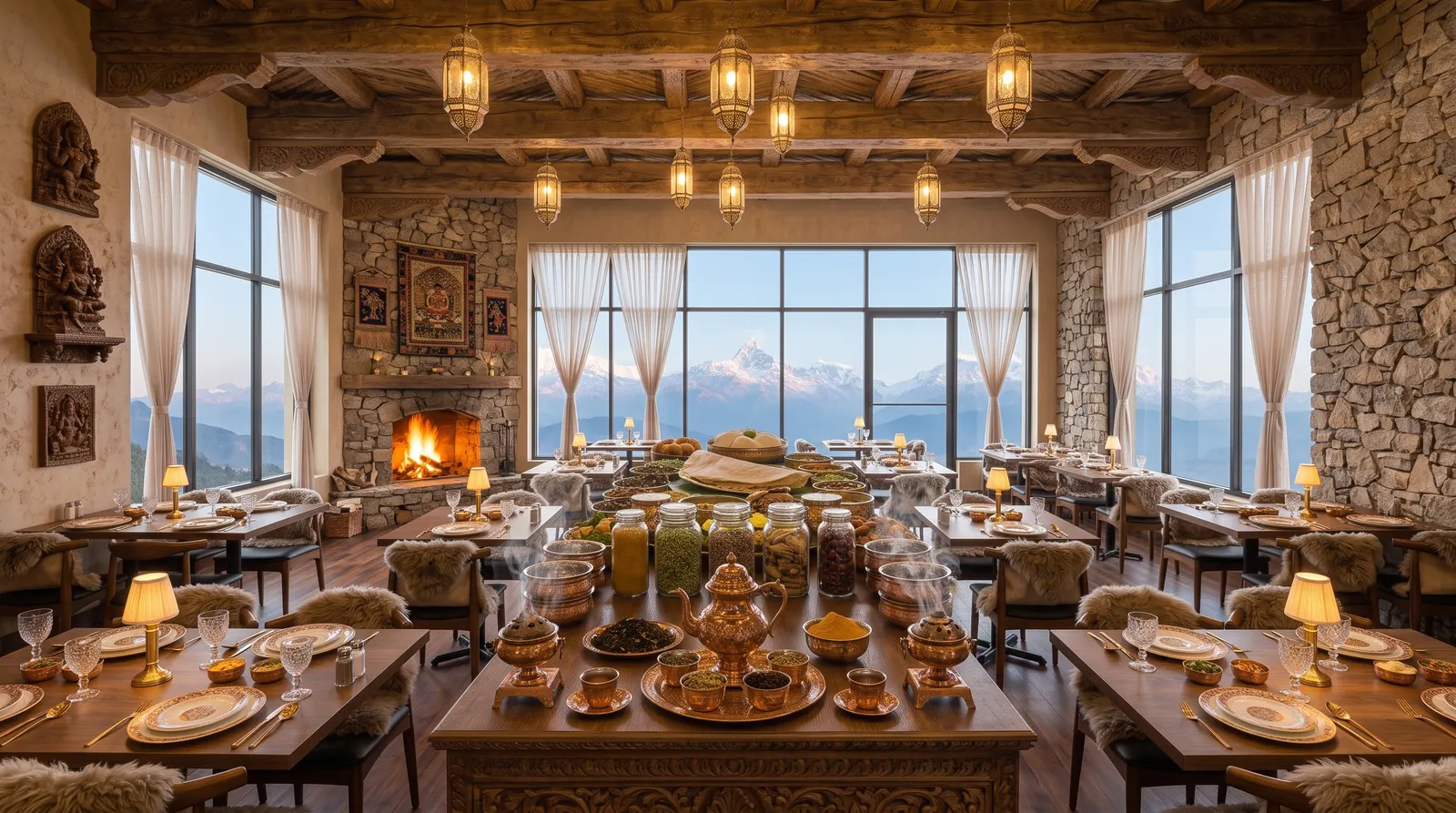
What Himalayan food is
Himalayan menus draw on Tibetan and high-hill Nepali cooking, where little grows and a meal has to be warming and calorie-dense. Expect wheat rather than rice, broth rather than gravy, and a spice level far below anything on an Indian menu. The food is closer to Central Asia than to the subcontinent. It is also, in restaurant form, a small selection from a large cooking area — the dishes that can be made in a city kitchen and sold to people who have never been above sea level.
What defines it
Simplicity and heat retention. Thukpa — hand-pulled or cut noodles in a bone broth with vegetables and a little meat — is the centrepiece, and the broth is where the work goes. Momo appear here too, but the Tibetan versions are often larger, plainer and served with a thinner chilli sauce. Butter and barley recur: tsampa, roasted barley flour, and po cha, tea churned with salt and butter, which tastes more like a thin soup than a drink. The technique is boiling and steaming rather than frying. The broth is made from bones and simmered for hours and the noodles are cooked in it; momo go into the steamer with the filling still raw; tingmo, the steamed yeast bread, is the one bread in the repertoire. There is almost no oven, because there is no fuel for one.
How a meal works
A bowl per person rather than shared plates, because the food is soup-led. Thukpa arrives very hot and is eaten with both chopsticks and spoon: chopsticks for the noodles, spoon for the broth. Momo come by the plate to share. There is rarely a bread course and rarely rice. The broth is served scalding and is meant to be eaten slowly; a radish pickle sits on the side. Butter tea, if it is on the menu at all, comes in a small bowl rather than a cup and is drunk through the day rather than with a meal, which is why a restaurant portion is small.
What it tastes like
Salt, fat and umami, with heat arriving late and by choice. The base is a bone broth or a butter-and-salt mixture, and the cooking does not use the souring agents of South Asia — no tamarind, no yogurt marinade, no vinegar. Sourness, when it appears, comes from fermented greens or dried radish, and it is a background note rather than the point. Fat is butter, yak cheese or the fat of the meat itself, and it is there for calories as much as for flavour; this is cooking designed to be eaten in cold air. Heat is a condiment, not an ingredient: chilli sauce or a chilli-and-garlic paste is served alongside so that each person adjusts their own bowl, and the broth itself is deliberately mild. Sweetness is almost absent from the savoury food, and the sweetness people remember is in the tea, and only in the Indian-influenced version. The overall effect is closer to a good European broth than to a curry, with the noodles and dumplings there to carry it.
Where it comes from
The food on a Himalayan menu comes from the Tibetan plateau and the high valleys around it, where the growing season is short, fuel is scarce and the staples are barley, wheat and dairy. Tsampa is the old staple: it needs no cooking, only butter tea to work it into a paste, which is exactly what a place with little firewood requires. Barley grows higher than rice or wheat, and the cooking reflects that limit — noodles and dumplings from wheat in the lower valleys, barley and root vegetables higher up, and meat from yak, goat and sheep used sparingly and boiled rather than roasted. Butter and salt, not sugar, are the flavour base; trade shaped the rest. The salt-for-grain trade between Tibet and Nepal moved through the high passes, and tea came up from China pressed into bricks, which is why butter tea is made from brick tea rather than leaf. The Tibetan diaspora after 1959 carried the cooking out — to India and Nepal first, then to Europe and North America — and the restaurant menu abroad settled on a small set: momo, thukpa, tingmo, shabaley.
If it is your first time
Thukpa if it is cold, momo either way. Ask for the chilli sauce on the side rather than in the bowl. If shabaley is on the menu, a fried meat pastry, order one: it is the thing most people have never had and immediately want again. Order the thukpa and the momo together and share, because one bowl of thukpa is a whole meal and a plate of momo is not. If the menu offers a set or a thali, read it carefully: it is usually a plate of rice, dal and curry borrowed from the Indian side, not anything from the mountains.
Worth knowing when you order
- Thukpa is the dish to judge the kitchen by
- Butter tea is an experience, not a beverage — try a small cup first
- Read the set menu before ordering it; it is often Indian food in disguise
Dishes to know
Regional variation
Restaurants labelled Himalayan abroad are usually run by Tibetans, Sherpas or people from Nepal's northern districts, and the menu depends heavily on which. A Tibetan kitchen leans towards thukpa, tingmo and shabaley; a Sherpa one towards potato dishes like rildok. Many also carry a short Indian section for customers who expect it, in the same pattern as Indo-Nepali places. The neighbouring traditions are close but not identical. Bhutanese cooking leans hard on chilli and cheese, in dishes that would be unrecognisable on a Tibetan menu. Ladakhi cooking, on the Indian side of the border, is close to Tibetan but uses more apricot and buckwheat, and a Ladakhi kitchen will usually have a thukpa and a momo too, made slightly differently.