Indian and Nepali food in Singapore
Where Indian food is part of the national food: prata at midnight, fish head curry, and Little India for the rest.
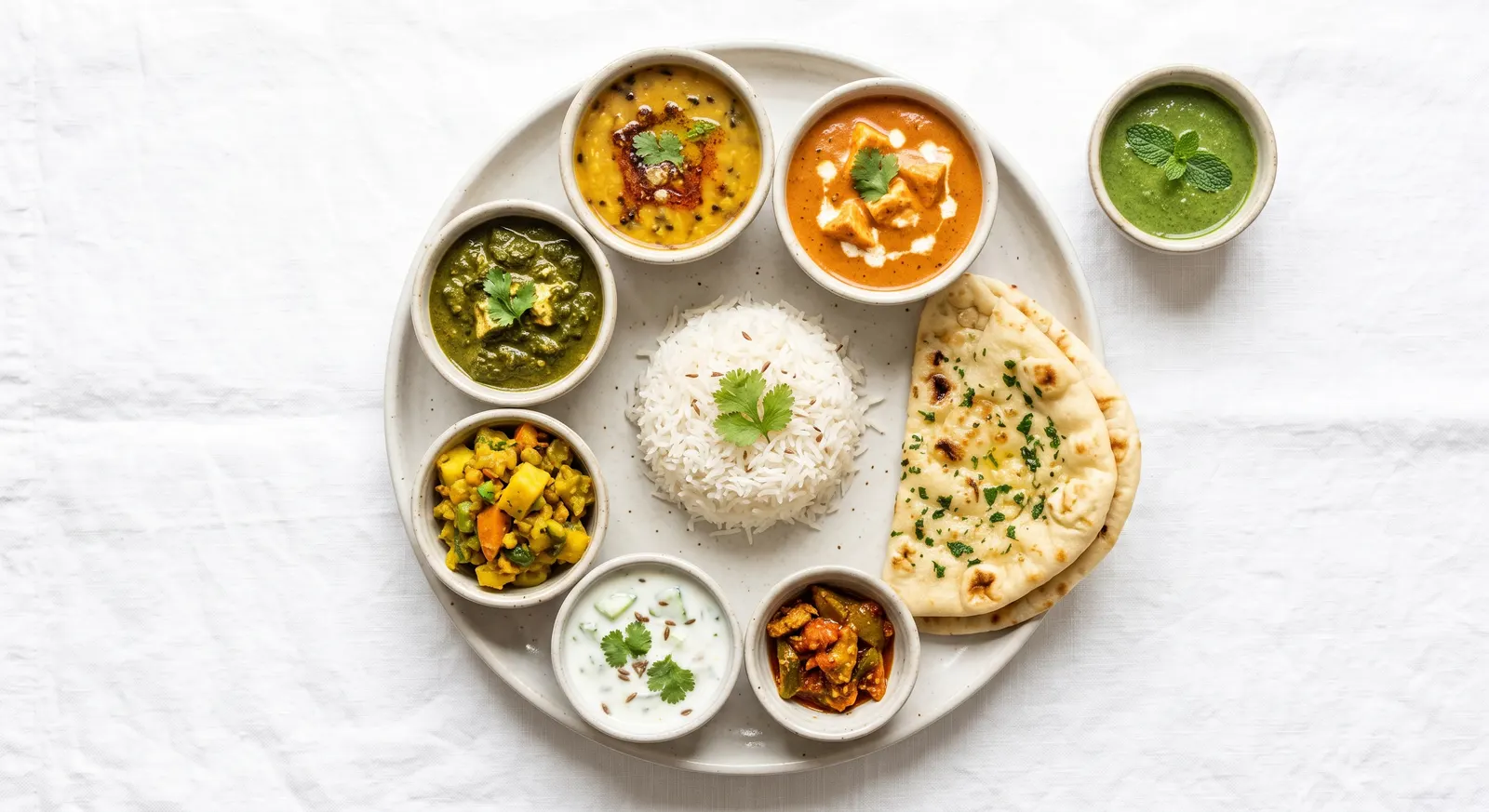
Illustrative dish photo, not a photo of Singapore.
The scene in Singapore
Indian food in Singapore leans Tamil, and especially Tamil Muslim cooking: roti prata, murtabak and biryani sold from stalls that Chinese, Malay and Indian Singaporeans all eat at. North Indian restaurants have become more visible in recent years. Some dishes here, such as fish head curry, were invented in Singapore by Indian cooks for local tastes.
How it got here
Indian workers began to settle around Serangoon Road in the 1820s, employed at brick kilns and then in the cattle trade, and the area grew into the centre of the Indian community without ever being officially designated for it. It was named Little India only in the 1980s, and was gazetted a conservation area on 7 July 1989. Fish head curry is credited to M. J. Gomez, a Kerala-born immigrant who adapted a South Indian fish curry for Chinese customers, a fusion of South Indian and Chinese cooking.
What to expect
Prata is a popular late-night supper and comes with many fillings; murtabak is prata stuffed with minced meat or sardines. Nasi biryani is eaten at both Indian and Malay weddings. Food is often served on a banana leaf or a metal plate and eaten with the right hand. The rarer South Indian items, such as appam, idli and thosai, are found mainly where the clientele is Indian, in and around Little India. Indian rojak is a Singapore salad of fried potatoes, egg and tofu that is not found in India.
Where to look
- Little India and Serangoon Road — The historic centre of Singapore's Indian community, with the widest range of South Indian and North Indian eating.
- Tekka Centre — A wet market, food centre and housing block that opened in 1981 on the site of the old Tekka Market, at the heart of Little India.
- Hawker centres across the island — Indian Muslim stalls selling prata, murtabak and biryani sit in ordinary neighbourhood food centres, not only in Little India.
- Sophia Road — Where M. J. Gomez is recorded as having first sold fish head curry, in 1949.
Where to eat

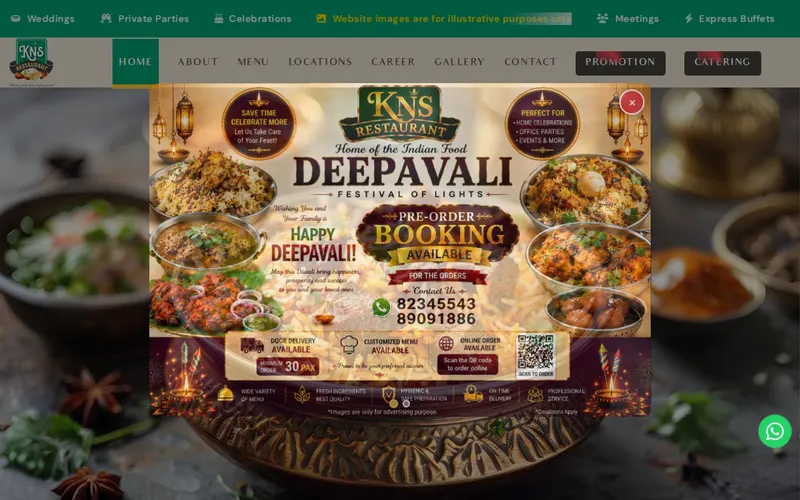
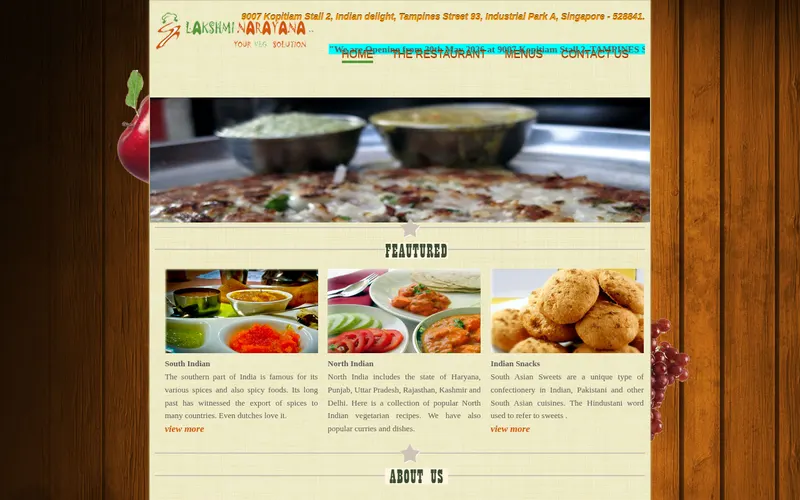
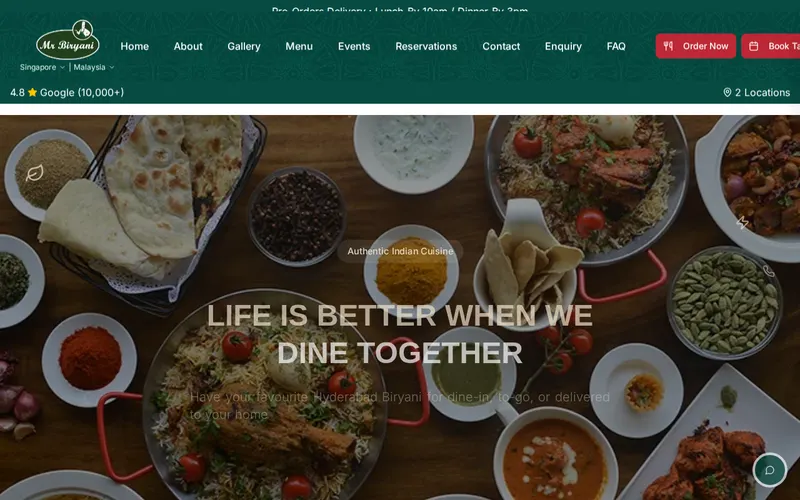
Practical notes
Indian food here is not confined to one district: it is sold at hawker centres, ordinary restaurants and upscale rooms, and some long-established South Indian vegetarian restaurants have opened outside Little India. Little India is the place for the full range, and becomes the main stage for public celebrations of Deepavali and Pongal. Expect banana-leaf service to be a style of meal rather than a dish, and check what a place serves before assuming it is vegetarian.
What is listed in Singapore
209 restaurants in the directory, by cuisine: