Indian and Nepali food in London
The deepest South Asian food city outside the subcontinent, and the one where the regional distinctions actually survive.
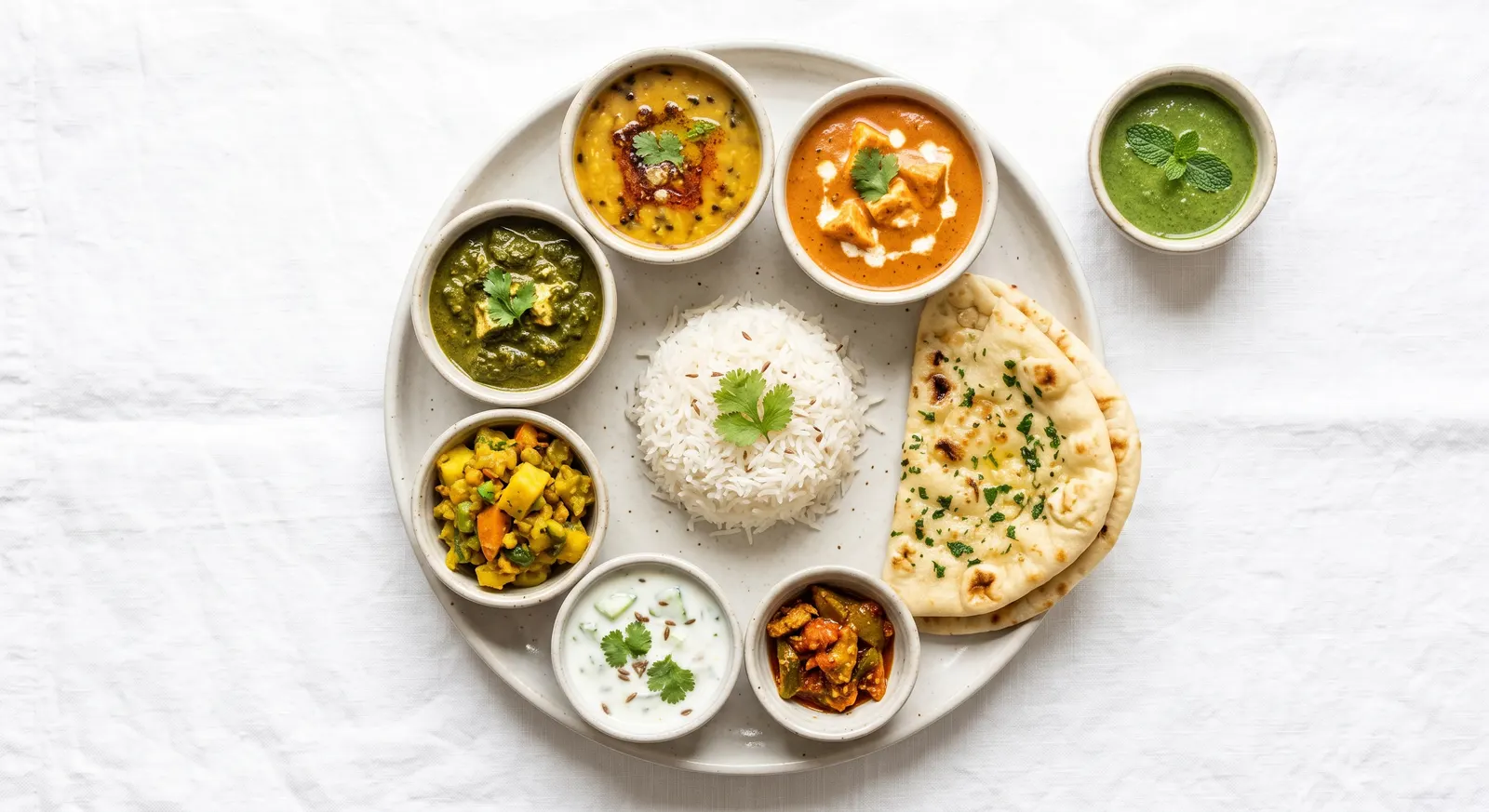
Illustrative dish photo, not a photo of London.
The scene in London
London has South Asian food at every level at once: Gujarati vegetarian cafés, Punjabi dhabas, Bangladeshi curry houses, Sri Lankan and Keralan kitchens, and a generation of restaurants doing regional Indian cooking at serious prices. It is one of the few cities outside the subcontinent where you can eat genuinely different regional traditions in a single week rather than variations on the same Punjabi-descended menu. The city's advantage is not that it holds one great restaurant but that it holds enough of each tradition for comparison to be possible.
How it got here
South Asian food has been cooked in London for longer than most accounts suggest. The first Indian restaurant in the city, the Hindostanee Coffee House, opened near Portman Square in 1810, aimed at officers and officials who had served in India; it was a curiosity rather than the start of a trade. The trade came with the docks. Lascars from Sylhet and Bengal signed on to British ships and settled around the East End, and small kitchens followed the men who worked the river. Migration arrived in distinct waves and each left its own food. Those Sylheti seafarers and the relatives who joined them built the curry-house trade that defined British Indian food for decades. Punjabis settled in Southall from the 1950s. East African Asians expelled from Uganda in 1972 brought Gujarati cooking to Wembley and Harrow. Sri Lankan Tamils came to Tooting and Wembley during the civil war. The map of London's South Asian food is a map of those arrivals. Each wave settled where the work was: cheap housing near the docks, mills and factories in the west, and later the airport and its service jobs around Hounslow.
What to expect
A sharper split than most cities between the curry house and the regional restaurant. The former is a British institution with its own invented canon — tikka masala, balti, vindaloo as a heat scale rather than a Goan dish — and is worth understanding on its own terms rather than dismissing. The latter is where the cooking has moved: Keralan, Hyderabadi, Chettinad and Bengali kitchens that assume you are not looking for korma. The canon has a grammar worth learning before you order. Balti is a Birmingham invention, a curry cooked and served in a pressed steel bowl. Vindaloo comes from the Portuguese vinha de alhos, a vinegar and garlic marinade that reached Goa and then became, in Britain, shorthand for heat. Phall is a British stunt rather than something anyone in South Asia orders. A curry-house kitchen runs on a base gravy cooked in bulk — onions, tomato, ginger, garlic and spice reduced for hours — and individual dishes are variations on it, which is why a korma and a madras from the same kitchen taste more alike than their names suggest. The regional kitchens work the other way. A Keralan restaurant will have fish curry and appam; a Hyderabadi one will have dum biryani and mirchi ka salan; a Chettinad one will be peppery in a way that surprises people who think Indian food is about chilli. Ask what the kitchen cooks for its own staff, and order that.
Where to look
- Southall — The Punjabi heart of London — sweet shops, dhabas and one of the best places in Britain for a plain, excellent curry. The Broadway is a working shopping street rather than a restaurant quarter: grocers selling atta and fresh methi, jewellers, saree shops, and a cluster of places doing chole bhature and Amritsari kulcha at breakfast time.
- Tooting — Sri Lankan and South Indian, with long-standing cafés doing dosa and kothu roti at low prices. The Broadway has a dense run of places within a few minutes of the station, and the Tamil and Keralan cooking is the reason to come: hoppers, string hoppers, kothu roti chopped on a hot plate, and fish curry. Several are vegetarian, and most are cheap enough to eat at twice a day.
- Brick Lane — The historic Bangladeshi curry-house strip. More touristed than it was, but the surrounding streets still hold the real thing. The restaurants on the lane itself are pitched at visitors and touts work the pavement on weekend evenings; a street or two back, off Whitechapel Road, the same community eats at places that make no effort to attract anyone.
- Wembley and Harrow — Gujarati and East African Asian cooking — vegetarian, sweet-leaning, and largely unknown to visitors. Ealing Road is the centre of it: sweet shops, farsan counters selling chevdo and khaman, and thali houses where the point is the number of small dishes rather than the main one. The East African influence shows in the mogo and the chilli-spiked chutneys.
- Green Street, Newham — A dense stretch of Punjabi and Pakistani grills and sweet shops, busiest in the evening. Green Street and Plashet Road run for nearly a mile of restaurants, sweet centres, fabric shops and grocers, with grill houses doing seekh kebab, lamb chops and karahi at prices that undercut the centre several times over. Friday and Saturday nights are loud and crowded.
Where to eat
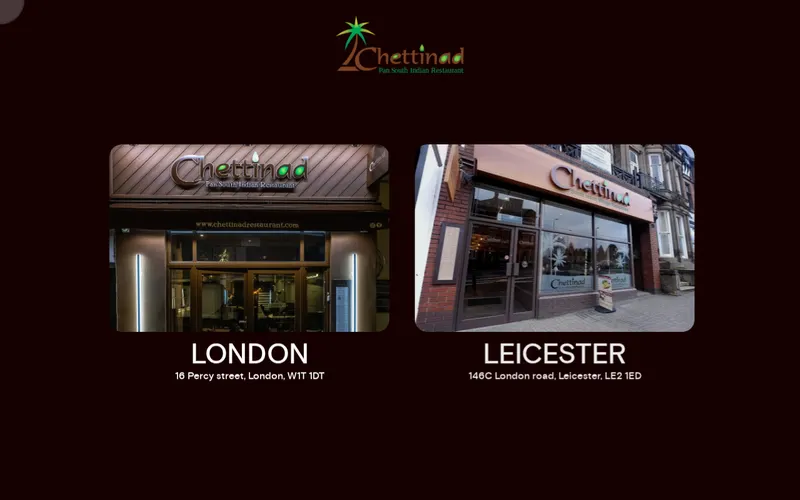
Chettinad
Directory listing — no guide yet
Bhageecha
Directory listing — no guide yet
Palm Beach
Directory listing — no guide yet
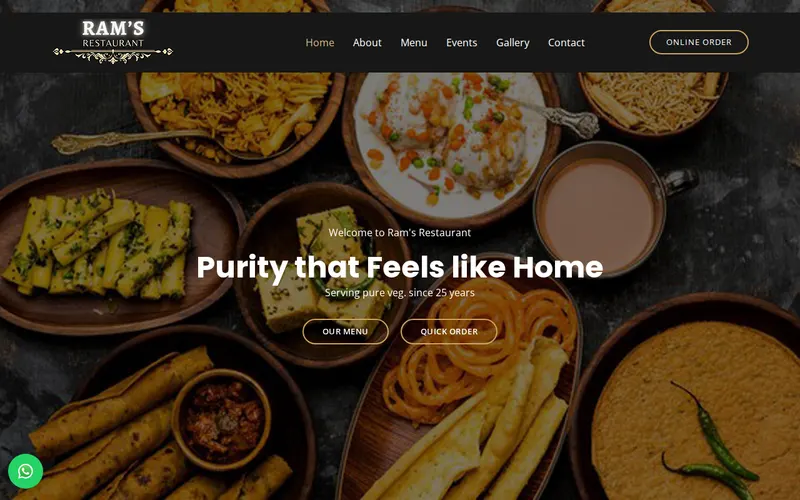
Ram's Pure Vegetarian
Directory listing — no guide yet
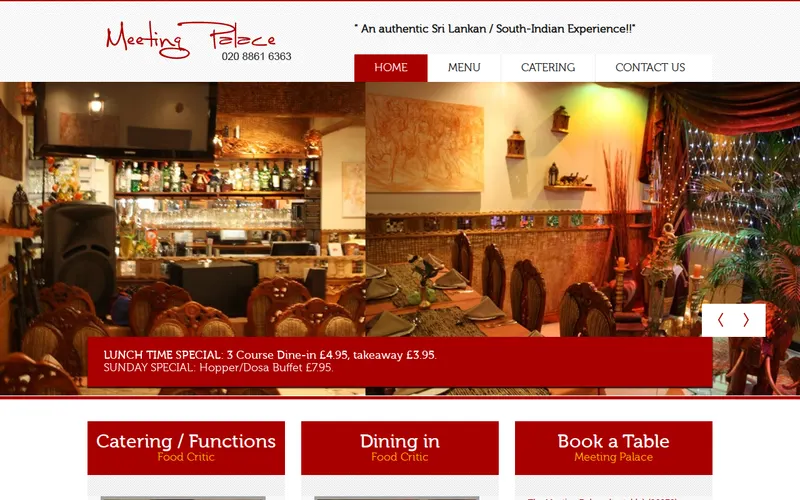
Meeting Palace
Directory listing — no guide yet
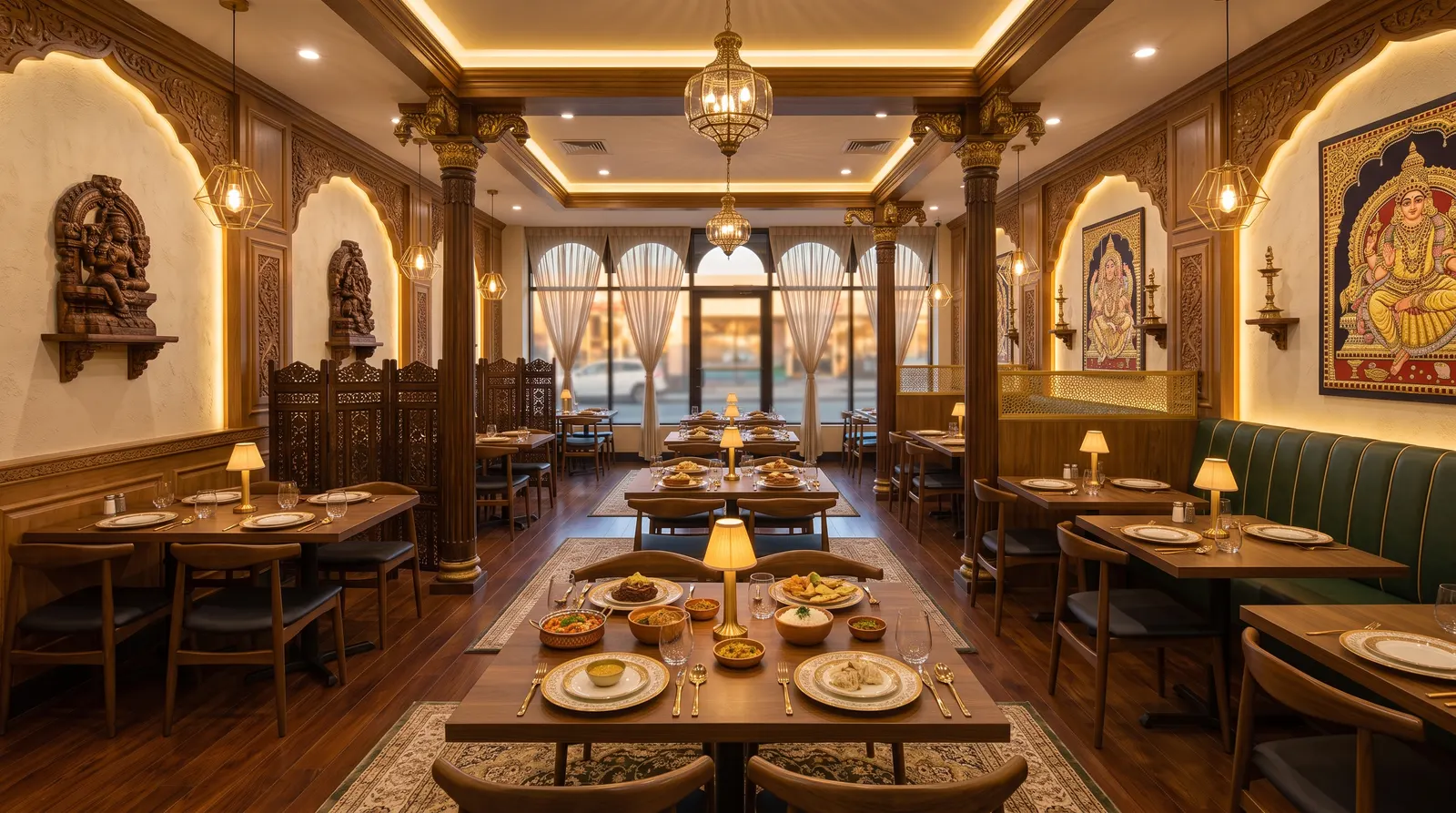
The Adaalat Lounge
Directory listing — no guide yet
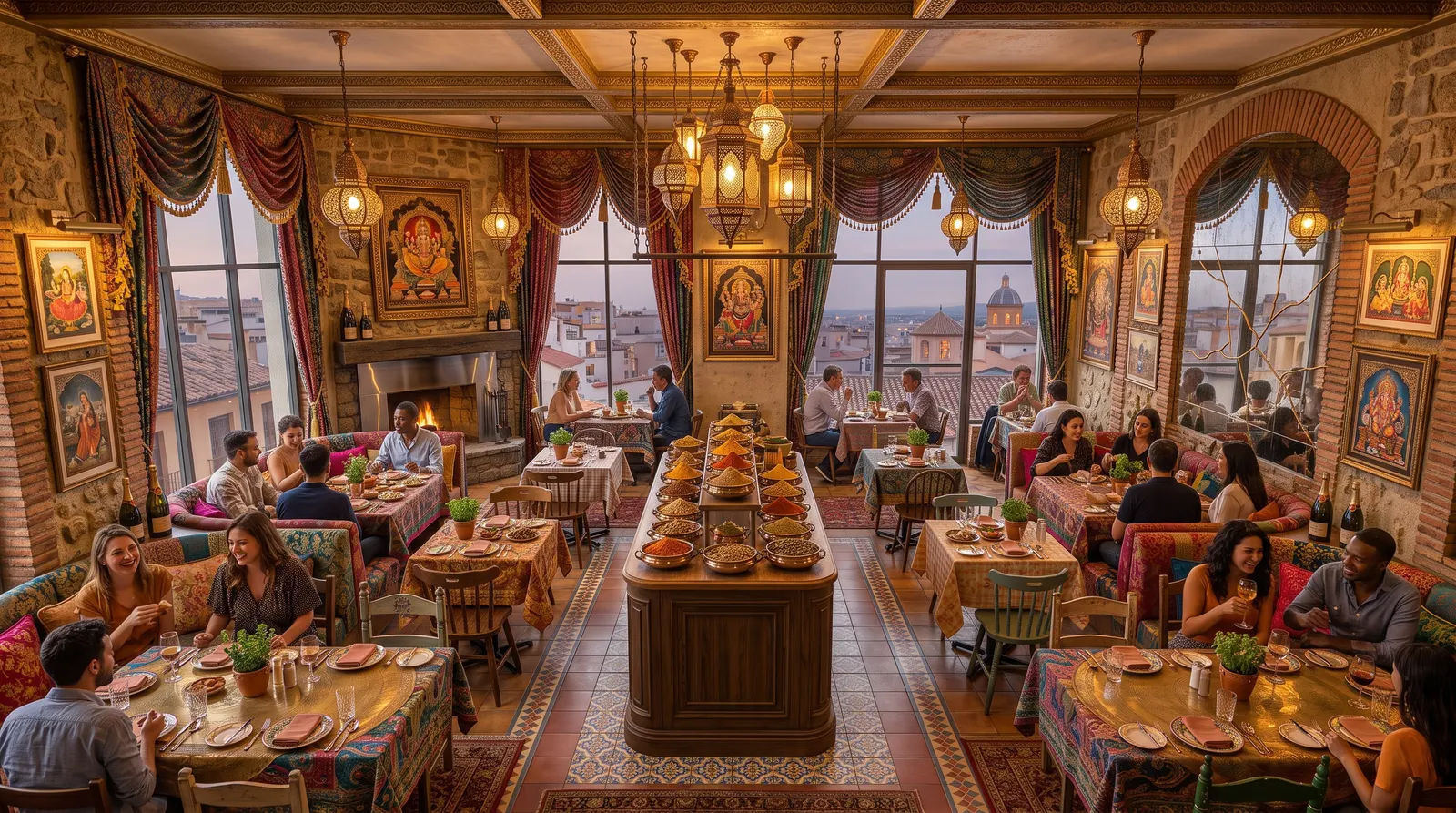
BKC Biryani Kebab Chai
Directory listing — no guide yet
DHE Chayakkada
Directory listing — no guide yet
Navateet
Directory listing — no guide yet
EastWest Pizza
Directory listing — no guide yet
Papadom
Directory listing — no guide yet
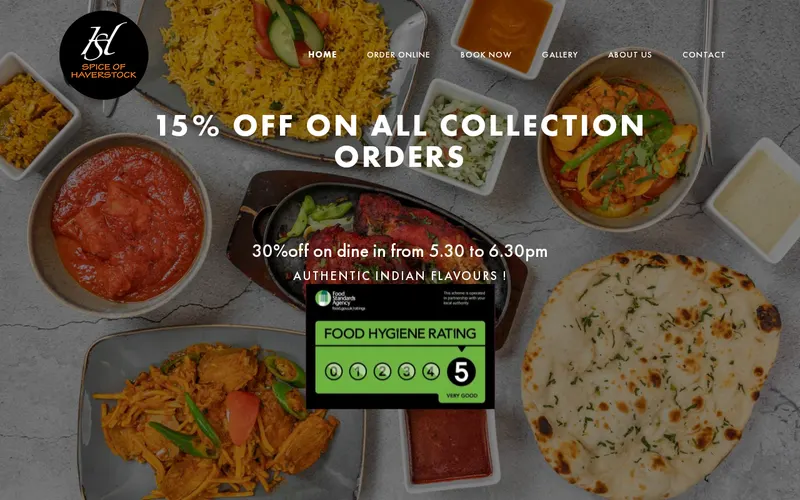
Spice of Haverstock
Directory listing — no guide yet
Practical notes
Southall and Tooting reward a trip. Many of the best places are unlicensed or bring-your-own, which is a feature, not a shortcoming. Book for anywhere well-reviewed on a weekend — the good rooms are small and fill early. Transport decides most of this. Southall is on the Great Western line out of Paddington and on the Elizabeth line, twenty minutes from the centre; Tooting Broadway is on the Northern line; Green Street is a short walk from Upton Park. None of those are difficult journeys, but they are journeys, and a visitor who stays in Zone 1 and eats in Zone 1 has eaten the most expensive and least interesting version of the city's food. A lunch thali in an outer-borough restaurant costs roughly what a sandwich and a coffee cost in the centre. Portions are large: two dishes between two people is usually enough with rice and bread. Tipping is not compulsory and ten per cent is generous. Most kitchens close between the afternoon and the evening, and the curry houses that stay open all day are the ones aimed at visitors.
The food year
Diwali in October or November is the busiest fortnight of the year for the sweet shops of Wembley, Harrow and Southall, when boxes of barfi and ladoo are bought by the tray and the queues run out of the door. Vaisakhi in April brings the Nagar Kirtan procession through Southall, with free food served along the route from stalls and langar tents, and anyone is welcome to eat. Ramadan moves the rhythm of Brick Lane and Green Street: the curry houses fill after sunset, the streets stay busy until two in the morning, and Eid al-Fitr is the biggest single day of the year for many of them. Navratri in the autumn fills Wembley's halls with garba and puts Gujarati fasting food on the menu for nine nights. Onam in late August or September puts sadya on banana leaves in the Keralan restaurants of East Ham. Christmas Day is the exception that proves the rule: the Bangladeshi curry houses of the East End open while almost everything else in the city is shut.
A common mix-up
The commonest mistake is to treat Brick Lane as the destination and the curry house as the cuisine. Most of what a curry house serves was built in Britain for British customers and would be unrecognisable in Sylhet. Visitors also assume that 'Indian' on a sign tells them who is cooking. In London it may mean Bangladeshi, Punjabi, Gujarati, Keralan or Sri Lankan, and the menu will only sometimes say which. Reading the surnames on the sign and the language of the other customers is more reliable than the word 'Indian' has ever been.
What is listed in London
500 restaurants in the directory, by cuisine: